I had a corporate client in last month, four-person executive team, tight schedule, and I found myself rebuilding my strobe setup from scratch mid-session because my assistant had reconfigured everything for a beauty shoot the day before. No diagram on the wall, no notes, just muscle memory and a mild panic. We got the shots, but the whole thing reminded me why I keep coming back to fundamentals. Not theory. Not mood boards. The actual mechanics of how a strobe system goes together and why each piece earns its place.
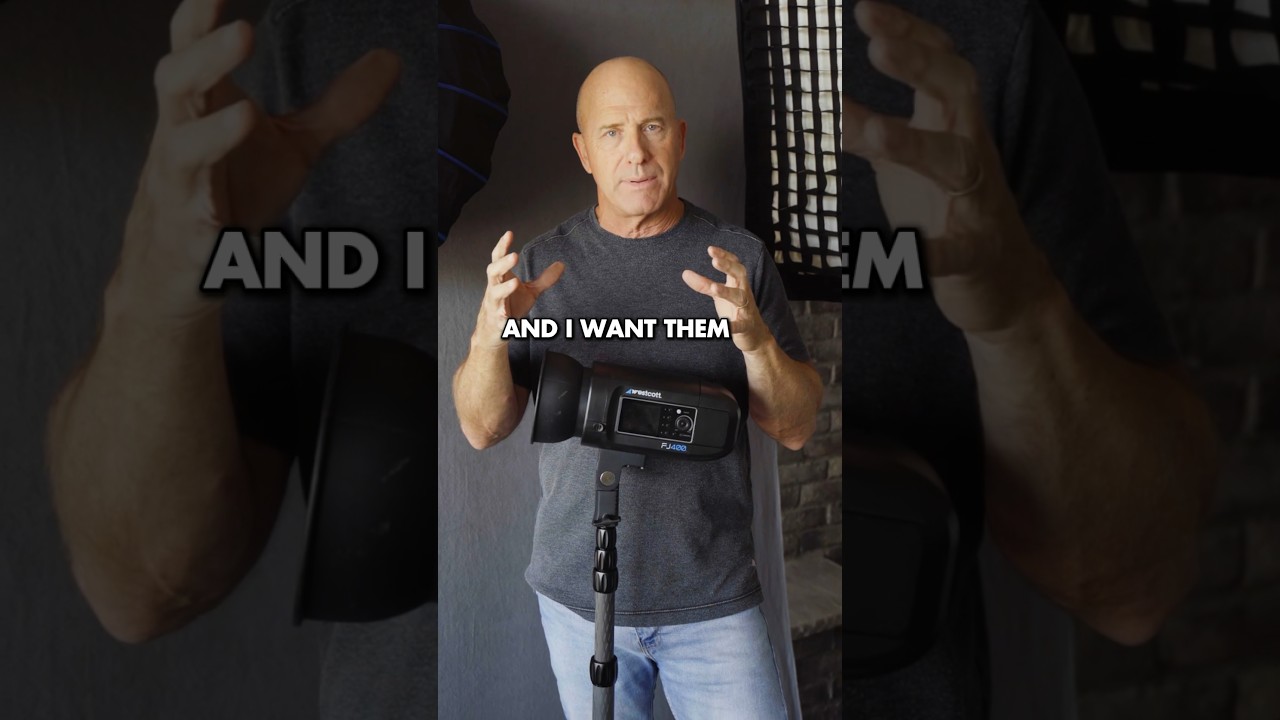
That same week I watched this Joel Grimes tutorial on building out a strobe system, and it landed differently than most gear breakdowns do. Grimes isn’t selling you a fantasy. He’s showing you a working system.
Why Strobe Systems Fail Before You Ever Fire a Shot
Most photographers who struggle with strobes aren’t struggling with the lights. They’re struggling with the infrastructure around the lights. The power source, the triggers, the modifier connection, the recycling time relative to their shooting pace. One weak link and the whole thing becomes unreliable in ways that are genuinely hard to diagnose on set.
Grimes addresses this directly. His approach treats a strobe system as exactly that: a system, not a collection of individual purchases. Every component has a relationship to every other component. That framing alone is worth the watch, because it shifts the question from “which strobe should I buy” to “what does this strobe need to function well, and do I have all of it.”
The Core Components and How They Talk to Each Other
Grimes walks through the main elements of a monolight-based strobe setup, and the logic is methodical enough that I’d almost call it a recipe. You have the strobe itself, a quality trigger system, a modifier that matches the mount, and a power source stable enough to give you consistent recycling. That last point matters more than most beginners expect.
Recycling time isn’t just a convenience issue. If your strobe is still recycling when you fire your next frame, you either get a misfire or a significantly underexposed shot. In a fast editorial session, that can cost you the decisive moment entirely. Grimes is emphatic about not underinvesting in power, and I’ve seen enough recycle-time failures in my own studio to fully agree.
The trigger system he covers is radio-based, which eliminates the line-of-sight dependency that optical triggers create. I actually label every trigger in my studio with masking tape, unit name and channel assignment, because the fastest way to introduce chaos into a session is to have mismatched channels and no quick way to tell which trigger controls which light. Grimes doesn’t get into that specific habit but his emphasis on system reliability points in exactly that direction.
Reading the Modifier Relationship
One thing Grimes handles well is the relationship between the strobe’s output and the modifier in front of it. A large softbox doesn’t just soften light. It also eats power, sometimes significantly. If you’re running a 200 watt-second monolight through a 4x6 foot softbox, you may find yourself maxed out on power before you’ve achieved the exposure you need, especially if you’re trying to overpower ambient light or maintain a small aperture for depth of field control.
His guidance here is practical: match your modifier size to your power budget, not just to your aesthetic preference. I’d add that this is worth testing the day you take delivery of any new modifier rather than discovering it mid-shoot. That’s a rule I follow without exception now, and it’s saved me more than once.
Where I’d Push This Further
The one place I’d extend Grimes’ framework is in the area of light ratio management across multiple units. His tutorial focuses on getting a single strobe system dialed in, which is exactly the right starting point. But once you’re running two or three lights, the conversation shifts to how those units relate to each other in terms of output.
I keep a lighting journal, just a small sketchbook where I draw the setup and note the power settings for every shoot. After about a year of doing this, patterns emerged. Certain ratios appear again and again for certain subject types. Two stops between key and fill for dramatic editorial portraits. One stop for corporate headshots where approachability matters more than contrast. Having those references means I can rebuild a setup fast even when my memory fails me, which is exactly the situation I was in with that executive team.
What Grimes teaches gets you to the point where you can reliably fire a single clean strobe. My journal is what happened after I did that enough times to see the relationships. One builds on the other.
The One Thing to Carry Out of This Tutorial
A strobe system only performs as well as its weakest component, and the weakest component is almost never the light itself. Get the trigger, the power, and the modifier relationship right first, then let the strobe do its job.
Watch the full Joel Grimes tutorial for the visual walkthrough. Reading about strobe systems helps, but seeing how the pieces connect physically makes the logic stick in a way that’s hard to replicate in text.
Comments
Leave a Comment