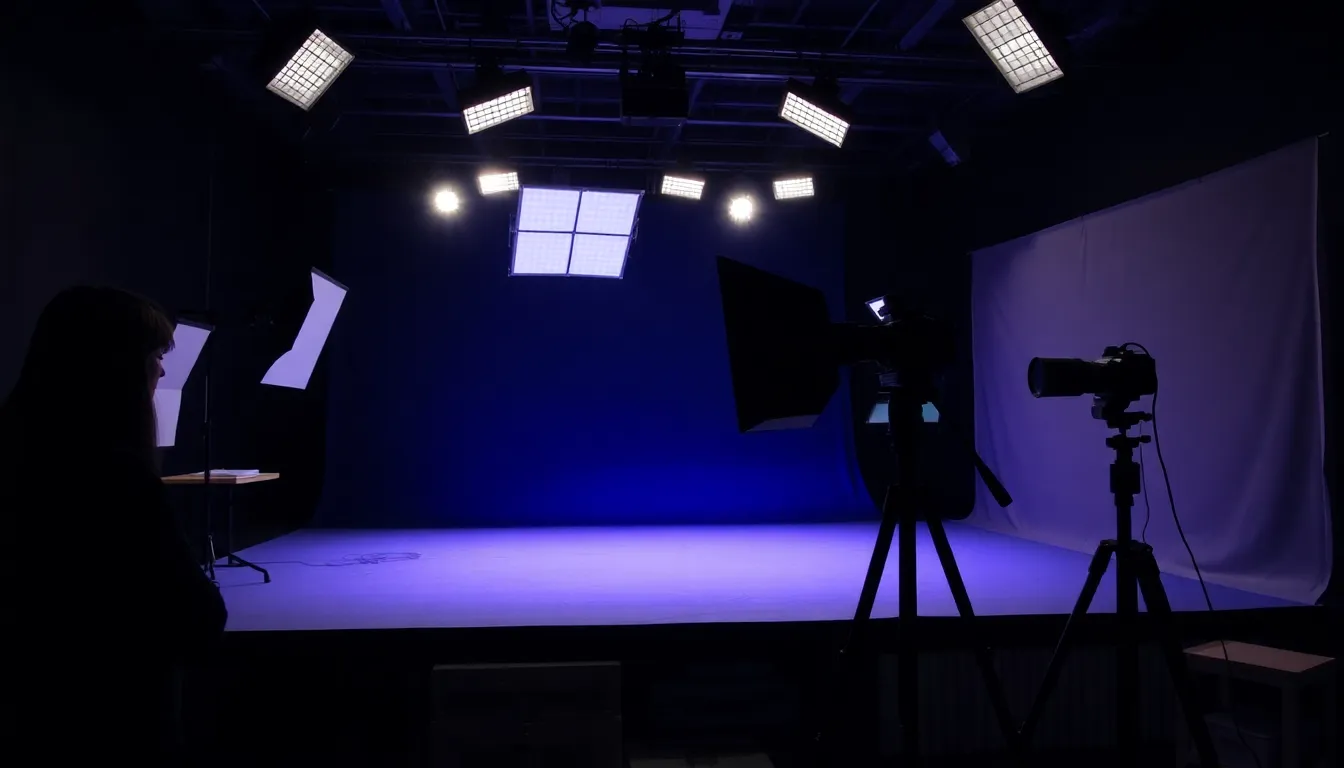
Low Key Lighting: The Discipline That Separates Professionals From Amateurs
Low key lighting isn’t a trend or an aesthetic preference—it’s a deliberate technical choice that demands precision, restraint, and a clear understanding of contrast ratios. After twenty years of working in studios and on location, I’ve found that photographers who master low key lighting develop a fundamental control over their craft that serves every other technique they’ll ever learn.
What Low Key Actually Means
Let’s be direct: low key doesn’t simply mean “dark.” It means controlled separation between subject and shadow. A proper low key setup maintains a narrow tonal range where your brightest highlights aren’t more than 3-4 stops above your deepest shadows. This creates visual drama through contrast, not through underexposure.
I see too many photographers confuse underexposed images with low key work. They’re not the same. An underexposed portrait is a technical failure. A low key portrait is a deliberate lighting choice.
The Essential Setup
I work with this recipe consistently:
The main light: Position a single key light at 45 degrees, slightly above eye level, roughly 4-5 feet from your subject. A 24" octabox or beauty dish works here—you need definition without harshness. Set this to be your only significant light source.
The fill: Here’s where discipline matters. Use either a reflector positioned opposite the key light at 6-8 feet distance, or a fill light at 1/4 to 1/3 the power of your key. Don’t fill evenly. Asymmetrical fill creates tension in the frame.
The background: Keep it darker than your subject’s lit side. I typically meter the background at 1-2 stops below your subject’s shadow areas. This separation prevents your subject from merging into the background—a critical mistake I see constantly.
No hair light. No accent light on the rim. Low key doesn’t mean adding more lights. It means subtracting everything unnecessary.
Camera Settings and Metering
I meter off the shadow side of the face, not the highlights. Set your exposure so the shadow side falls around Zone III on the Adams scale—visible detail but clearly shadowed. Your highlights will naturally fall into Zone VI or VII, creating that 3-4 stop separation we discussed.
Shoot in manual mode. Don’t let your camera’s meter make this decision for you. Low key requires intentional exposure control.
Use ISO 400-800 minimum. You need aperture flexibility. I typically shoot f/2.8 to f/4 to maintain that critical shadow detail while keeping the background completely black.
Posing for Low Key
The lighting exposes every flaw in posture and head angle. Your subject’s shoulders must be turned away from the key light approximately 30-45 degrees. This position maximizes the lit side of the face while deepening the shadow side.
The chin should drop slightly—10-15 degrees from level. This prevents that washed-out look under the eyes and creates defined cheekbones.
Position your subject roughly 8-10 feet from the background. Distance is your control valve. Closer distances require hotter background lighting; farther distances drop naturally into black.
The Gear Conversation
You don’t need expensive equipment for low key work, but you need reliable equipment. Invest in a quality lightmeter—a Sekonic L-308X will never fail you. Cheap light meters introduce variables you cannot control.
Your main light needs to be consistent and directional. Godox and Profoto lights both work; choose based on recycle time, not price. A 2-second recycle time will cost you frames and money in reshoot time.
The Discipline
Low key photography requires patience. It’s slower than flat, even lighting. You’ll take fewer frames per session. You’ll spend more time on positioning and metering.
That’s exactly why it matters. This discipline trains your eye to see light as separation, contrast, and control rather than as illumination. Master this approach, and you’ll understand lighting in ways that transcend individual techniques.
Low key isn’t for every assignment. But understanding low key completely will improve every assignment you accept.