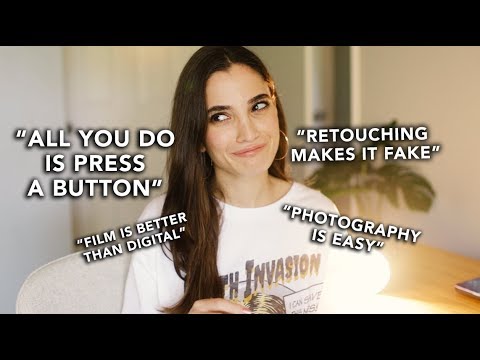
Every few months, someone on a client call says something that makes me set my coffee down slowly. “Can’t you just fix it in post?” is a classic. “Photography seems pretty straightforward” is another. I’ve been shooting commercial and editorial work in Los Angeles long enough to know these ideas don’t come from nowhere — they’re floating around the culture, repeated until they feel true. So when I came across this Jessica Kobeissi tutorial, Watch the full tutorial on YouTube, I sat with it longer than I expected to. She’s working through popular photography opinions submitted by her audience, and what she’s actually doing — whether she frames it this way or not — is a myth-busting exercise that every working photographer has had to conduct privately, usually after getting burned.
What struck me is how many of these myths aren’t just wrong, they point in exactly the opposite direction of where real skill lives. If you’ve been shooting for a while, you’ll recognize each one. If you’re newer, getting clarity on these early will save you years of second-guessing your process.
Step 1: Reject the “Just Press a Button” Framing Completely
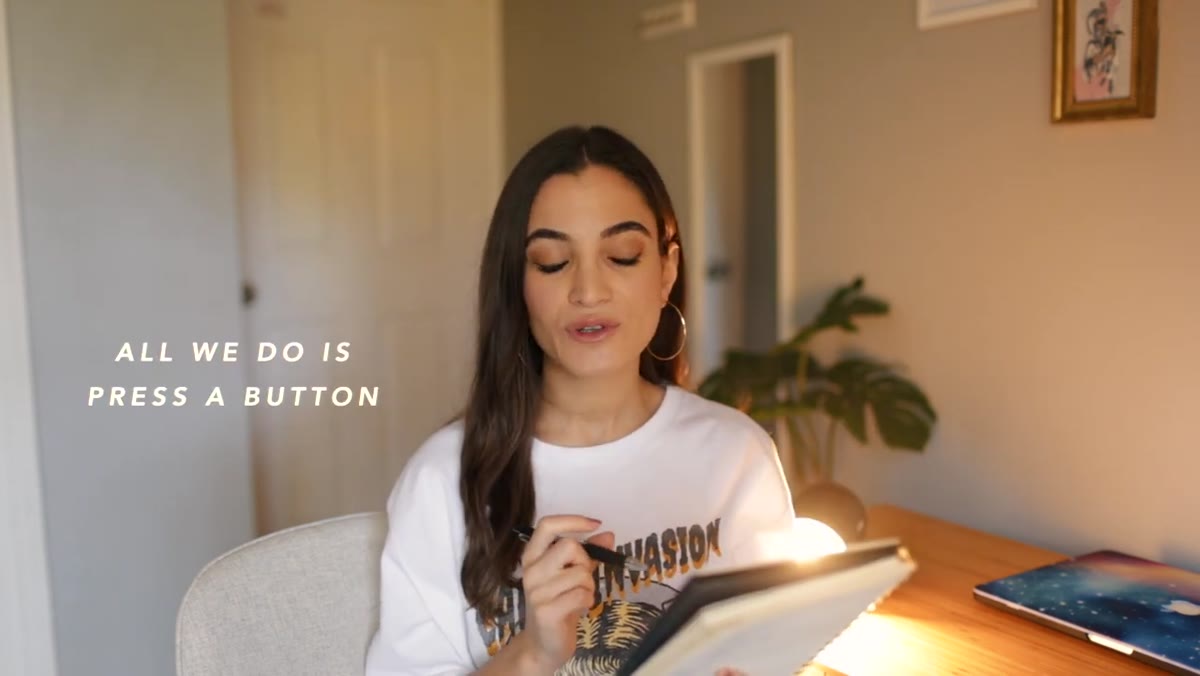 Jessica reacting to the “photographers just press a button” myth
The idea that photography is a single-button job is the oldest dismissal in the book, and Jessica doesn’t waste time on it. She points out the obvious: in any dynamic shooting environment, your settings are in constant motion. Moving from an indoor reception to direct afternoon sun at a wedding means your exposure triangle shifts entirely. ISO, aperture, shutter speed – none of them reset themselves. If you’re shooting manual, you’re making those calls in real time, often in seconds.
Jessica reacting to the “photographers just press a button” myth
The idea that photography is a single-button job is the oldest dismissal in the book, and Jessica doesn’t waste time on it. She points out the obvious: in any dynamic shooting environment, your settings are in constant motion. Moving from an indoor reception to direct afternoon sun at a wedding means your exposure triangle shifts entirely. ISO, aperture, shutter speed – none of them reset themselves. If you’re shooting manual, you’re making those calls in real time, often in seconds.
In studio work, I’d extend this even further. Every light I run has a label on it – position, power setting, modifier – written on masking tape. That’s not obsessive, that’s operational. A strobe at full power with a bare reflector is a completely different instrument than the same strobe at half power through a 48-inch octobox. “Pressing a button” doesn’t come close to describing what’s happening.
Step 2: Stop Conflating Medium With Quality (The Film Myth)
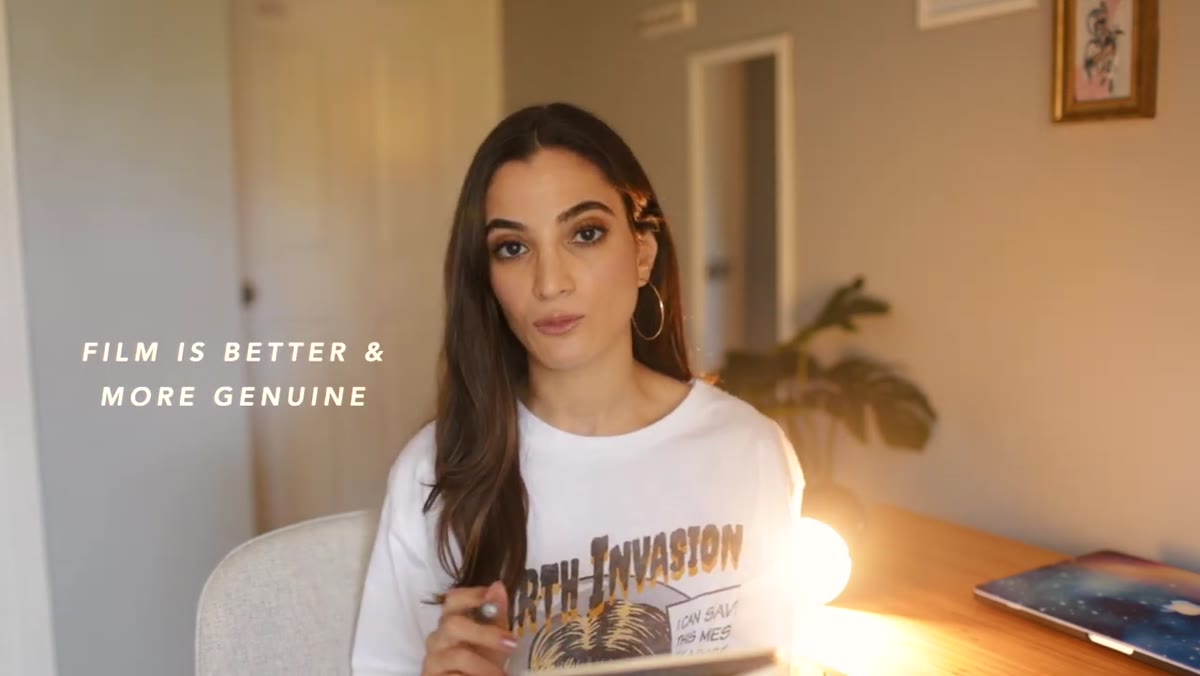 Jessica discussing film photography and personal preference
Jessica is careful here, and rightly so. She gives film its due – it’s genuinely difficult, the exposure latitude is unforgiving, and processing adds another layer of craft. But she draws a clean line: the medium does not automatically elevate the image. A poorly composed, badly lit frame on film is still a poorly composed, badly lit frame.
Jessica discussing film photography and personal preference
Jessica is careful here, and rightly so. She gives film its due – it’s genuinely difficult, the exposure latitude is unforgiving, and processing adds another layer of craft. But she draws a clean line: the medium does not automatically elevate the image. A poorly composed, badly lit frame on film is still a poorly composed, badly lit frame.
This is a useful corrective for studio shooters specifically. I’ve seen photographers invest heavily in analog gear expecting the grain and color rendering to carry work that hadn’t been thought through. Light still has to fall correctly. The subject still has to be directed. A Rembrandt pattern on film looks exactly as wrong as a Rembrandt pattern on a mirrorless sensor if the key light is six inches out of position. Medium is a tool, not a substitution for fundamentals.
Step 3: Audit the Full Cost of a Single Image
 Jessica listing everything photography requires beyond taking a picture
Jessica runs through the list of what actually goes into a shoot: lighting equipment, storage, software, memory cards, filters, lenses, and the people involved behind the scenes. Her point is that the finished image is the visible tip of an enormous logistical structure most people never see.
Jessica listing everything photography requires beyond taking a picture
Jessica runs through the list of what actually goes into a shoot: lighting equipment, storage, software, memory cards, filters, lenses, and the people involved behind the scenes. Her point is that the finished image is the visible tip of an enormous logistical structure most people never see.
For studio work, that list is even longer. Before a single frame fires, I’ve run power draws to check circuit loads, tested every modifier on the stands I plan to use, calibrated my color temperature against a reference target, and pulled the lighting diagram I sketched after the last similar shoot. That diagram habit started years ago, after I ruined an editorial job by mixing a 5600K key light with ambient tungsten and didn’t catch it until I was reviewing selects on a calibrated monitor the next morning. The lesson was expensive. Now every setup gets documented before the talent walks in.
Step 4: Understand Why Imitation Has a Ceiling
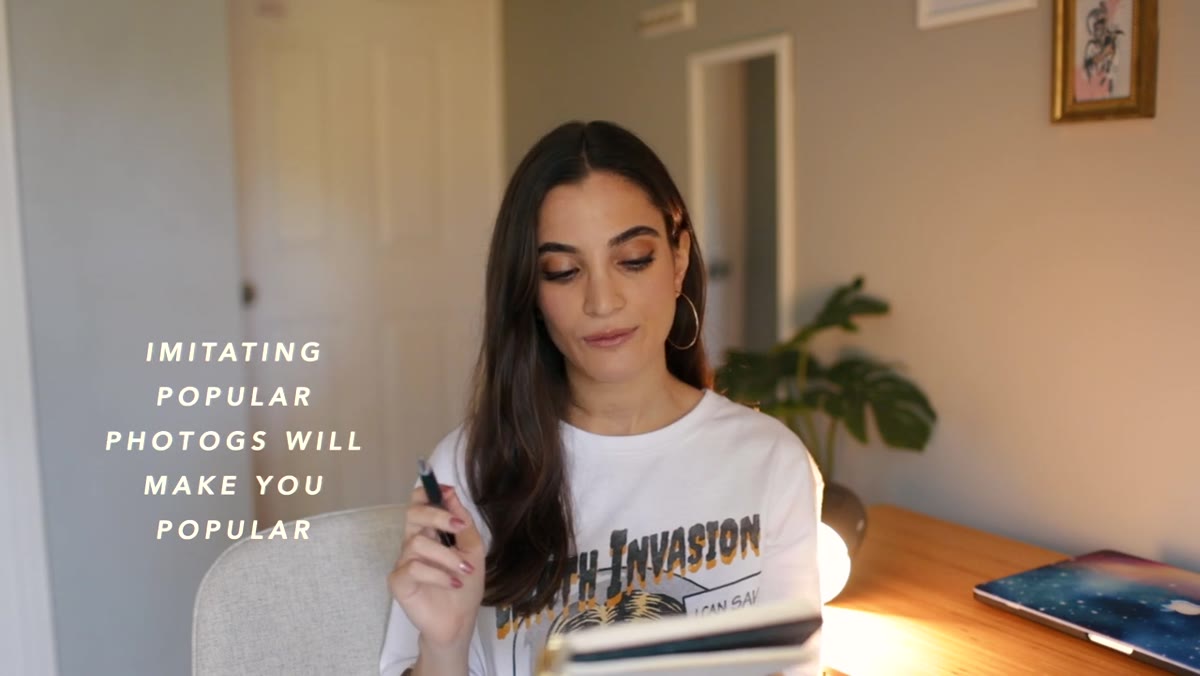 Jessica explaining the limits of copying another photographer’s Instagram style
This is the one I see play out most often with assistants and second shooters. Jessica’s point is direct: you can copy another photographer’s aesthetic precisely and still never replicate their trajectory. The style was built from a specific combination of experience, client relationships, equipment choices, and creative instincts that you weren’t present for. It looks like a look, but it’s actually a history.
Jessica explaining the limits of copying another photographer’s Instagram style
This is the one I see play out most often with assistants and second shooters. Jessica’s point is direct: you can copy another photographer’s aesthetic precisely and still never replicate their trajectory. The style was built from a specific combination of experience, client relationships, equipment choices, and creative instincts that you weren’t present for. It looks like a look, but it’s actually a history.
Inspiration is a completely different thing. I keep a lighting journal where I sketch every setup I run – not to preserve my own ideas, but to train my eye to read light analytically wherever I encounter it. I’ll sketch a setup I admired in someone else’s work, try to reverse-engineer the modifier placement and power ratios, and see what I learn in the attempt. That process builds your own vocabulary. Straight imitation just borrows someone else’s sentences without learning the grammar.
Step 5: Separate Inspiration From Replication in Your Own Practice
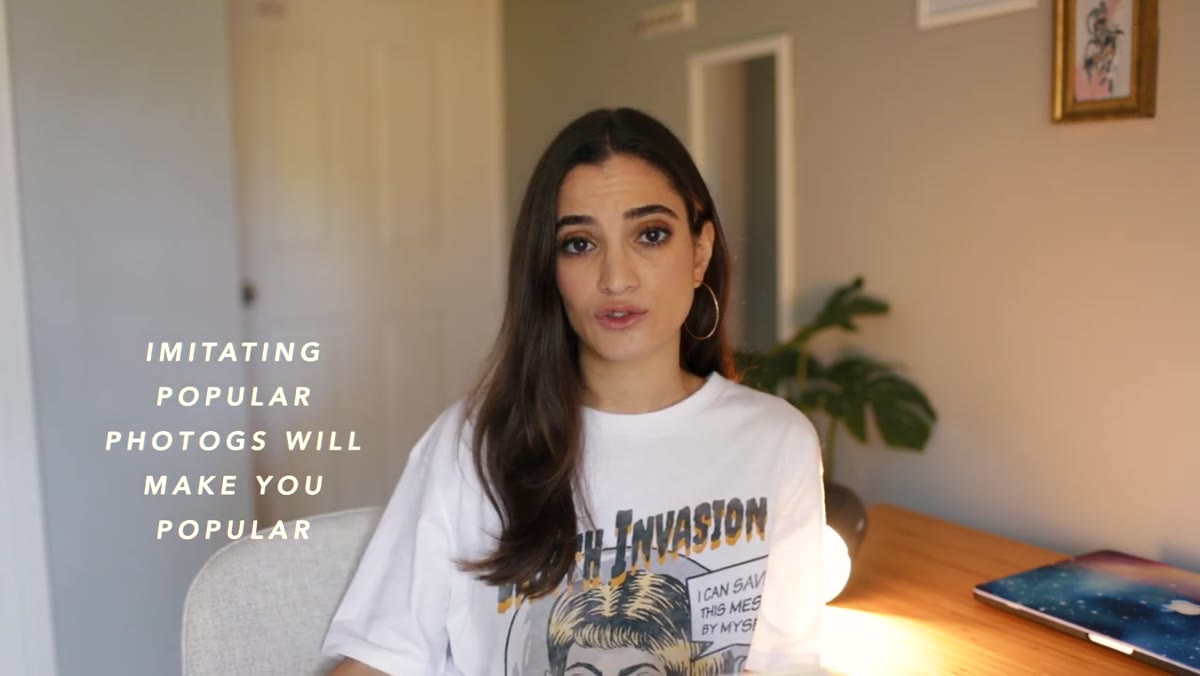 Jessica clarifying the difference between being inspired and copying work
Jessica makes a distinction worth repeating: finding inspiration in another photographer’s work is legitimate and useful. Copying the surface output without understanding the underlying decisions is a trap. The copied version will always be a step behind because you’re chasing results, not building process.
Jessica clarifying the difference between being inspired and copying work
Jessica makes a distinction worth repeating: finding inspiration in another photographer’s work is legitimate and useful. Copying the surface output without understanding the underlying decisions is a trap. The copied version will always be a step behind because you’re chasing results, not building process.
In practical terms, this means when you’re studying work you admire, ask the structural questions. Where is the key light relative to the subject’s face? What’s the ratio between key and fill? Is the background lit separately or falling off naturally? Those questions lead somewhere. “I want my photos to look like that” without the follow-up analysis leads to a style that doesn’t hold together under different conditions.
The Studio Caveat: Myths Get More Expensive in Controlled Environments
Studio photography is the setting where these myths cause the most concrete damage. When you’re outdoors, ambient light can rescue a mediocre setup. In a controlled studio environment, every problem is yours. The color temperature is wrong because you made it wrong. The shadows are muddy because you positioned the fill incorrectly. The skin tones are off because you didn’t calibrate.
That accountability is what I love about studio work, but it means the “photography is easy” myth can cost you a client. I test every new modifier the day it arrives – not because I’m impatient, but because I need to know how it behaves before it’s standing between me and a deadline. A 7-foot parabolic umbrella at full flood is a different instrument than the same umbrella at half pull. Knowing that before the shoot is the difference between a setup that works in twenty minutes and one that wastes an hour.
The single most important thing I took from this Jessica Kobeissi tutorial is the idea that myths about photography almost always underestimate process. Every shortcut assumption – it’s just a button, film makes it better, copying works fine – skips over the decision-making that actually produces strong images. The medium, the gear, the references you draw from: none of it replaces the understanding of light, timing, and intention that builds up over years of deliberate practice.
Watch the full tutorial on YouTube and pay attention to the way Jessica unpacks each assumption – there’s more practical clarity in this one video than in a month of gear forums.
Comments
Leave a Comment