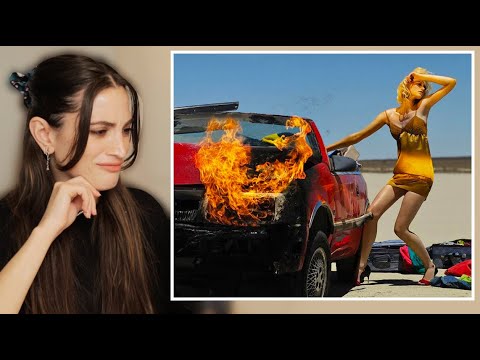
There’s a posing problem that comes up on almost every editorial shoot I do, and it has nothing to do with hands or angles. It’s the moment a model understands the concept intellectually but can’t translate it into her body. She knows the word. She just can’t feel it. That gap between briefing and execution is where a lot of otherwise technically solid shoots fall apart, and it’s something I’ve spent years developing systems to close. So when I came across a Jessica Kobeissi tutorial where she reacts to an America’s Next Top Model desert shoot – burning cars, extreme heat, desperation as a creative brief – I watched it twice. Not because of the spectacle, but because the photographer on that shoot was doing something instructive in how he framed his direction.
Watch the full tutorial on YouTube
In this Jessica Kobeissi video, she unpacks a shoot where the concept is survival-level desperation, set against a burning car in the Mojave. The environment is doing a lot of the work – intense heat, real fire, an actual sense of physical discomfort – but the direction still has to be precise. Kobeissi’s commentary cuts right to the core question: when a photographer gives you an emotional directive instead of a physical one, how do you make it land? I want to walk through what’s actually happening in this clip, step by step, because there are techniques in here that transfer directly into a controlled studio environment.
Step 1: Establish the Emotional Brief Before Anyone Touches the Set
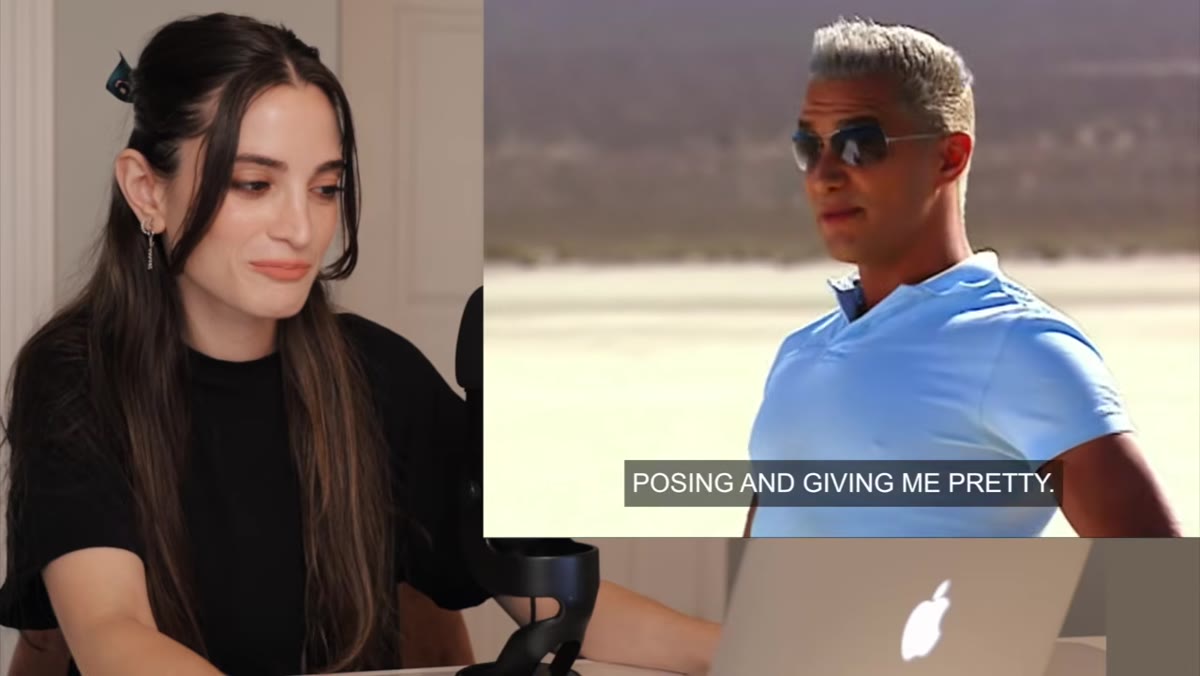 Photographer explaining the concept of desperation to models
The ANTM photographer doesn’t describe poses. He describes a scenario. Lost in the desert. Burning car. Survival. He’s building an internal world for the model before the camera is even raised. This is something I do at the start of every editorial session, and it almost always gets skipped by photographers who are newer to directing. Before you set a single light, sit your model down and tell her a story. Not “I want you to look fierce.” Tell her where she is, what just happened, what she’s afraid of. The more specific the narrative, the more specific the body language you’ll get back.
Photographer explaining the concept of desperation to models
The ANTM photographer doesn’t describe poses. He describes a scenario. Lost in the desert. Burning car. Survival. He’s building an internal world for the model before the camera is even raised. This is something I do at the start of every editorial session, and it almost always gets skipped by photographers who are newer to directing. Before you set a single light, sit your model down and tell her a story. Not “I want you to look fierce.” Tell her where she is, what just happened, what she’s afraid of. The more specific the narrative, the more specific the body language you’ll get back.
Step 2: Use the Environment as a Physical Anchor, Not Just a Backdrop
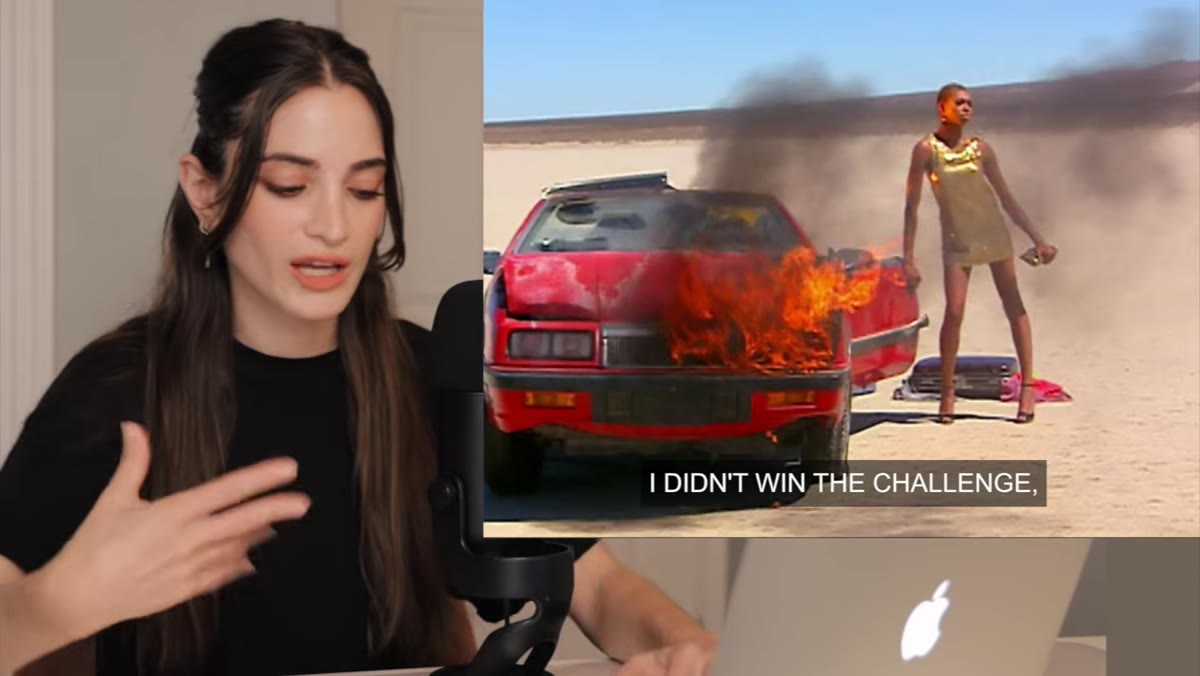 Model interacting with and touching the car during the shoot
One of the things Kobeissi points out is how the model is directed to physically interact with the car – holding on, touching it, leaning into it. In a studio context, you don’t have a flaming vehicle, but you have props, walls, chairs, and set pieces. The principle is identical. When a model has something to physically connect with, her posture shifts from “performing” to “being.” The prop becomes a grounding point that makes the body stop thinking about itself. I keep a handful of versatile props in my studio specifically for this: a weathered stool, a length of chain, an old mirror. They’re not decorative. They’re anchors.
Model interacting with and touching the car during the shoot
One of the things Kobeissi points out is how the model is directed to physically interact with the car – holding on, touching it, leaning into it. In a studio context, you don’t have a flaming vehicle, but you have props, walls, chairs, and set pieces. The principle is identical. When a model has something to physically connect with, her posture shifts from “performing” to “being.” The prop becomes a grounding point that makes the body stop thinking about itself. I keep a handful of versatile props in my studio specifically for this: a weathered stool, a length of chain, an old mirror. They’re not decorative. They’re anchors.
Step 3: Give Micro-Direction Mid-Shoot Without Breaking the Emotional State
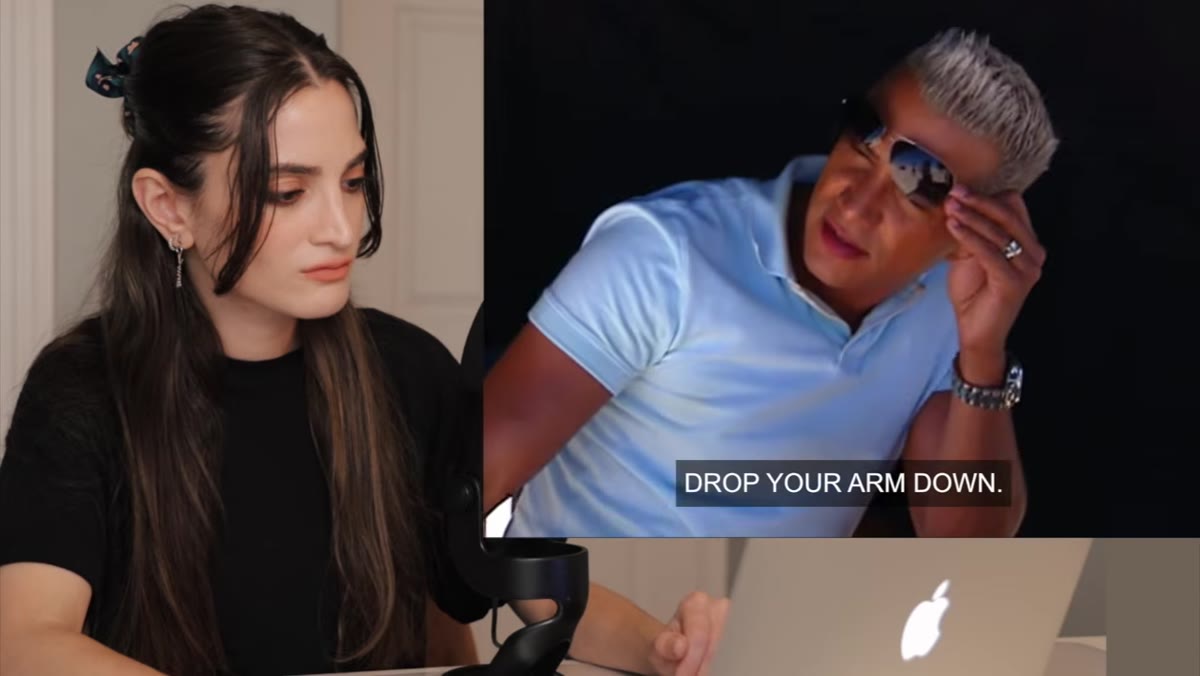 Photographer calling out arm adjustments during the live shoot
Watch the moment the photographer says to drop the right arm. He doesn’t stop the shoot. He doesn’t call a reset. He gives a single, physical, precise note while the model is still inside the emotional frame. This is a skill worth practicing deliberately. The mistake I see most often is photographers who give emotional direction to open the scene, then switch to technical corrections that yank the model out of the feeling they just built. Keep your technical notes physical and minimal. “Drop the elbow” is fine. “No, that’s not the expression I want” kills the whole thing.
Photographer calling out arm adjustments during the live shoot
Watch the moment the photographer says to drop the right arm. He doesn’t stop the shoot. He doesn’t call a reset. He gives a single, physical, precise note while the model is still inside the emotional frame. This is a skill worth practicing deliberately. The mistake I see most often is photographers who give emotional direction to open the scene, then switch to technical corrections that yank the model out of the feeling they just built. Keep your technical notes physical and minimal. “Drop the elbow” is fine. “No, that’s not the expression I want” kills the whole thing.
Step 4: Read When a Model Is Lost and Reframe It as the Concept
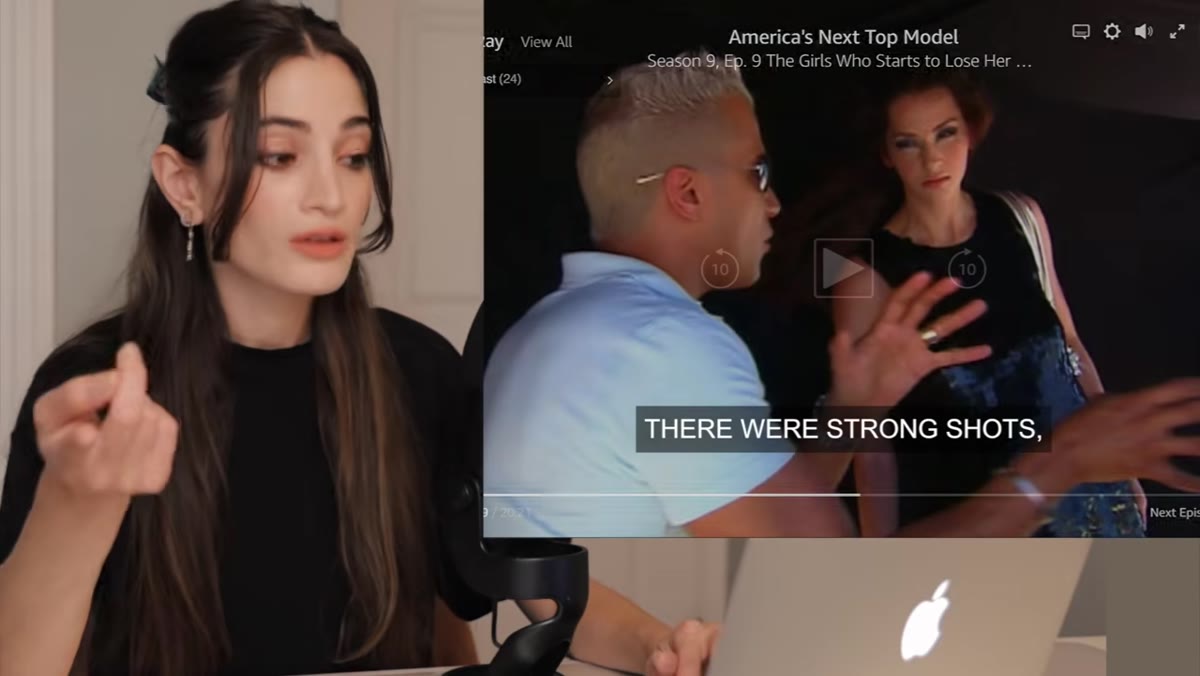 Discussion about Heather looking lost during the shoot
Kobeissi raises a great point here that deserves its own step. When one model appears genuinely lost and disoriented on set, the photographer calls it out at judging as a problem. But Kobeissi immediately clocks the contradiction: lost was the brief. This is a directing lesson disguised as a critique. When you’re behind the lens and something unexpected happens in a model’s body or expression, your first instinct should not be to correct it. Pause and ask whether what you’re seeing is actually closer to the concept than what you planned for. I’ve pulled some of my best frames from moments I initially planned to reshoot.
Discussion about Heather looking lost during the shoot
Kobeissi raises a great point here that deserves its own step. When one model appears genuinely lost and disoriented on set, the photographer calls it out at judging as a problem. But Kobeissi immediately clocks the contradiction: lost was the brief. This is a directing lesson disguised as a critique. When you’re behind the lens and something unexpected happens in a model’s body or expression, your first instinct should not be to correct it. Pause and ask whether what you’re seeing is actually closer to the concept than what you planned for. I’ve pulled some of my best frames from moments I initially planned to reshoot.
Step 5: Let Practical Light Inform Your Artificial Lighting Setup
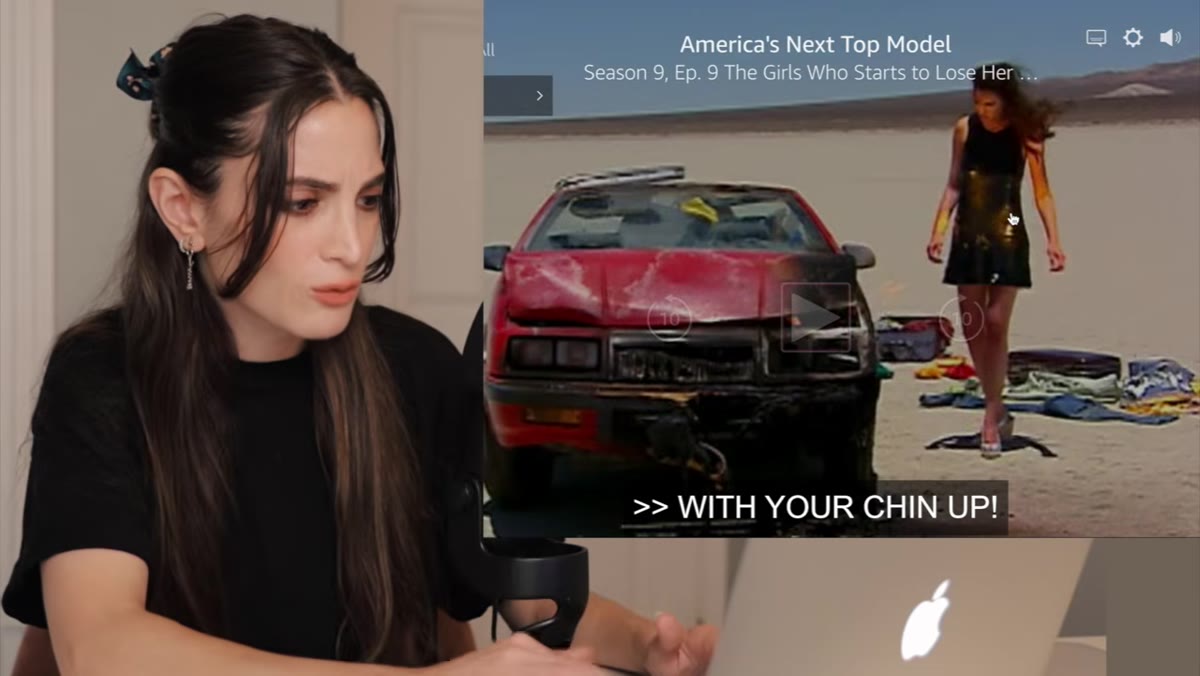 Warm light from the fire bouncing across the model’s skin
Kobeissi pauses on a frame where firelight is bouncing warm and directional across the model’s skin. She notes it, almost in passing, but it’s one of the most technically instructive moments in the video. That warm, low, raking light wrapping one side of the body is extremely flattering and dramatic – and it’s entirely replicable with a tungsten-balanced light source or a strobe gelled with a full CTO at low power, placed below and to the side of your subject. I keep a notes page in my lighting journal specifically for practical-light looks I want to replicate in studio. A burning car at golden hour is just a very dramatic practical. You can get 80% of that look with a gridded strip box and the right gel.
Warm light from the fire bouncing across the model’s skin
Kobeissi pauses on a frame where firelight is bouncing warm and directional across the model’s skin. She notes it, almost in passing, but it’s one of the most technically instructive moments in the video. That warm, low, raking light wrapping one side of the body is extremely flattering and dramatic – and it’s entirely replicable with a tungsten-balanced light source or a strobe gelled with a full CTO at low power, placed below and to the side of your subject. I keep a notes page in my lighting journal specifically for practical-light looks I want to replicate in studio. A burning car at golden hour is just a very dramatic practical. You can get 80% of that look with a gridded strip box and the right gel.
Step 6: Build a Concept Brief Strong Enough That the Wardrobe Has to Fight It
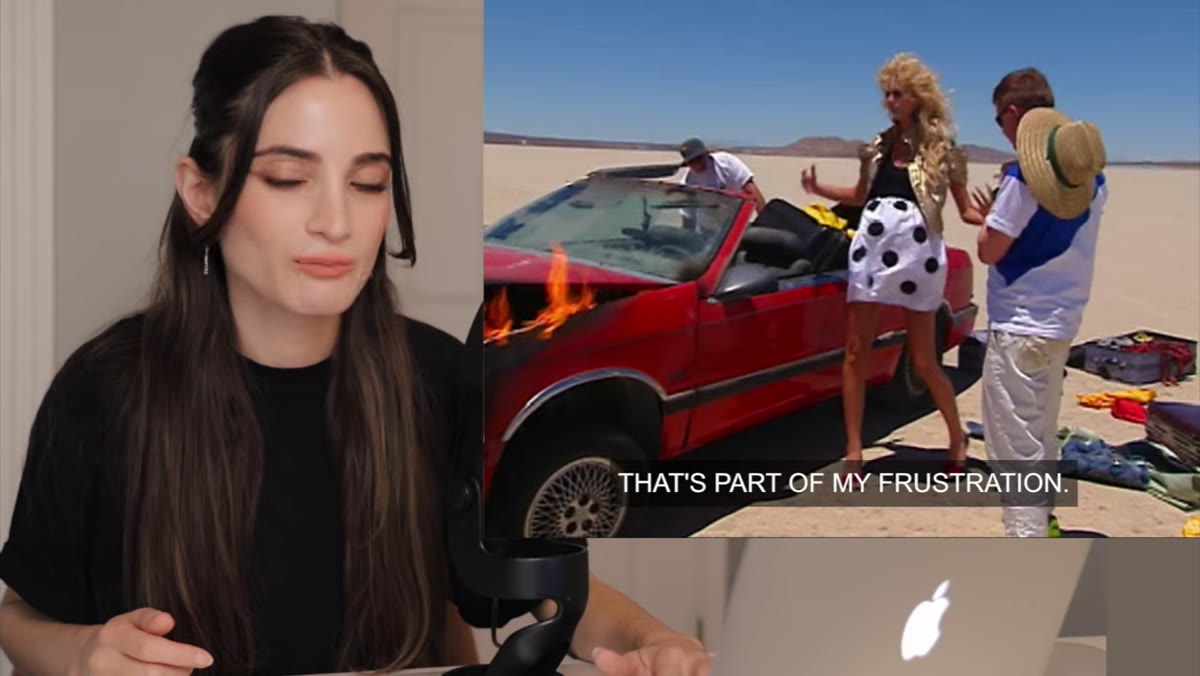 Model struggling with a large, billowing dress in wind
The final model in the sequence is working against a dress that’s functioning more like a parachute than a garment. Kobeissi’s reaction to this is pointed – the wardrobe is fighting the concept rather than supporting it. This is something I push back on hard when I’m collaborating with stylists. Every wardrobe choice should reinforce the emotional brief, or at minimum, not contradict it. A survival-desperation concept and a voluminous, theatrical gown are pulling in opposite directions. When you’re planning your own shoots, put the concept and the wardrobe in the same conversation early. If the stylist doesn’t know the brief, they’ll dress for the look, not the feeling.
Model struggling with a large, billowing dress in wind
The final model in the sequence is working against a dress that’s functioning more like a parachute than a garment. Kobeissi’s reaction to this is pointed – the wardrobe is fighting the concept rather than supporting it. This is something I push back on hard when I’m collaborating with stylists. Every wardrobe choice should reinforce the emotional brief, or at minimum, not contradict it. A survival-desperation concept and a voluminous, theatrical gown are pulling in opposite directions. When you’re planning your own shoots, put the concept and the wardrobe in the same conversation early. If the stylist doesn’t know the brief, they’ll dress for the look, not the feeling.
What I Do Differently in a Controlled Studio
The desert shoot in this video is using environmental extremity to generate authentic emotion – real heat, real discomfort, real fire. In the studio, you don’t have any of that working for you, which means your directing has to work harder. What I’ve found effective is playing music that matches the emotional brief at low volume during the shoot. Not to entertain the model, but to give her nervous system something to sync with. I started doing this after a beauty shoot where I needed a very particular kind of quiet sadness, and no amount of verbal direction was getting there. I put on a specific piece of ambient music and within two frames, the model’s eyes changed. It’s not a trick. It’s just another form of environmental input.
The single most important thing I took from this video is something Kobeissi almost throws away as a joke: the model who looked lost was actually delivering the brief. As photographers and directors, we’re often so locked onto our pre-visualized image that we miss when reality hands us something better. Train yourself to stay open behind the viewfinder. The brief is a starting point. What the model gives you in the moment is the raw material.
Watch the full tutorial on YouTube
Comments
Leave a Comment