
Watch the full tutorial on YouTube
I’ve been shooting in studios for nearly two decades. I label every light with masking tape. I have a custom app on my phone for diagramming setups. I test every new modifier the day it arrives. If there’s a system to build, I’ll build it. What I’m less good at, historically, is the stuff that can’t be diagrammed: how to handle the pressure to perform a version of yourself that gets more likes, keeps more clients happy, or avoids more conflict. That’s not a lighting problem. But it turns out it shapes your work just as much as your key light placement does.
In this Jessica Kobeissi tutorial, she reads through audience assumptions about her personality and responds with a candor that’s genuinely rare on YouTube. It’s not a gear video. It’s not a lighting breakdown. But for anyone building a long-term creative practice, the subtext running through the whole thing is worth paying close attention to. Kobeissi has built a substantial audience and a working photography career without shapeshifting to please every corner of the internet, and she’s direct about the cost and the payoff of that choice.
What follows is my attempt to extract the lessons that actually transfer to how you show up in a studio, with clients, and in your creative work.
Step 1: Recognize the People-Pleaser Trap Before It Costs You a Shoot
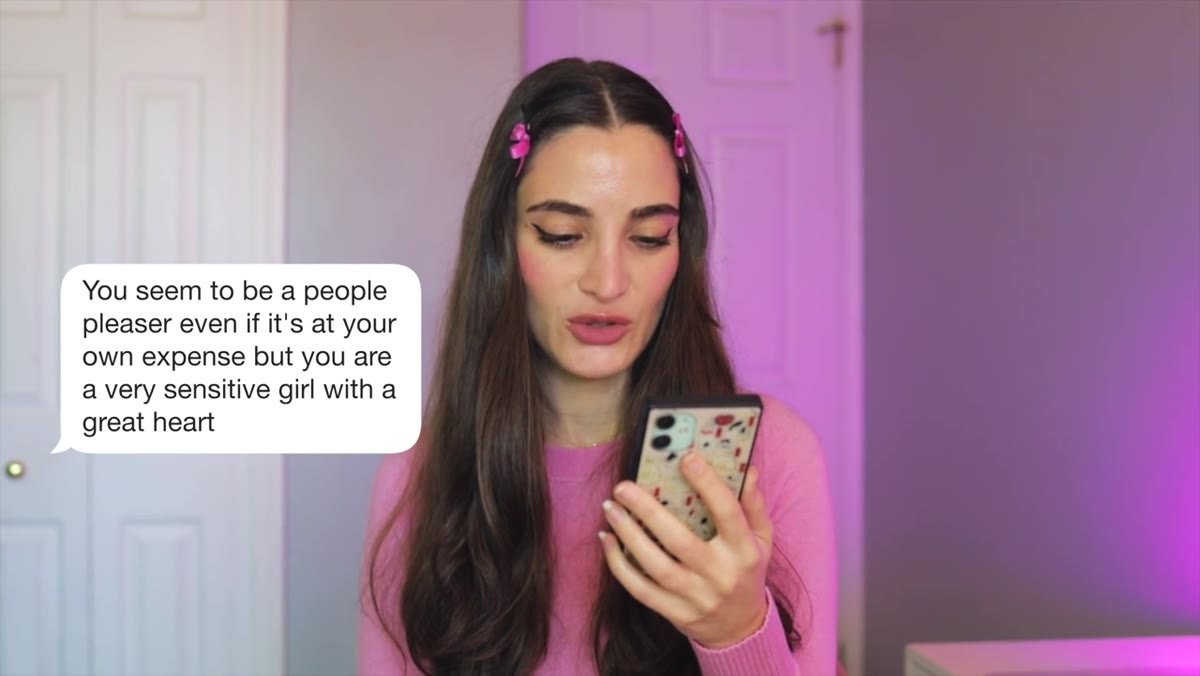 Jessica reading a “people pleaser” audience assumption aloud
Early in the video, Kobeissi addresses the assumption that she’s a people pleaser, someone who bends to avoid disappointing others. She owns that this used to be true, and she’s clear that it’s no longer the operating mode. The framing she uses is useful: if you change who you are so someone will like you, they don’t actually like you. They like the performance.
Jessica reading a “people pleaser” audience assumption aloud
Early in the video, Kobeissi addresses the assumption that she’s a people pleaser, someone who bends to avoid disappointing others. She owns that this used to be true, and she’s clear that it’s no longer the operating mode. The framing she uses is useful: if you change who you are so someone will like you, they don’t actually like you. They like the performance.
In studio work, this shows up constantly. A client hints they want a certain look. You know from experience it won’t work with the model, the light, or the concept. But you fold anyway because the room gets quiet when you push back. I’ve done it. The resulting images are always a compromise, and the client somehow senses that even if they can’t name it. Kobeissi’s point, reframed for photographers: hold your read of the situation, because your expertise is exactly what you were hired for.
Step 2: Separate What You Enjoy Making from What Performs Well
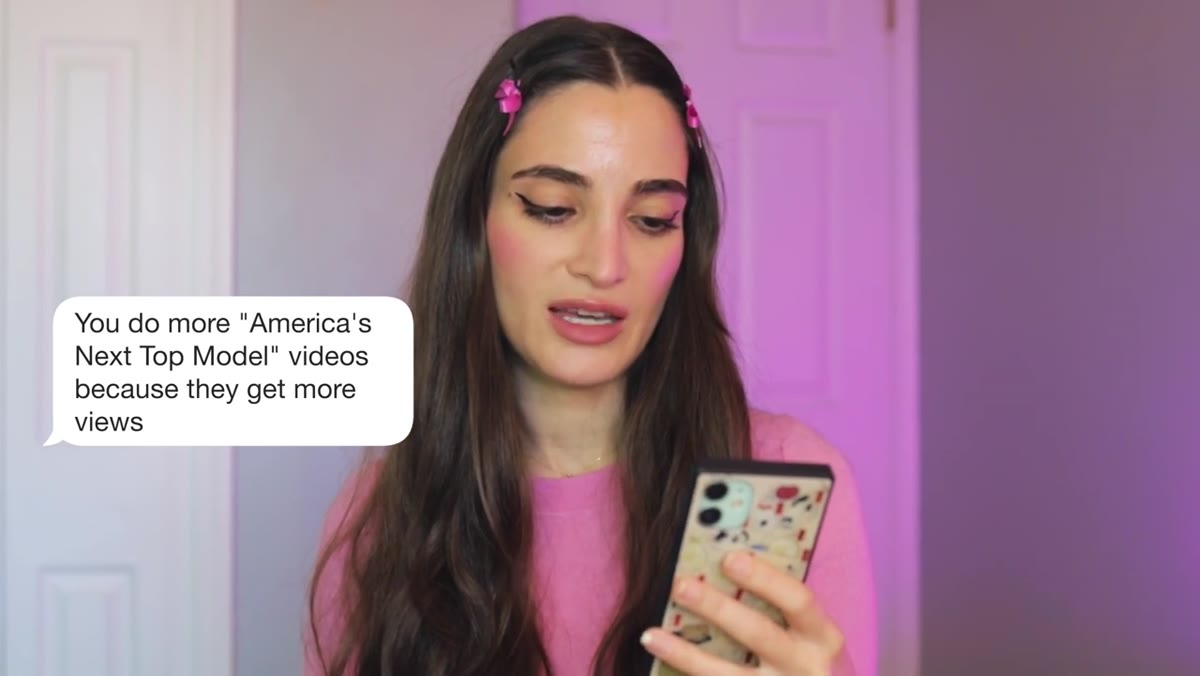 Jessica discussing her America’s Next Top Model reaction videos
Kobeissi talks about the assumption that she makes certain types of videos purely because they perform well algorithmically. Her answer is more nuanced than a simple denial. She acknowledges the performance data, but she’s also clear that she makes those videos because she genuinely enjoys them. The two things overlap, and she doesn’t pretend otherwise.
Jessica discussing her America’s Next Top Model reaction videos
Kobeissi talks about the assumption that she makes certain types of videos purely because they perform well algorithmically. Her answer is more nuanced than a simple denial. She acknowledges the performance data, but she’s also clear that she makes those videos because she genuinely enjoys them. The two things overlap, and she doesn’t pretend otherwise.
This is an important distinction for photographers deciding what kind of work to pursue. There’s nothing wrong with noticing which portfolio pieces get the most inquiries. The problem is building your entire practice around what books rather than what you’re actually good at and interested in. Over time, work you don’t care about shows up in the images. Clients can feel when a photographer is going through motions. Know which projects excite you, and let that knowledge guide your pitching, even when it means turning down easier money.
Step 3: Don’t Confuse Authenticity with Refusing to Evolve
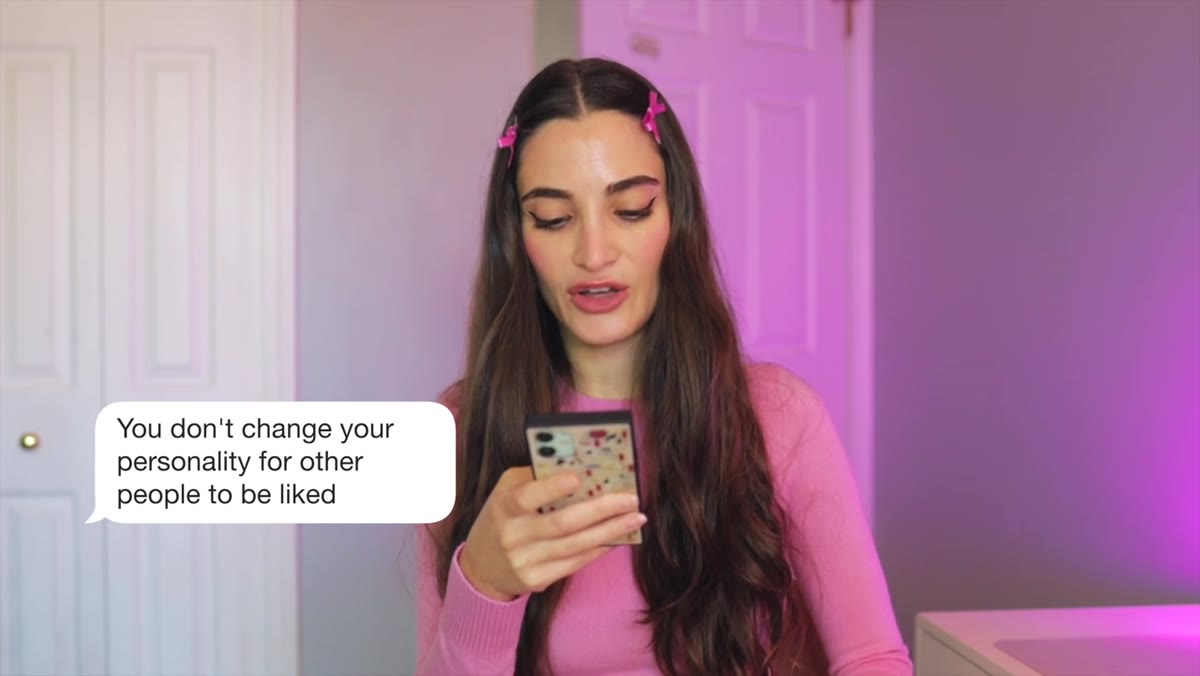 Jessica explaining she won’t change her personality just to be liked
There’s a moment where Kobeissi draws a clear line: she won’t change her personality to be liked, but that’s different from refusing to grow or adapt. It’s a subtle distinction and one that gets collapsed a lot in conversations about “staying true to yourself.”
Jessica explaining she won’t change her personality just to be liked
There’s a moment where Kobeissi draws a clear line: she won’t change her personality to be liked, but that’s different from refusing to grow or adapt. It’s a subtle distinction and one that gets collapsed a lot in conversations about “staying true to yourself.”
In lighting terms, I think of it this way. My core approach, the way I build a setup from a single motivated source and add only what the image demands, hasn’t changed much in fifteen years. But my toolkit has. I’ve adopted new modifiers, changed how I handle color temperature after I ruined an early editorial job by not calibrating my strobes to match the practical lights on set. Evolving your craft is not the same as abandoning your creative identity. Know which parts of your practice are foundational and which are just habits that could use revisiting.
Step 4: Build a Tolerance for Disappointing People
 Jessica saying she is now “a people disappointer”
Kobeissi delivers this one with humor, but the underlying point is serious. Building a career means making choices that not everyone will endorse, including people close to you. She mentions family specifically, which takes some honesty to put on camera.
Jessica saying she is now “a people disappointer”
Kobeissi delivers this one with humor, but the underlying point is serious. Building a career means making choices that not everyone will endorse, including people close to you. She mentions family specifically, which takes some honesty to put on camera.
Photographers face this constantly: the client who wants revisions that would ruin the image, the art director pushing a lighting style that doesn’t suit the subject, the agency that wants you to shoot cheaper and faster. Learning to say no clearly and without lengthy justification is a skill that takes practice. The earlier you start treating it as a skill rather than a personality flaw, the better your work gets. A studio is not a democracy. You can take input, and you should, but someone has to make the final call on the light.
Step 5: Know Where You Actually Work Best
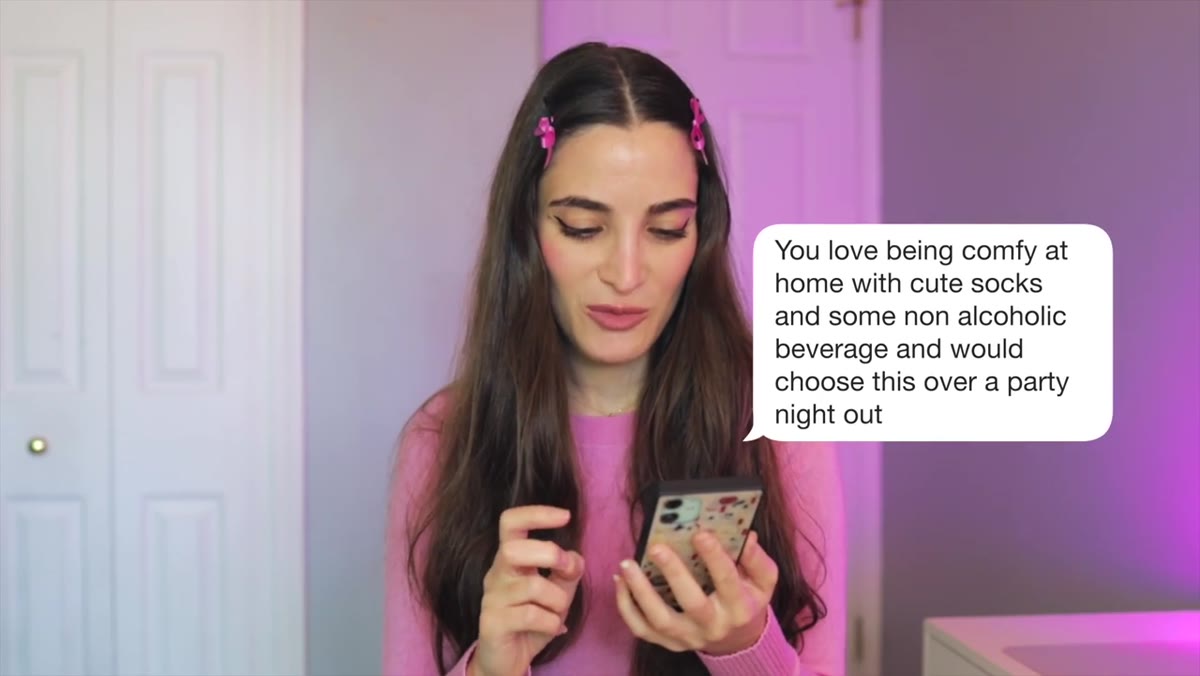 Jessica describing her preference for staying home over going out
Near the end of the video, Kobeissi confirms what a lot of her audience had already guessed: she’s not a party person, doesn’t drink, and strongly prefers a quiet evening at home. She says it without apology, and that matters.
Jessica describing her preference for staying home over going out
Near the end of the video, Kobeissi confirms what a lot of her audience had already guessed: she’s not a party person, doesn’t drink, and strongly prefers a quiet evening at home. She says it without apology, and that matters.
Photographers are often expected to be socially relentless, networking constantly, visible at every industry event. Some people genuinely thrive in that mode. Others do their best work when they’re conserving energy and thinking clearly. I shoot better after a quiet morning than after a loud dinner. Knowing that about yourself is not a weakness. It’s information you can use to structure your schedule, your client communication, and your shoot days.
What I’d Add From My Own Practice
Kobeissi doesn’t talk about documentation in this video, but everything she describes, the clarity about who she is, the separation of external pressure from internal values, only becomes reliable when you’ve actually taken the time to write it down. I keep a lighting journal where I sketch every setup from every shoot. I started a second section a few years ago for notes on what I’d do differently, not technically, but in terms of how I handled the room.
If you’re going to build a practice with a genuine point of view, you need a record of what that point of view actually is. Otherwise “staying true to yourself” is just a feeling, and feelings shift under pressure. Write down what you won’t compromise on. Revisit it when a client is pushing you somewhere uncomfortable. It works better than you’d expect.
The single most important thing I took from this video is that creative identity is not passive. It requires the same deliberate construction you’d give a lighting setup, and the same willingness to defend your choices when someone in the room thinks they know better. Kobeissi has clearly done that work, and it shows in how she talks about her craft and her career.
Watch the full tutorial on YouTube and pay attention to what she doesn’t say as much as what she does.
Comments
Leave a Comment