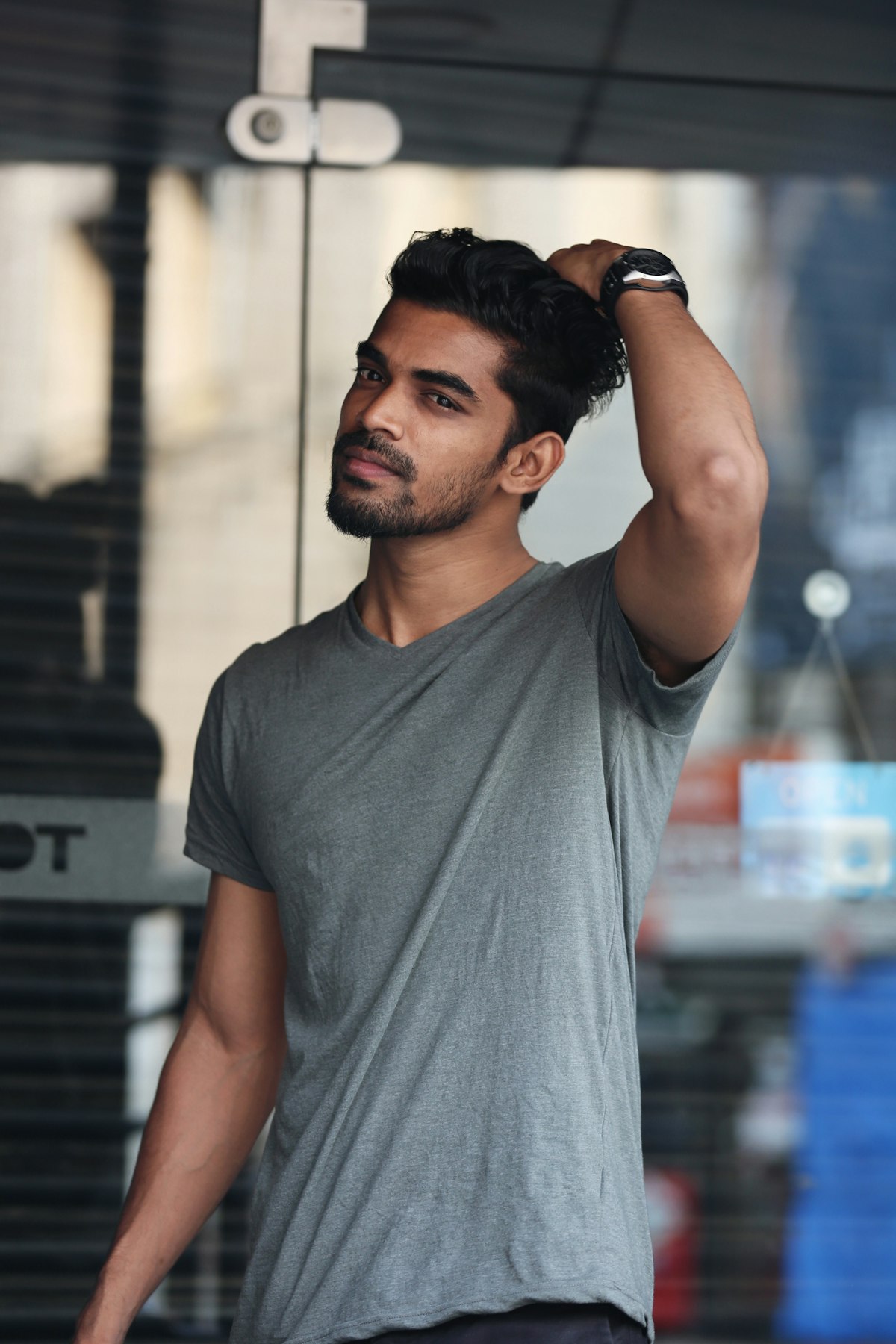
Environmental portraits tell a story that studio portraits can’t. A chef in their kitchen, an artist in their studio, a farmer in their field — the environment provides context that gives the viewer insight into who the person is. But lighting these scenes is fundamentally different from studio work. You’re not creating light from scratch — you’re integrating with light that already exists.
The Environmental Portrait Philosophy
The environment is as important as the subject. Unlike headshots where the background is irrelevant, environmental portraits fail if the location isn’t visible and recognizable. Your lighting must accomplish two things simultaneously: flatter the subject and preserve the environment’s character.
This means working with available light rather than overpowering it. A flash that’s too strong eliminates the ambient atmosphere — the warm glow of a workshop, the cool fluorescent of a laboratory, the dappled window light of a cafe. Your light supplements and enhances the existing light; it doesn’t replace it.
The Ambient-First Approach
Step 1: Expose for the Environment
Before touching a flash, set your exposure for the ambient environment. This is your base — it determines how the background and atmosphere appear in the final image.
Walk around the space and meter the ambient light at different points. Find the exposure that captures the environment at a pleasing brightness — bright enough to read details, dim enough to preserve mood.
Step 2: Evaluate the Subject in Ambient
With your ambient exposure set, look at how the subject appears. In most cases, they’ll be underlit (insufficient light on the face for a pleasing portrait) or poorly lit (light from an unflattering direction — overhead fluorescents, side windows creating half-shadow).
Step 3: Add Flash to Fill
Now add flash to bring the subject’s exposure up to a flattering level while keeping it compatible with the ambient:
Match the ambient intensity. If the background exposure is f/4, your flash should deliver approximately f/4 on the subject’s face. This maintains a natural balance where the subject appears lit by the same level of light as the environment.
Match the ambient direction. If a window is the dominant ambient source from the left, position your flash from the left as well. This supplements the existing light rather than creating a contradictory second light direction.
Match the ambient color. If the environment has warm tungsten lighting, gel your flash with a CTO gel. If the space has cool fluorescent light, add a green/fluorescent correction gel. Mismatched color temperature on the subject versus the background is the fastest way to make flash look like flash.
Shutter Speed Is Your Ambient Control
In environmental portraits, you have two independent exposure controls:
Aperture and flash power control flash exposure. Opening the aperture or increasing flash power brightens the subject.
Shutter speed controls ambient exposure. Faster shutter speeds darken the ambient background; slower shutter speeds brighten it. Flash duration is so brief that shutter speed doesn’t affect it (within sync speed limits).
This gives you a slider between fully ambient (no flash visible) and flash-dominant (dark background, bright subject). The ideal environmental portrait sits in the middle — flash is present but doesn’t overpower the ambient atmosphere.
Practical Lighting Scenarios
Workshop or Studio Space
The challenge: Mixed overhead lighting, often dim and unflattering.
Solution: Use a medium softbox (24x36 inches) at 45 degrees as key light, powered to match the ambient within one stop. The softbox supplements the overhead light without overpowering it. Set white balance to match the dominant ambient source.
Kitchen or Restaurant
The challenge: Warm tungsten lighting, often from overhead, creating raccoon eyes.
Solution: Bounce flash off a white ceiling to add fill from above (matching the existing overhead direction). Or use a small flash bounced off a white card to add frontal fill. Gel the flash warm to match the kitchen’s tungsten ambiance.
Outdoor Work Environment (Farm, Construction Site)
The challenge: Harsh directional sunlight with deep shadows.
Solution: Position the subject with the sun as rim or side light. Use a large reflector or off-camera flash with a diffuser to fill the shadow side. The goal is reducing the contrast ratio between sun and shadow to something a camera can handle, while keeping the obvious sunlit character of the scene.
Office or Corporate Space
The challenge: Flat, even fluorescent lighting with no character.
Solution: Turn off the overhead fluorescents if possible. Use window light as your key and add a subtle flash for fill. This immediately adds depth and interest to a space that fluorescents flatten. If you can’t kill the fluorescents, overpower them with your flash while maintaining enough ambient to show the space.
Equipment for Environmental Portraits
Travel light. Unlike studio work where you have a controlled space, environmental portraits often happen in spaces that weren’t designed for photography.
One light and one modifier handles 80% of environmental portrait situations. A battery-powered strobe with a collapsible softbox gives you a portable studio-quality light source.
Light stand with a sandbag. Environmental locations have uneven floors, wind, and people walking by. A weighted light stand prevents expensive accidents.
Gels. Carry CTO, CTB, and green correction gels to match any ambient color temperature. These small, lightweight items solve one of the biggest problems in mixed-lighting environments.
White reflector or white foam board. Sometimes you don’t need flash at all — a reflector redirecting window light onto the subject’s face is enough. Simpler setups often produce more natural results.
Composing the Environment
Place the subject within the environment, not in front of it. The viewer should see the workspace, the tools, the setting extending behind and around the person.
Wide focal lengths (24-35mm on full frame) include more environment. Place the subject at roughly the one-third point of the frame, with the environment filling the rest.
Relevant details in the background. A carpenter should have woodworking tools visible. A musician should have their instrument or studio equipment in view. Choose what appears in the background as deliberately as you choose how to light the face.