
I shoot a lot of outdoor fashion work here in Los Angeles, and for years the flash sync ceiling was the most frustrating technical wall I ran into. You want open sky in the background, you want to overpower the sun just enough to sculpt the face, and then your camera tells you that 1/250 second is as fast as it’s going to go with flash attached. That limit has shaped creative decisions I shouldn’t have had to make. So when I came across this Visual Education tutorial on flash sync speeds and global shutters, I watched it twice in one sitting. Watch the full tutorial on YouTube before or after reading this breakdown.
What the tutorial does well is explain the mechanical reason the sync limit exists, not just state that it does. That distinction matters. When you understand why 1/250 is a wall, you make smarter decisions about when to push against it and when to work around it entirely. Here is the full walkthrough, ordered the way the tutorial presents it.
Step 1: Understand What Flash Sync Actually Means
 Text definition of flash synchronization on screen
Flash synchronization means timing the shutter so the sensor is fully exposed at the exact moment the flash fires. That sounds simple until you account for the mechanical reality of how shutters work. Think of the shutter curtains like a pair of sliding doors. At slower speeds, the first curtain opens completely, the flash fires across the whole sensor, and then the second curtain closes. Every pixel gets the same hit of light at the same moment. That is the condition required for a clean flash exposure.
Text definition of flash synchronization on screen
Flash synchronization means timing the shutter so the sensor is fully exposed at the exact moment the flash fires. That sounds simple until you account for the mechanical reality of how shutters work. Think of the shutter curtains like a pair of sliding doors. At slower speeds, the first curtain opens completely, the flash fires across the whole sensor, and then the second curtain closes. Every pixel gets the same hit of light at the same moment. That is the condition required for a clean flash exposure.
The problem surfaces the moment you push past that sync threshold. At faster shutter speeds, the second curtain starts closing before the first curtain has finished opening. The sensor is never fully uncovered at any single instant.
Step 2: Recognize What Happens When You Exceed the Sync Speed
 Dark banding across lower portion of flash-exposed frame
This is the image that every photographer needs to see once, ideally not on a paid shoot. When the shutter speed exceeds the camera’s maximum sync speed, you get a dark band across the frame. That band is the shutter curtain itself, physically blocking part of the sensor while the flash fires. The flash duration is extremely short, often a fraction of a millisecond, so it fires, exposes part of the sensor, and by the time that slit of open shutter reaches the rest of the sensor, the light is already gone.
Dark banding across lower portion of flash-exposed frame
This is the image that every photographer needs to see once, ideally not on a paid shoot. When the shutter speed exceeds the camera’s maximum sync speed, you get a dark band across the frame. That band is the shutter curtain itself, physically blocking part of the sensor while the flash fires. The flash duration is extremely short, often a fraction of a millisecond, so it fires, exposes part of the sensor, and by the time that slit of open shutter reaches the rest of the sensor, the light is already gone.
The fix is not to just “slow down the shutter.” On a bright day, slowing the shutter lets in more ambient light, which blows out your background or flattens your light ratio. This is exactly the creative trap the sync limit creates.
Step 3: Learn How the Focal Plane Shutter Becomes a Slit Scanner
 Animation showing shutter curtain traveling across sensor as narrow slit
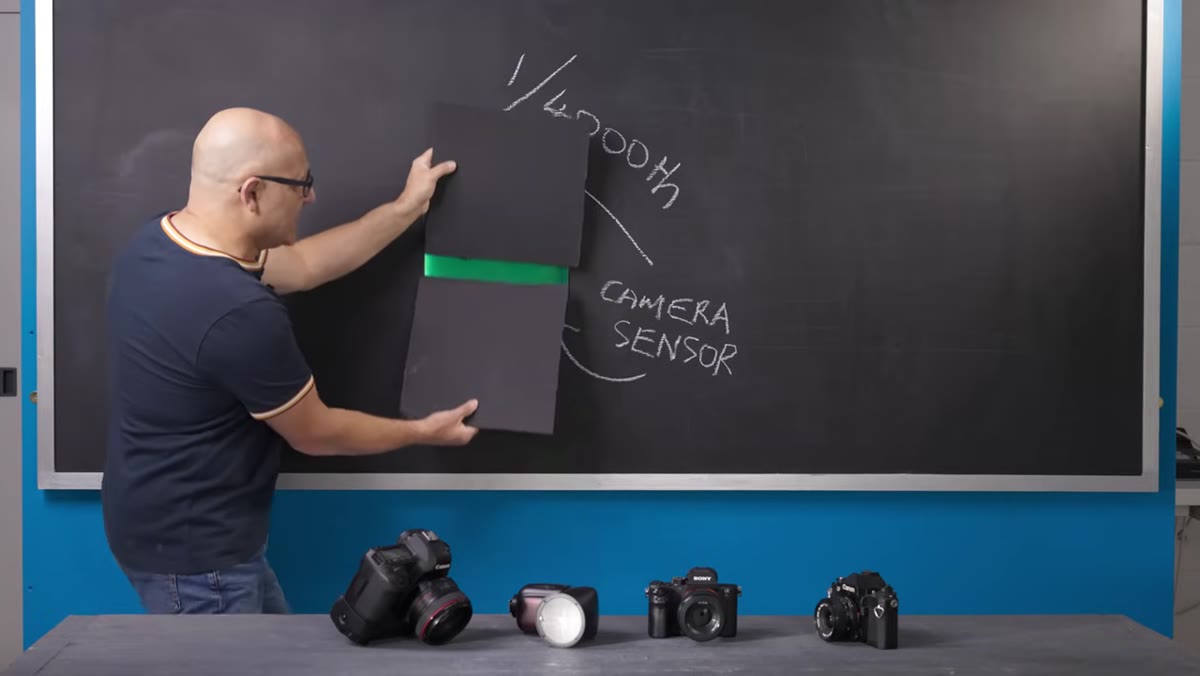
At speeds above the sync limit, the shutter stops functioning like a door and starts functioning like a slit that scans across the sensor from top to bottom. This is excellent for freezing motion with ambient light alone. The slit moves fast enough that even a sprinting subject looks sharp. But the slit is the problem for flash, because no single position of that slit covers the entire sensor. You cannot fire a single burst of light and expect it to illuminate every pixel evenly.
Animation showing shutter curtain traveling across sensor as narrow slit
At speeds above the sync limit, the shutter stops functioning like a door and starts functioning like a slit that scans across the sensor from top to bottom. This is excellent for freezing motion with ambient light alone. The slit moves fast enough that even a sprinting subject looks sharp. But the slit is the problem for flash, because no single position of that slit covers the entire sensor. You cannot fire a single burst of light and expect it to illuminate every pixel evenly.
Understanding this scanning behavior is what makes the rest of the solutions make sense. Everything from high-speed sync to global shutters is an answer to the same mechanical question: how do you expose the entire sensor when the shutter never fully opens?
Step 4: Understand Central Shutters and Why They Solve This Cleanly
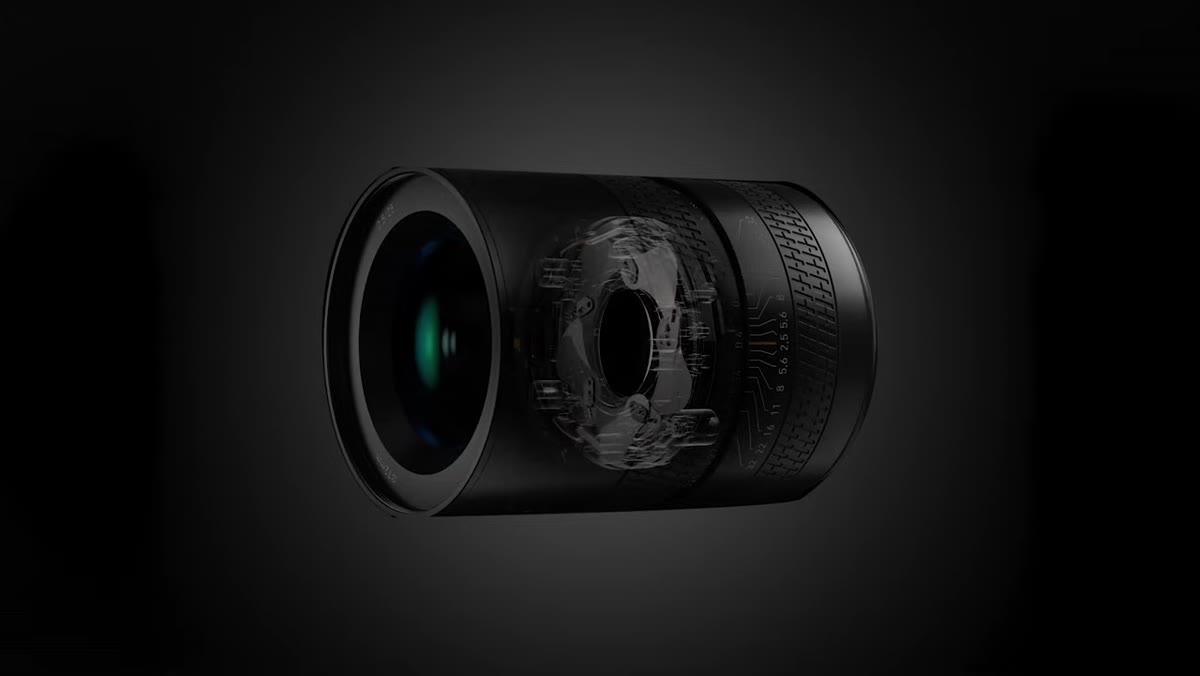 Diagram of central shutter blades opening outward from lens center
Central shutters, which sit inside the lens rather than in the camera body, open and close like an aperture iris. Because they expand outward from the center rather than scanning across, they can expose the entire sensor simultaneously, even at speeds up to 1/4000 second. Full sensor coverage at that speed means a clean flash sync at any shutter setting.
Diagram of central shutter blades opening outward from lens center
Central shutters, which sit inside the lens rather than in the camera body, open and close like an aperture iris. Because they expand outward from the center rather than scanning across, they can expose the entire sensor simultaneously, even at speeds up to 1/4000 second. Full sensor coverage at that speed means a clean flash sync at any shutter setting.
The catch is cost and format. Central shutters appear almost exclusively in medium format lenses, which puts them out of reach for most 35mm shooters. If you are working with a Phase One or Hasselblad system for high-end beauty or fashion, this is your cleanest solution. For the rest of us shooting with Sony, Nikon, or Canon bodies, keep reading.
Step 5: Use High-Speed Sync and Know Its Real Cost
 Flash unit set to HSS mode, shutter speed above 1/500 on camera
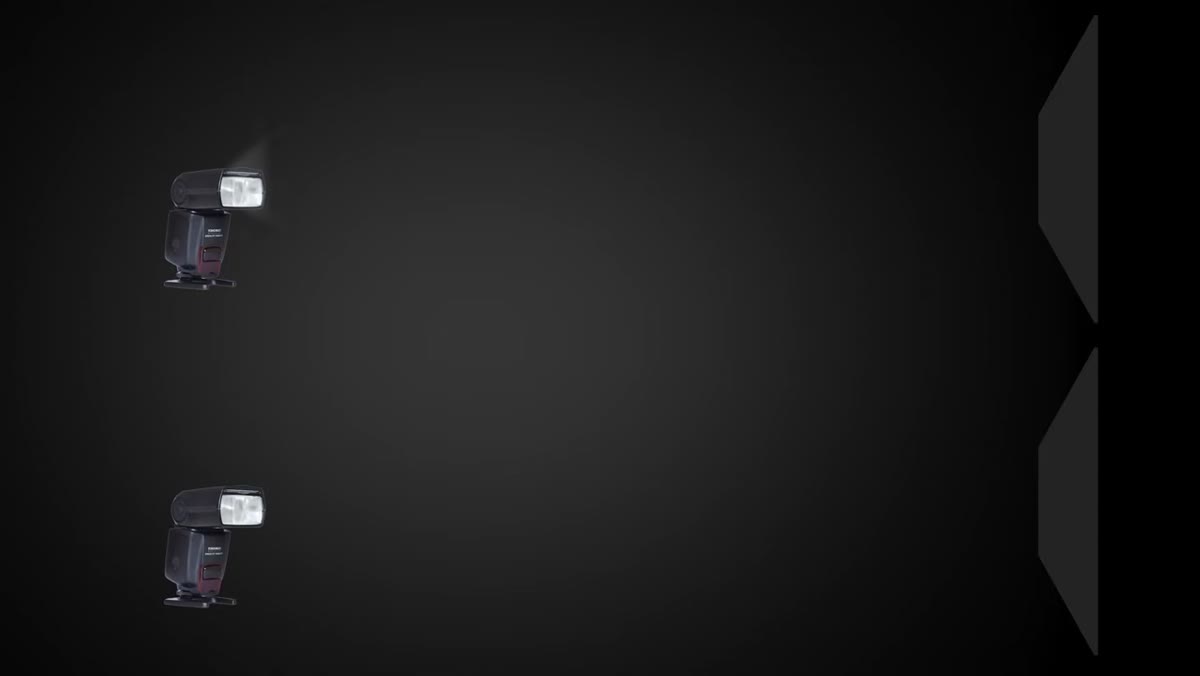
High-speed sync solves the slit problem by extending the flash output across the entire duration of the shutter’s travel. Instead of one short burst, the flash either fires one long sustained pulse or a rapid sequence of pulses that effectively illuminates the sensor continuously as the slit scans across it.
Flash unit set to HSS mode, shutter speed above 1/500 on camera
High-speed sync solves the slit problem by extending the flash output across the entire duration of the shutter’s travel. Instead of one short burst, the flash either fires one long sustained pulse or a rapid sequence of pulses that effectively illuminates the sensor continuously as the slit scans across it.
The cost is significant. The tutorial puts it plainly: roughly 70 percent of the sensor is covered by the shutter curtain at any given moment during that scan, meaning only about 30 percent of the flash output actually reaches the sensor. You lose multiple stops of effective flash power. To compensate, you either open the aperture, which reduces depth of field, or you move your light dramatically closer to the subject, which changes the quality of the light. Neither option is free. On outdoor shoots I use HSS regularly, but I always position my key light closer than I would at normal sync speeds, and I accept the shallower depth of field as part of the look rather than fighting it.
Step 6: Meet the Global Shutter and What It Changes
 Sony camera body labeled as featuring global shutter sensor
Sony has introduced what the tutorial calls a global shutter, and it is a genuine shift. Rather than using a mechanical curtain at all, the sensor itself reads every pixel simultaneously. There is no scanning. There is no slit. The entire sensor captures light at the same instant, which means the sync speed ceiling effectively disappears. You can fire flash at any shutter speed the camera supports.
Sony camera body labeled as featuring global shutter sensor
Sony has introduced what the tutorial calls a global shutter, and it is a genuine shift. Rather than using a mechanical curtain at all, the sensor itself reads every pixel simultaneously. There is no scanning. There is no slit. The entire sensor captures light at the same instant, which means the sync speed ceiling effectively disappears. You can fire flash at any shutter speed the camera supports.
This is not incremental progress. It changes the outdoor flash workflow in a fundamental way, eliminating the power loss from HSS and restoring creative control over aperture independently of shutter speed.
From My Own Experience: The Power Loss Is the Real Conversation
I have used HSS on editorial shoots for years, and the thing the tutorial gets right is that the power loss is not just a technical footnote. It changes the physics of your setup. I label every light in my studio with masking tape showing its position and power setting from the last job, and HSS setups get their own notation because the math is so different. On one outdoor beauty shoot last spring, I needed a second head just to compensate for HSS loss on my key. That is a real cost in time, weight, and battery draw.
If you are shooting with a camera that offers a global shutter sensor, test it with flash immediately. The freedom it returns to your aperture decisions is not subtle.
The single most important takeaway here is mechanical: the sync speed limit exists because the shutter scans rather than opens. Every workaround, whether HSS, central shutters, or global shutters, is an answer to that one physical constraint. Once you internalize the reason, the solutions stop feeling like arbitrary settings and start feeling like logical tools.
Watch the full tutorial on YouTube for the animated diagrams, which make the shutter mechanics click in a way that text descriptions can only approximate.
Comments
Leave a Comment