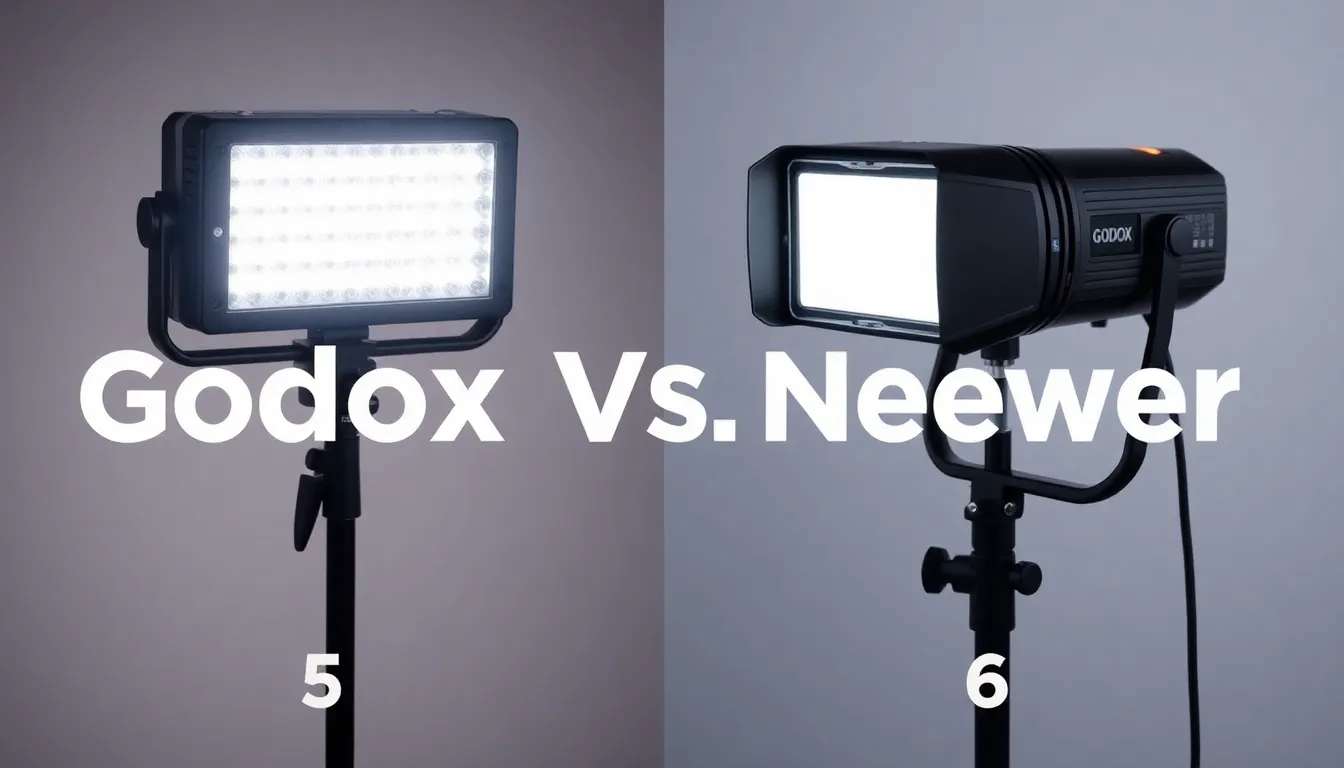
Godox TT600 vs Neewer 660 LED — Choosing Your First Studio Light
I’ve spent the last eight years recommending lighting gear to photographers stepping into studio work, and I can tell you with certainty: the first light you buy shouldn’t be your dream light. It should be your learning light.
That’s where budget options like the Godox TT600 Speedlite Flash and the Neewer 660 LED Video Light 2-Pack Kit come in. Both sit under $100, but they represent fundamentally different approaches to lighting. I’ve tested both extensively, and the choice between them depends entirely on what you’re actually trying to shoot.
The Core Difference: Flash vs. Continuous Light
Let me explain this like a recipe, because that’s how I think about lighting decisions.
Flash is the espresso shot—concentrated, powerful, and requires precise timing. The Godox TT600 fires 1/6000th of a second pulses of light. You can’t see your shadow placement in real-time. Your subject can’t see the effect. But when it fires, it’s bright—genuinely bright. That power matters.
Continuous LED is the slow-brewed coffee—always on, predictable, visible. The Neewer 660 LED 2-pack gives you constant illumination at 660 LEDs (hence the name). You see exactly what you’re getting before the shutter opens. No surprises. But that constant operation demands AC power or frequent battery swaps.
Real-World Performance: Where These Lights Actually Work
I tested the Godox TT600 on portrait sessions—the thing it was designed for. Mounted on a camera or triggered wirelessly, it’s genuinely capable. The output (equivalent to guide number 36) is enough to overpower ambient light in most indoor spaces. I was shooting at f/2.8 with fill flash in afternoon window light, and the system handled it without flinching. Battery life is exceptional because it’s not always firing; you can shoot 200+ frames on fresh batteries.
The Neewer 660 LED came to life in completely different scenarios. I used it for video work, YouTube lighting setups, and product photography. Here’s what impressed me: I could position the light, fire up my camera, and show my subject exactly what the final image would look like. No guessing. No test shots. That’s invaluable when you’re learning posing and composition.
The brightness, though—I’ll be honest—maxes out around what a TT600 does at quarter-power. The 660 LED is softer, which is actually good for learning because you can’t hide behind power; you have to learn technique. But if you’re shooting darker skin tones or working in dim venues, you’ll feel the ceiling quickly.
Power and Reach
The Godox wins decisively on raw output. In a medium studio (15x20 feet), I could bounce the TT600 off a ceiling and still have workable fill light 12 feet away. Try that with the Neewer and you’re in candlelight territory.
The Neewer’s power isn’t useless—it’s just specialized. Pair it with a five-in-one reflector (the Neewer 5-in-1 Collapsible Reflector is $15 and essential), and you’ve got bounce options that can extend your reach. But this requires intentional positioning, not just raw wattage.
The Learning Curve
Here’s where my opinion gets firm: Flash gear has a steeper learning curve.
With the TT600, you need to understand:
- Trigger systems (on-camera or wireless)
- Flash metering modes
- Sync speed limitations
- The flash-to-subject distance math
The Neewer LED makes you focus on:
- Light placement
- Modifier choice (you can see what softbox size does live)
- Posing under actual light
- Composition
For your first light, if you’re learning posing and studio discipline, the Neewer is more forgiving. You’re not debugging flash sync issues; you’re learning to see light.
Power Demands and Practicality
The TT600 needs AA batteries. Two sets of quality batteries cost $20 and last through a full session. It’s plug-and-shoot simple.
The Neewer 660 LED runs on either AC power or proprietary batteries. The batteries are fine but not amazing—you’re looking at 45 minutes per charge, which means you need two sets for a multi-hour session. This adds $40-60 to your system cost. But it’s also why Neewer includes the 2-pack—they understand this limitation.
Modifier Compatibility
The TT600 uses standard flash mount modifiers. Softboxes and diffusers are plentiful and cheap. You can build an entire Godox flash kit for under $300.
The Neewer LED comes with a stand, reflector, and barn doors. Adding softbox compatibility requires special mounts. This is a hidden cost if you want to expand.
My Actual Recommendation
If you’re shooting portraits or events, get the Godox TT600. The power, battery efficiency, and modifier ecosystem make this a no-brainer for traditional studio work. Yes, you’ll need to learn flash sync and wireless triggers, but that knowledge stays with you forever.
If you’re doing video, YouTube content, product photography, or learning posing and light placement, get the Neewer 660 LED 2-Pack. Add the Neewer 5-in-1 Reflector to your order (it costs nothing and solves half your light-shaping problems). The continuous light forces you to actually see and understand what you’re doing.
Don’t choose based on specs. Choose based on what you’ll actually shoot next month. That clarity is worth more than any lumen count.
Comments
Leave a Comment