
Every bad habit I’ve developed in this business started with me reaching for a shortcut before I understood the fundamentals. Flash was no different. Early in my commercial work, I was running TTL on location shoots and wondering why my results felt inconsistent, why I’d nail an exposure in one room and completely lose it in the next. The truth was that I didn’t actually control my light. My camera did, and it had no idea what I was going for.
Watch the full tutorial on YouTube
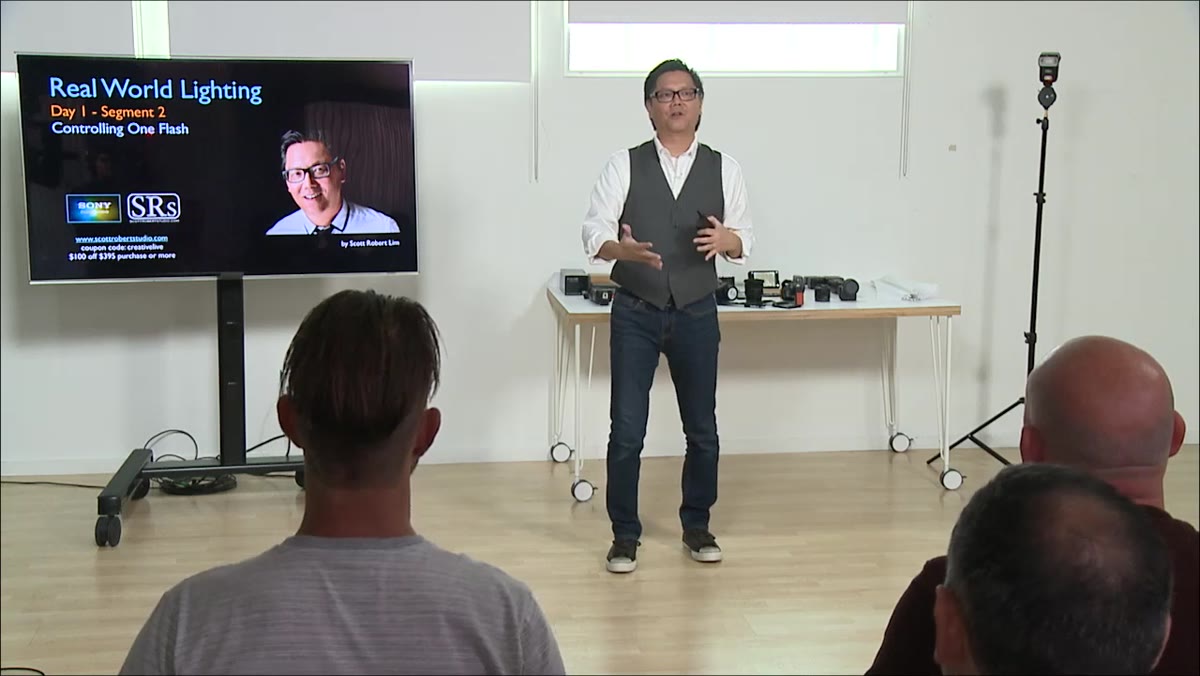
In this CreativeLive tutorial, photographer Scott Robert Lim makes a case that I wish someone had made to me ten years ago: before you ever think about a two-light setup, you need to completely own a single flash. The logic is the same logic I use when teaching assistants on set. If you can’t pose one person cleanly, putting a couple in front of the camera just doubles the problem. The same rule applies to light sources. Lim works through the reasoning for manual flash in plain language, and even if you’ve heard parts of this argument before, the way he builds it is worth your time.
Step 1: Accept That One Flash Is Enough to Learn From
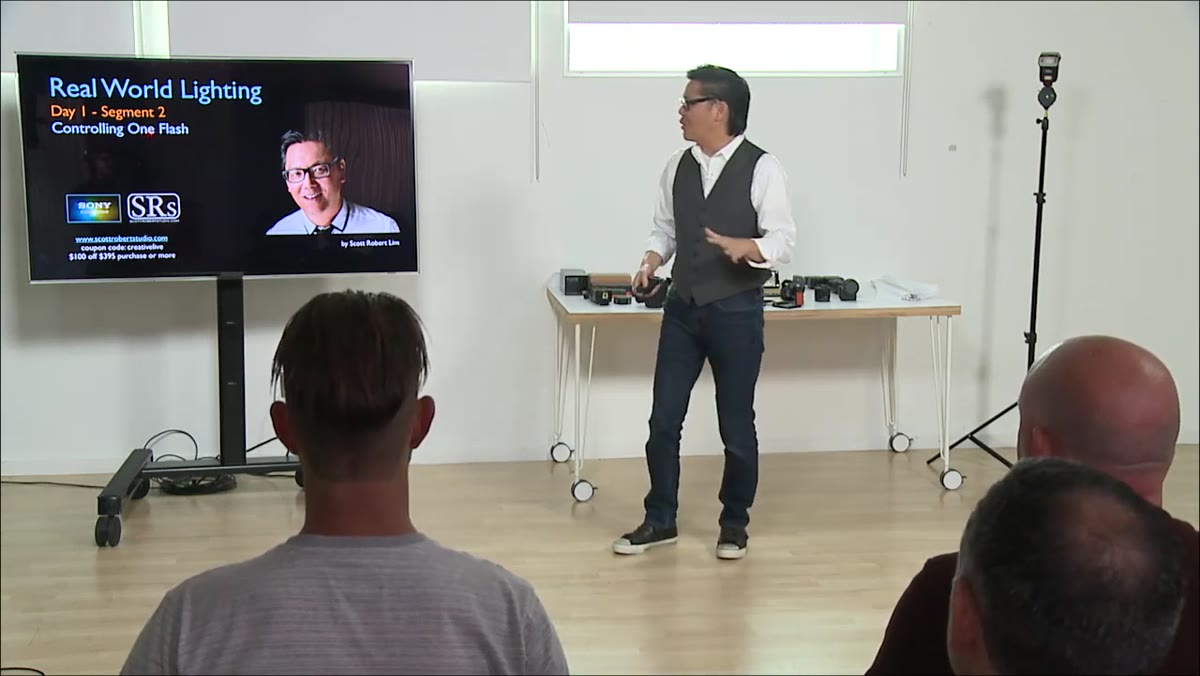 Instructor at shooting station explaining one-flash control
Before touching any setting, Lim establishes the premise: master one flash completely before adding complexity. This isn’t a beginner concept dressed up as wisdom. It’s a working principle. When I set up in the studio, I label every light with masking tape, name, power setting, modifier, distance. That discipline started because I once lost track of which head I’d adjusted mid-shoot and spent twenty minutes chasing a problem I’d created myself. One light means one variable. Learn to read it completely.
Instructor at shooting station explaining one-flash control
Before touching any setting, Lim establishes the premise: master one flash completely before adding complexity. This isn’t a beginner concept dressed up as wisdom. It’s a working principle. When I set up in the studio, I label every light with masking tape, name, power setting, modifier, distance. That discipline started because I once lost track of which head I’d adjusted mid-shoot and spent twenty minutes chasing a problem I’d created myself. One light means one variable. Learn to read it completely.
The practical exercise here is to commit to a single-flash session. One flash, one subject, one background. Change one thing at a time and observe what happens. This is how you build a mental model of light behavior that holds up under pressure on a real job.
Step 2: Understand Why TTL Lets You Down
 Instructor explaining TTL versus manual flash modes
TTL (Through The Lens) metering works by firing a pre-flash, reading the reflected light, and calculating an exposure. In theory, that sounds useful. In practice, it makes assumptions based on what the sensor sees, not what you’re trying to create. Lim points out that the camera simply cannot know your vision. It’s solving a math problem, not making a picture.
Instructor explaining TTL versus manual flash modes
TTL (Through The Lens) metering works by firing a pre-flash, reading the reflected light, and calculating an exposure. In theory, that sounds useful. In practice, it makes assumptions based on what the sensor sees, not what you’re trying to create. Lim points out that the camera simply cannot know your vision. It’s solving a math problem, not making a picture.
I shoot beauty and fashion work for clients who come in with very specific reference images. When a creative director hands me a mood board, I need to hit that look on the first test frame, not negotiate toward it over several TTL-adjusted shots. Manual flash removes the camera’s opinion from the equation entirely. You set the power, you read the result, you adjust. The feedback loop is direct and honest.
Step 3: Recognize That the Professional World Runs on Manual
 Instructor discussing studio flash systems and TTL absence
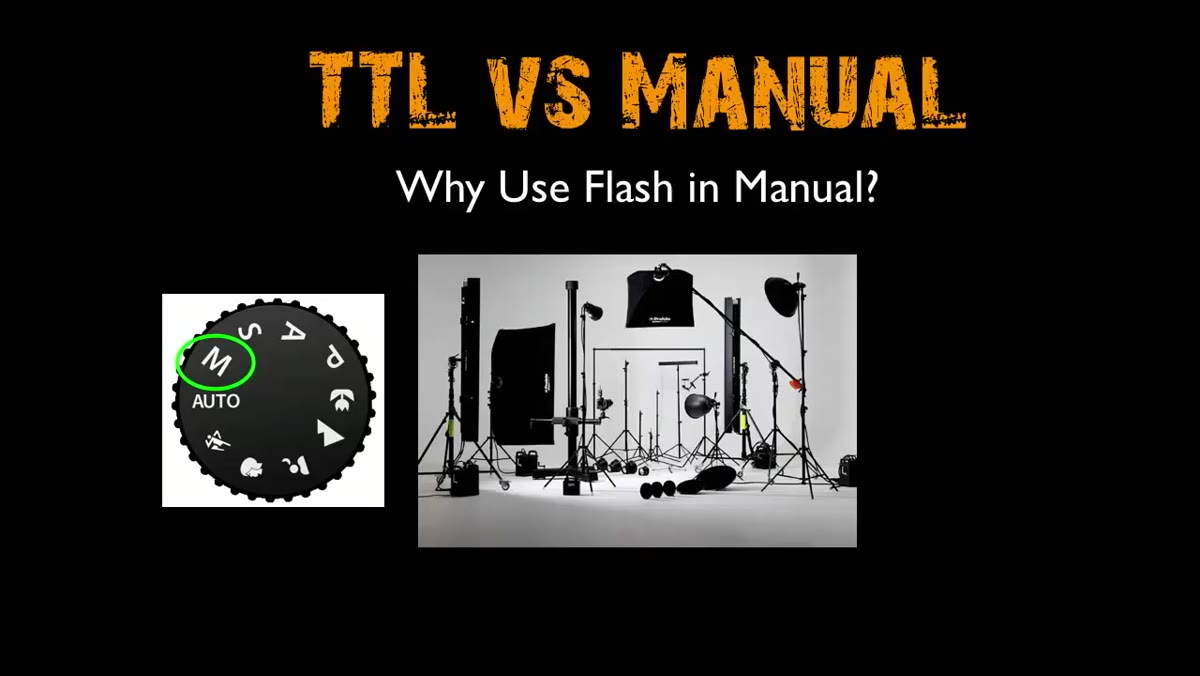
Lim makes a point that landed differently for me the first time I heard it framed this way: go into any professional studio supply store and try to buy a TTL studio strobe. You won’t find one. The entire infrastructure of serious portrait and commercial photography, pack systems, monolights, large format strobes, is built around manual control. That’s not an accident or a legacy holdover. It’s because working photographers need consistency across dozens of frames, not something that’s approximately right most of the time.
Instructor discussing studio flash systems and TTL absence
Lim makes a point that landed differently for me the first time I heard it framed this way: go into any professional studio supply store and try to buy a TTL studio strobe. You won’t find one. The entire infrastructure of serious portrait and commercial photography, pack systems, monolights, large format strobes, is built around manual control. That’s not an accident or a legacy holdover. It’s because working photographers need consistency across dozens of frames, not something that’s approximately right most of the time.
When I’m doing a product shoot that runs four hours with a client watching every frame on a tethered monitor, I cannot have my light shifting between shots because the metering system decided the reflectivity of the product changed. Manual gives me a locked, repeatable result. Frame 1 and frame 200 match.
Step 4: Do the Math on Manual Flash Systems and Gear Costs
 Instructor comparing costs of TTL versus manual flash systems
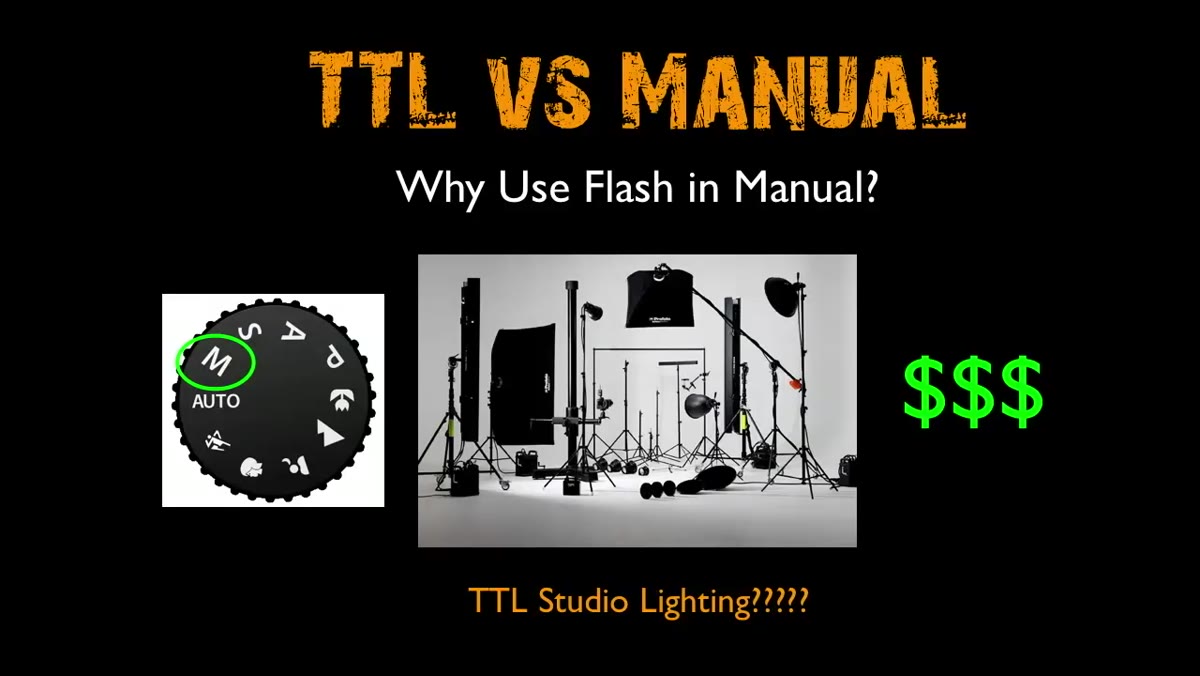
Here’s the gear argument Lim makes, and it’s a sound one. A camera-brand TTL wireless flash system can easily run you close to a thousand dollars for a single transmitter-flash combination. That same budget, directed toward a manual trigger and several manual speedlights, gets you multiple light sources, more creative flexibility, and no proprietary lock-in. For photographers who are building out their kit while also running a business, that math matters.
Instructor comparing costs of TTL versus manual flash systems
Here’s the gear argument Lim makes, and it’s a sound one. A camera-brand TTL wireless flash system can easily run you close to a thousand dollars for a single transmitter-flash combination. That same budget, directed toward a manual trigger and several manual speedlights, gets you multiple light sources, more creative flexibility, and no proprietary lock-in. For photographers who are building out their kit while also running a business, that math matters.
I built my first studio kit almost entirely on manual flash for exactly this reason. The money I didn’t spend on TTL compatibility went into modifiers, which is where the real creative control lives anyway. A better softbox will change your images more than a smarter flash metering system will.
Step 5: Use the Inverse Square Law as a Practical Tool
 Instructor preparing to demonstrate inverse square law live
Lim signals early that he’s going to demonstrate the inverse square law in a visible, testable way rather than just describe it. The law itself is simple: double the distance between your light and your subject, and the light doesn’t halve. It falls to one quarter of its original intensity. This is why moving a flash two feet further back is a much bigger change than it sounds.
Instructor preparing to demonstrate inverse square law live
Lim signals early that he’s going to demonstrate the inverse square law in a visible, testable way rather than just describe it. The law itself is simple: double the distance between your light and your subject, and the light doesn’t halve. It falls to one quarter of its original intensity. This is why moving a flash two feet further back is a much bigger change than it sounds.
The practical application is in how you position your light relative to your subject. Close the flash to the subject and you get fast fall-off, which means your background goes dark quickly. Move the flash back and the light becomes more even across the frame. Neither is right or wrong. But understanding the mechanism means you’re choosing intentionally, not guessing.
From My Studio: The Lighting Journal Habit That Changed Everything
I keep a small journal where I sketch every lighting setup from every shoot. Not just the light positions, but the power settings, the modifiers, the distance from subject to light and light to background. After a few years, that journal has become a reference I reach for constantly. When a new client comes in with a reference image, I can often flip to a sketch that gets me 80 percent of the way there before I fire a single test frame.
The reason this works is exactly what Lim is teaching here. When you run manual flash long enough, you build a real understanding of cause and effect. You stop reacting to what the camera gives you and start predicting what the light will do. That shift, from reactive to predictive, is what separates working professionals from photographers who get lucky sometimes.
The single most important idea in this tutorial is the one Lim states plainest: you cannot control two lights if you don’t fully control one. Before your next shoot, strip your setup down. One flash, manual mode, and a deliberate decision about every variable. That discipline compounds over time into something that looks a lot like instinct on set, but is actually just deep familiarity with how light behaves.
Watch the full tutorial on YouTube
Comments (1)
My workflow just got 10x faster. Not even kidding.
Leave a Comment