
Social media has never been the part of this job I enjoy. I am much more comfortable taping modifier names onto barn doors and sketching light plots in my journal than I am writing captions or thinking about posting schedules. But the business reality of running a studio in Los Angeles is that the photographers who get consistent work are the ones who show up consistently online. That tension has been sitting on my desk for years.
So when I came across a conversation on The Portrait System’s podcast channel featuring Meg Loeks, a photographer who has built a following of over 730,000 across her platforms by teaching photography, I paid attention. Watch the full tutorial on YouTube. What she lays out is not a complicated system. It is actually closer to how I think about lighting: find your repeatable process, execute it precisely, and trust the accumulation of small correct decisions over time.
The clip is short, but the density of practical thinking in it is high. I want to break down exactly what she does, because the principles apply whether you are teaching photography or just trying to attract commercial clients who need to trust your aesthetic before they ever book a call.
Step 1: Commit to a Posting Frequency You Can Actually Hold
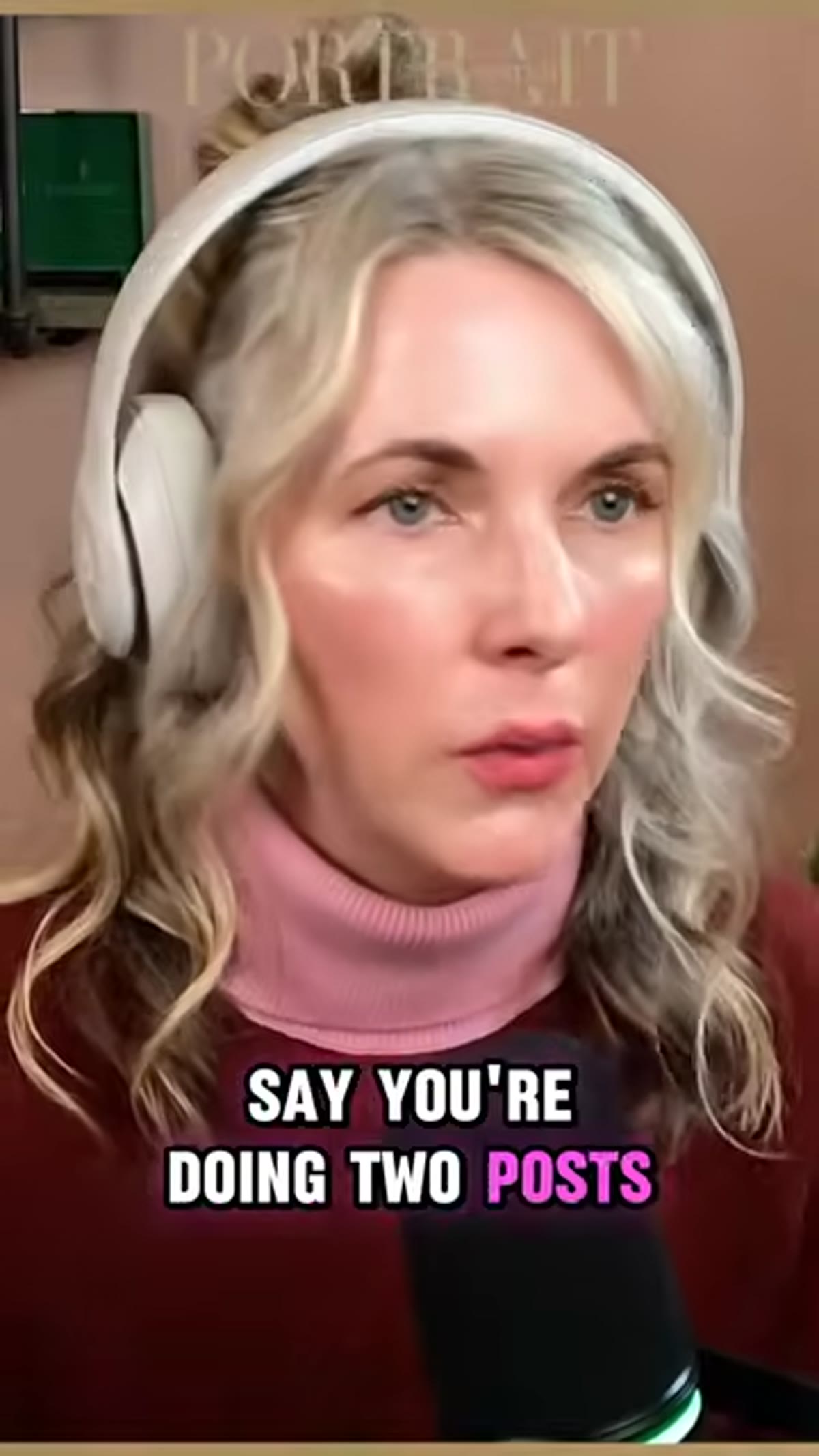 Meg explaining consistency and twice-weekly posting schedule
The first thing Loeks identifies as a growth driver is consistency, and she is specific about what that word means in practice. She is not talking about posting every day or chasing an algorithm. She means choosing a realistic cadence, something like twice a week, and then holding it without deviation.
Meg explaining consistency and twice-weekly posting schedule
The first thing Loeks identifies as a growth driver is consistency, and she is specific about what that word means in practice. She is not talking about posting every day or chasing an algorithm. She means choosing a realistic cadence, something like twice a week, and then holding it without deviation.
The photographer’s instinct is to wait until the work is perfect before sharing it. I have fallen into this trap constantly. But from a follower’s perspective, reliability builds trust faster than quality alone. When your audience knows that Tuesday and Friday mornings mean new content from you, they start looking for it. That anticipation is worth more than any single viral image.
Step 2: Record Everything You Are Already Doing
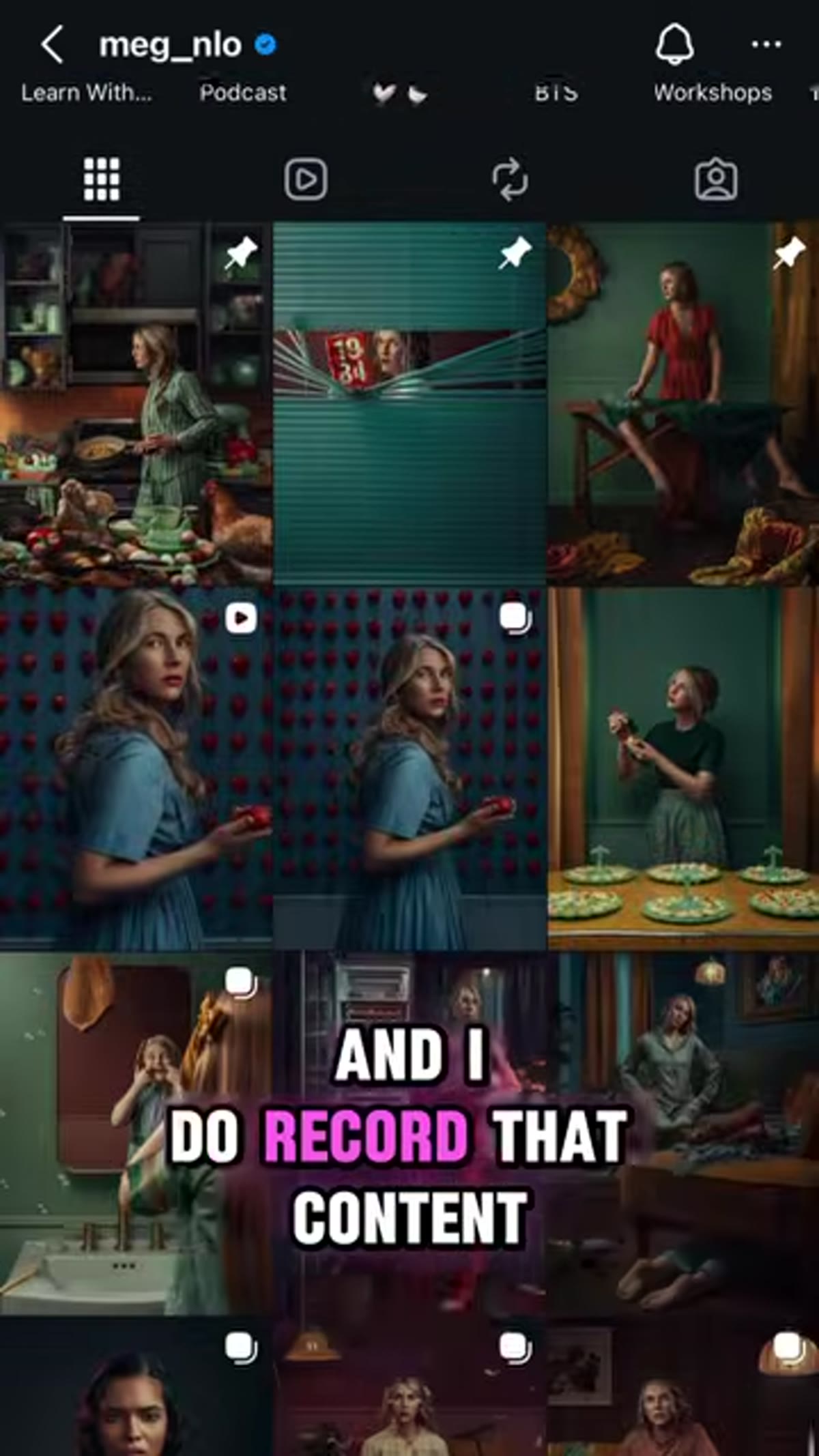 Meg discussing recording content during shoots and workshops
Loeks does not create separate content for social media and separate content for her workshops. She records what she is already doing and routes that footage in two directions simultaneously. The same behind-the-scenes material from a shoot becomes an Instagram reel and a workshop resource.
Meg discussing recording content during shoots and workshops
Loeks does not create separate content for social media and separate content for her workshops. She records what she is already doing and routes that footage in two directions simultaneously. The same behind-the-scenes material from a shoot becomes an Instagram reel and a workshop resource.
This is the principle I wish someone had handed me ten years ago. Every time I set up a new lighting configuration, I photograph the setup, sketch it in my journal, and note the modifier distances and power ratios. That habit already exists. The only missing step is pointing a camera at it and trimming the clip for a post. If you are already doing the work, the content is already there. You are just not capturing it.
Step 3: Post to Your Feed and Stories at the Same Time
 Meg describing simultaneous feed and Stories posting strategy
This is the detail most people skip, and it is the one that stuck with me most. When Loeks publishes a post to her feed, whether it is a still image or a reel, she also pushes to Stories at the exact same moment. Not later that day. At the same time.
Meg describing simultaneous feed and Stories posting strategy
This is the detail most people skip, and it is the one that stuck with me most. When Loeks publishes a post to her feed, whether it is a still image or a reel, she also pushes to Stories at the exact same moment. Not later that day. At the same time.
The logic is about signal reach. Instagram’s algorithm does not guarantee that your followers see your feed posts. Stories function as a direct notification to people who have already opted into watching you. Posting to both simultaneously means you are reaching two different segments of your audience at once, those who browse the feed and those who scroll Stories, without any extra content creation required. One piece of work, two distribution channels, activated at the same moment.
Step 4: Make Engagement Feel Personal, Not Performative
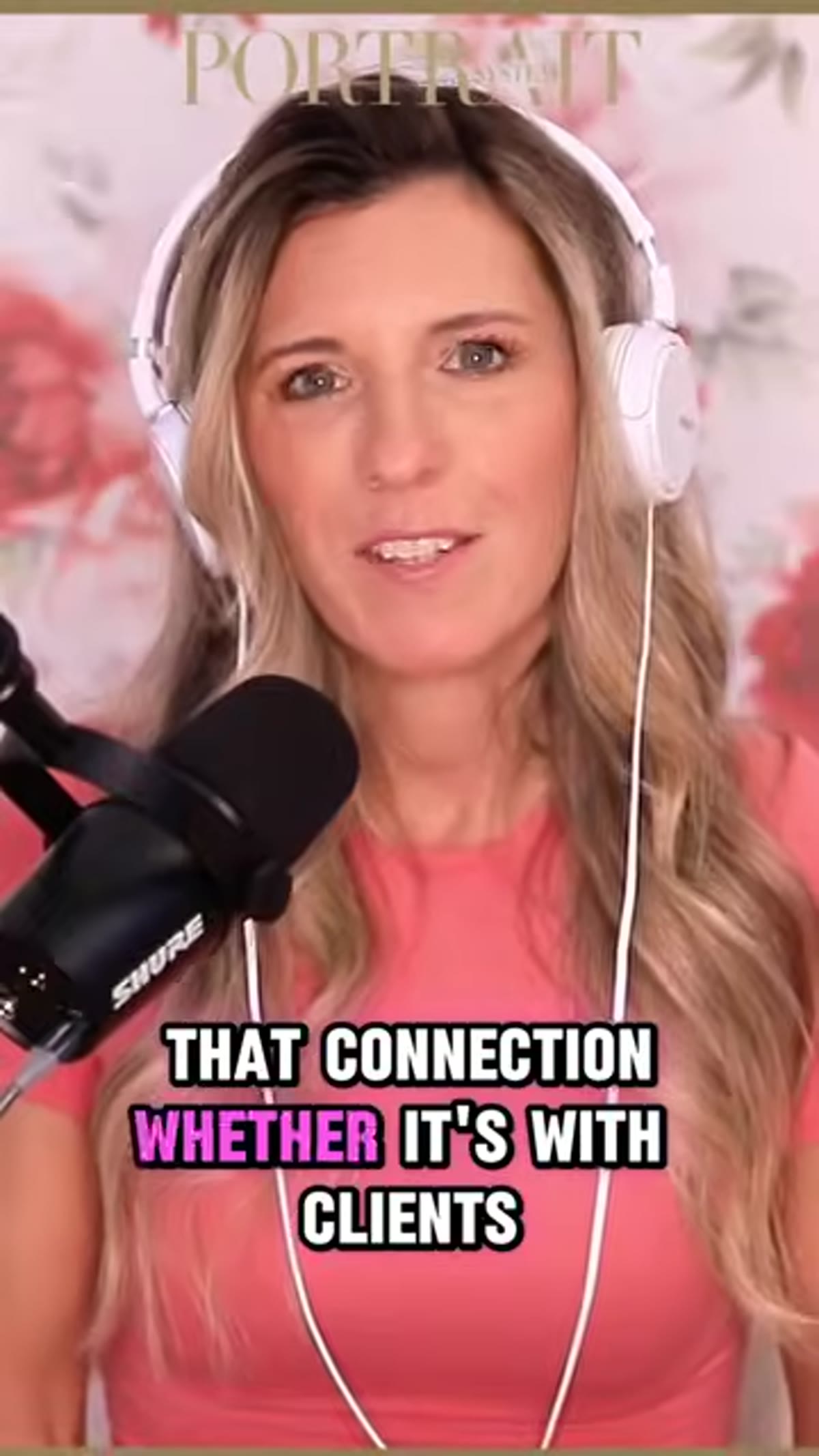 Meg speaking about making followers feel heard and seen
The final point Loeks makes is the one that sounds softest but is probably doing the most structural work in her growth. She talks about making people feel heard, seen, and important. Whether those people are clients, students, or casual followers, the quality of the interaction matters more than the volume of posts.
Meg speaking about making followers feel heard and seen
The final point Loeks makes is the one that sounds softest but is probably doing the most structural work in her growth. She talks about making people feel heard, seen, and important. Whether those people are clients, students, or casual followers, the quality of the interaction matters more than the volume of posts.
In studio photography terms, this is the difference between a client who books once and a client who sends referrals. People return to educators and photographers whose work makes them feel like the attention is genuine. Responding to comments with actual answers, asking follow-up questions in your Stories, acknowledging someone who shares your post. None of this takes long, but the compounding effect on audience loyalty is substantial. Loeks is clear that this should not be calculated or mechanical. It has to be real, or people sense the difference immediately.
What I Would Add From the Studio Side
The framework Loeks describes maps almost perfectly onto how I think about building lighting skills, but there is one extension I would push for photographers who want to use their technical work as content.
Show the decision-making, not just the result. A finished portrait with perfect Rembrandt shadow placement is beautiful, but it does not teach your audience anything. What teaches is showing the light at 45 degrees, then at 60 degrees, and explaining what changed in the catchlights and the jaw shadow when you made that adjustment. I have started doing this in short video clips, specifically because I noticed that the posts where I explain why I positioned a light where I did consistently get more saves than posts where I just show the final image.
For studio and product photographers especially, our lighting decisions are the most valuable educational content we can share. The modifier choices, the color temperature calibration, the distance from subject to background light. These are not trade secrets. They are the curriculum that builds a following of people who trust your technical judgment, and that trust is exactly what converts into workshop enrollments or client bookings.
The single most transferable idea from Loeks is this: treat your social media presence like a shoot schedule. Pick your shoot days, show up, and produce the work regardless of how inspired you feel that morning. The photographers I know who have built real audiences online are not more talented than the ones who have not. They are more consistent.
Watch the full tutorial on YouTube to hear Loeks walk through her approach in her own words. It is a short clip, but the clarity of her thinking is worth the ten minutes you spend on it.
Comments (5)
This should be required reading for anyone starting out.
I tried this on a client project yesterday and the results were way better than expected.
This is going in my reference folder. Incredibly useful.
Just subscribed. If the rest of your content is this good, I'm in.
Great breakdown. The step-by-step approach really helps.
Leave a Comment