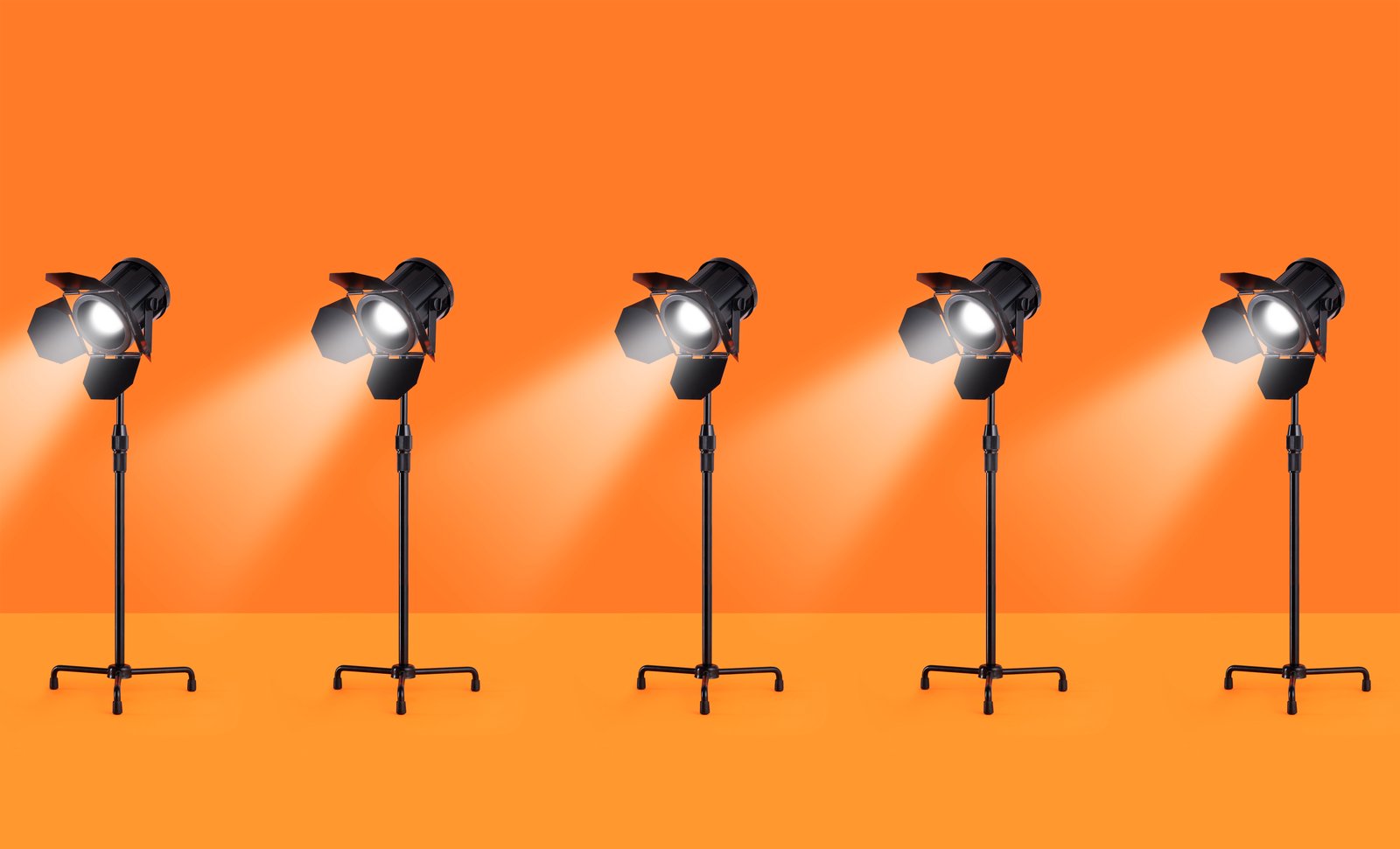
Every strip of masking tape in my studio has a name on it. Each light, each stand, each modifier gets labeled before a single strobe fires. My assistants think it’s obsessive. I think it’s the reason I can rebuild a beauty setup from six months ago in under twelve minutes while my client is still getting coffee.
I did not always work this way. Early in my career, I winged it. I’d walk into the studio, throw up a key light, add a fill, maybe bounce something off the ceiling, and call it intuition. The problem with intuition is it has no memory. Every shoot started from zero, and every session burned the first hour rediscovering what I’d figured out the week before.
Why Your Brain Is a Terrible Archive
The human memory is not optimized for f-stops and power ratios. You might remember the mood of a shoot, the client’s face when the hero image came up on the tethered monitor, the color of the backdrop. You will not remember that your key was a 47-inch octabox at f/8, positioned 45 degrees camera left at a height of six feet, with your fill card at 60 percent reflectance sitting 18 inches from the subject’s right cheek.
That level of specificity is exactly what you need to replicate a result. And replication is the actual job in commercial photography. Clients come back because they know what they’re going to get. Beauty brands, in particular, need consistency across a campaign that might shoot in January, March, and July with different subjects at each session.
If your workflow doesn’t have a documentation layer built into it, you’re guessing every time. And guessing costs you time and money, which eventually costs you clients.
The Setup Ritual Before Anything Gets Plugged In
My workflow begins before I touch a light. I open the lighting diagram app I built for myself on my phone, create a new file named with the client, date, and shoot type, and sketch the rough room layout. The app lets me drop in light icons, assign them modifier labels, and note power settings in a text field. It takes four minutes. That file goes into a shared folder the same day.
Then comes the tape. Every stand in my studio has a piece of masking tape on the column with its label, so when I build the diagram, the light labeled “Key A” corresponds to the stand physically marked “Key A.” This sounds trivial until you’re striking a set at 9pm and your assistant is trying to figure out which head came from where. The tape costs nothing. The friction it eliminates is worth an hour of confusion.
I start with my key light every single time, regardless of what the shoot calls for. I set it, meter it, and lock it in before I place anything else. For a typical beauty setup, I’m starting at f/8 at ISO 100, 1/160s, with a 47-inch octabox from a Profoto B10 or B1X head. Those are my baseline units, and I know their output behavior intimately because I’ve tested them for hours. Get one modifier, run it through every power setting, note how the light falls. That’s not something you do on a client’s clock.
Building the Ratio Before Touching the Subject
Once the key is locked, I set my fill at half the power of the key and work from there. For most editorial beauty work, I’m running a 2:1 or 3:1 ratio depending on how much shadow definition the creative brief calls for. I don’t guess at ratios. I meter both sides with a Sekonic L-858D and write down both readings in the diagram notes before the model steps in front of the camera.
This matters because light does not behave the same way twice if you don’t control the variables. Distance moves, flags get repositioned, the assistant nudges a stand while moving a reflector. If you haven’t metered and documented before you start shooting, you have no baseline to return to when something looks off at frame 30.
Hair and background lights go in last, always. I treat them as supporting elements, not structural ones. A background light at one stop under your key keeps the backdrop clean without competing. A hair light at roughly 1.5 stops over your key, coming from high and behind with a small grid to control spill, adds separation without going theatrical unless that’s what you’re after.
What the Journal Catches That Memory Misses
I keep a physical lighting journal. Sketches, notes, sometimes a small inkjet print taped to the page. I started it because a friend mentioned offhand that keeping one helped him study his own tendencies, and he was right. Looking back at a year’s worth of setups, I can see patterns I wasn’t consciously aware of, how I reach for a 30-degree grid when I’m nervous about spill on a dark background, how my key position creeps higher when I’m shooting men versus women.
The journal also catches what the digital file doesn’t, the feeling of a shoot, why I made a choice that deviated from the plan. Once I was shooting a fragrance campaign and swapped my planned 7-inch reflector dish for a much larger parabolic on instinct. The notes I wrote that evening explained exactly why: the product’s packaging had a matte finish, and I needed a broader, softer specular to show the texture without harsh hotspots. That reasoning is sitting on page 47, and I’ve pulled it out twice since for similar jobs.
The Actual Time You Save Is in the Rebuild
The ROI on this whole system is not the first shoot. It’s the third, the fifth, the time a client calls and says they want to recreate something from two years ago. Because you have the diagram, the ratio, the modifier choice, and the notes about why, you’re rebuilding a tested setup rather than reverse-engineering a memory.
Every minute you spend documenting during a shoot is worth roughly five minutes the next time that setup is needed. That math improves the more you shoot, and it compounds across a career.
The single most important thing you can do for your studio workflow is treat documentation as part of the shoot itself, not an afterthought. If it doesn’t happen before you strike the set, it doesn’t happen at all.
Comments (8)
Clear and practical. No fluff. Appreciate that.
Clear and practical. No fluff. Appreciate that.
Would love to see a follow-up going deeper into this topic.
Just subscribed. If the rest of your content is this good, I'm in.
Would love to see a follow-up going deeper into this topic.
This saved me so much time on my last edit. Wish I'd found this sooner.
My workflow just got 10x faster. Not even kidding.
Great article! I actually covered something related on my site — the compositing angle is really complementary to this.
Leave a Comment