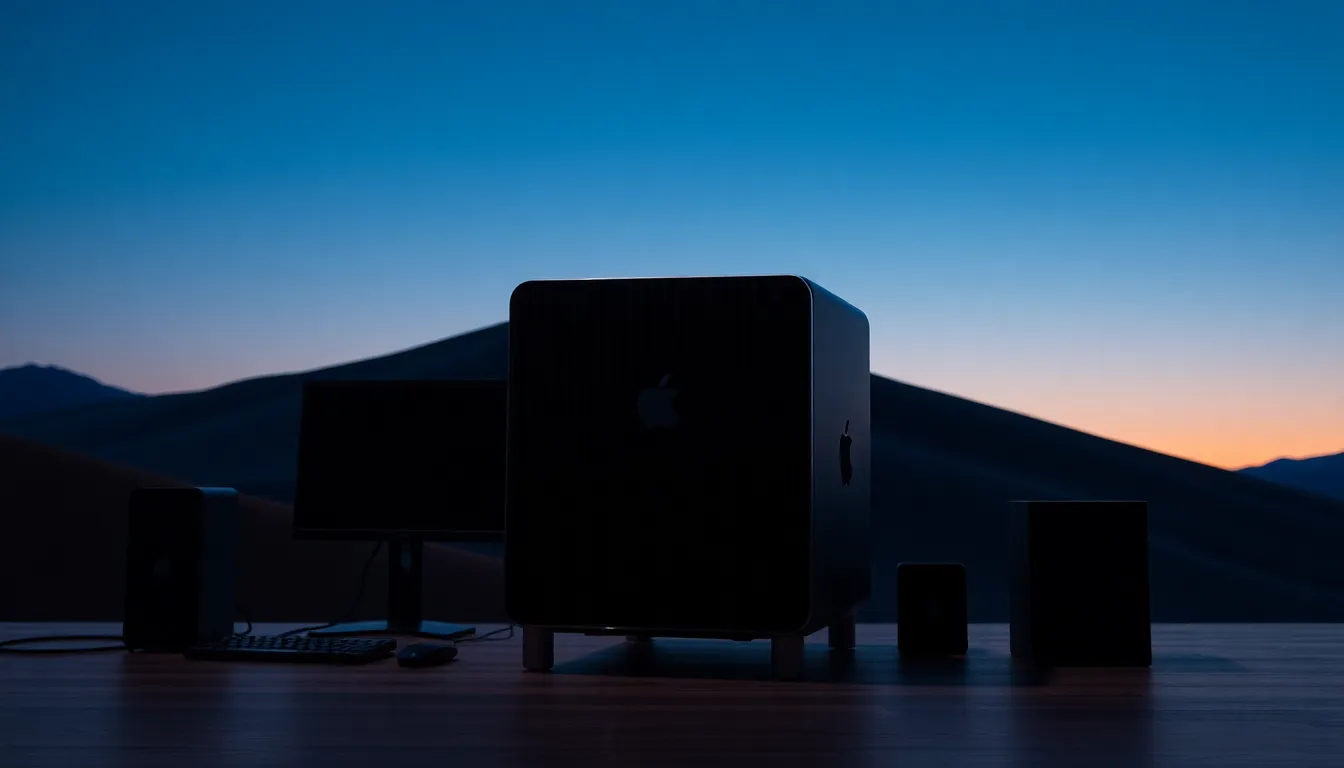
Apple has officially discontinued the Mac Pro, the tower-shaped desktop computer that served as the company’s flagship professional machine. After the 2023 update, the Cupertino giant has quietly removed the model from its product lineup, leaving the Mac Studio as its current high-end offering for creative professionals.
What This Means for Your Post-Production Pipeline
I’ve spent years calibrating color-critical workflows in studio environments, and this move signals something important: Apple is betting that most creative professionals no longer need the extreme modularity the Mac Pro represented. The 2019 redesign—remember that distinctive cheese-grater chassis?—promised easily swappable components and expandability. In theory, it was the perfect machine for a photographer’s editing suite.
But here’s what I’ve observed in practice: modern workflows have become more streamlined. Your lighting setup, metering, and on-set decisions matter far more than raw processing horsepower. A well-exposed image shot with precise posing requires less brute-force computation than we thought.
The Mac Studio Takes Center Stage
The Mac Studio occupies that professional sweet spot now. It’s powerful enough for serious studio work—batch processing hundreds of portraits, managing RAW files from your latest lighting experiments, running color-grading software without lag. What you lose in expandability, you gain in efficiency and quiet operation (crucial for a studio environment where audio matters).
For studio photographers specifically, this shift reflects reality: we’re not the ones pushing computational boundaries anymore. Video creators and 3D artists were the Mac Pro’s true constituency. Our needs are more straightforward.
A Practical Take
I won’t pretend discontinuing the Mac Pro doesn’t sting if you were considering one. The cheese-grater design was beautiful, undeniably. But I’ve learned that gear philosophy matters more than specific equipment. What counts is having a reliable machine that lets you focus on what actually creates great images: understanding your lighting, posing your subjects with intention, and capturing the moment.
If you’re running a studio operation, the Mac Studio handles everything most of us need. It processes files quickly, runs color management software flawlessly, and takes up minimal desk space—something I actually value more than I used to.
The discontinuation won’t change how we approach studio photography. Your lighting ratios, your posing techniques, your eye for composition—those remain constant regardless of what machine sits under your desk.
Comments
Leave a Comment