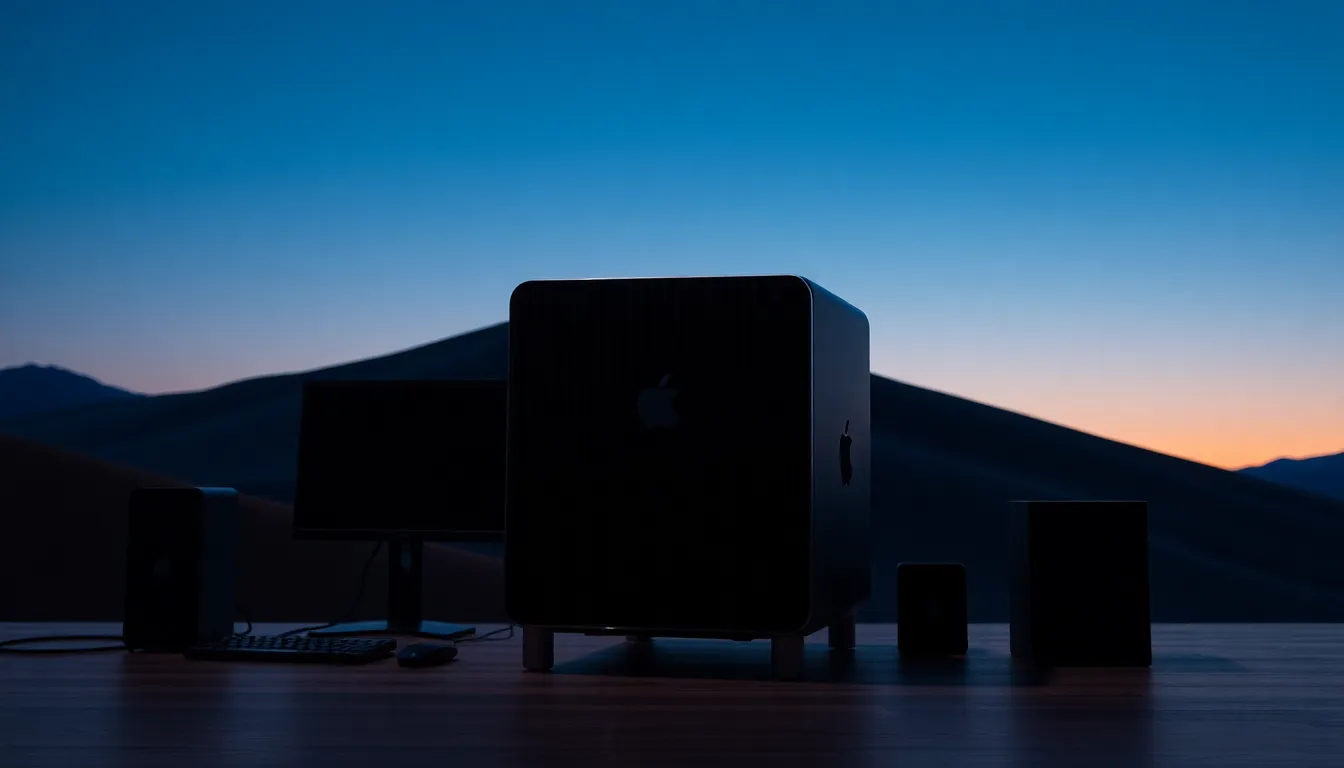
The End of an Era
Apple has quietly discontinued the Mac Pro, and I have to be honest—it’s a significant shift worth paying attention to if you’re running a serious photography studio. The company has removed the tower from its lineup entirely, leaving the Mac Studio as the new flagship desktop option. After decades of offering a modular, expandable powerhouse, Apple is essentially saying: this is as big as we’re going.
What This Means for Studio Photographers
I won’t sugarcoat this: the Mac Pro’s discontinuation signals a fundamental change in how Apple sees professional computing. Those internal PCI-e slots? They’re gone. That expandability that made the Pro so attractive to studios with complex setups—additional storage controllers, capture cards, specialized accelerators—no longer exists as an Apple offering.
For lighting technicians and studio managers, this matters more than you might think. Many of us built our color-critical workflows around the flexibility that a Pro tower provided. We could add dedicated GPU acceleration for real-time rendering. We could expand storage on our own terms. We had choices.
The Mac Studio Reality Check
The Mac Studio is genuinely capable. I won’t argue that point. It’s fast, it handles image processing smoothly, and the build quality is typically excellent. But it’s a closed system. What you buy is what you get. If you need more processing power in two years, your only option is to buy a new machine entirely.
I approach equipment decisions like recipes—each ingredient matters, and substitutions carry consequences. The Mac Studio removes the ability to adjust that recipe down the line.
Planning Your Studio Strategy
If you’re still running a Mac Pro and considering what comes next, don’t panic. These machines remain capable workhorses. The question isn’t whether Mac Studio can handle your work—it absolutely can. The question is whether accepting a closed architecture aligns with how you’ve built your studio operations.
For new studios or those planning refresh cycles, this forces clarity: commit to the Mac ecosystem as-is, or start seriously evaluating alternatives. Apple has made its choice about what “professional” computing means in their vision.
It’s not necessarily wrong. It’s just different. And different requires planning.
Comments (3)
Finally someone explains this in a way that actually makes sense.
This is going in my reference folder. Incredibly useful.
Couldn't agree more. I've seen this make a huge difference in photoshop work specifically.
Leave a Comment