Rim Lighting Done Right: How to Separate Your Subject from Any Background

Rim Lighting Done Right: How to Separate Your Subject from Any Background

The Shot That Made Me Take Rim Lighting Seriously I was three hours into a corporate headshot marathon, twenty-six executives, one seamless background, and a key light I was genuinely proud of. Clean, directional, flattering. The problem was that by subject fifteen, everyone was starting to look the same. The darker-complexioned executives were nearly disappearing into the gray background. I had separation on paper because the background was lighter, but visually, on screen, it wasn’t reading.


Why Your Group Shots Look Flat (And the Lighting Formula I Use to Fix Them)

Why Your Group Shots Look Flat (And the Lighting Formula I Use to Fix Them)

The Moment Group Lighting Gets Expensive A few years ago I was hired to shoot a corporate team portrait. Fourteen people, a client who wanted “clean and modern,” and a studio space I’d used a hundred times. I had my usual two-light setup dialed in from the previous week’s headshot marathon, and I made the mistake of thinking that would transfer cleanly to a group of fourteen. It didn’t. The people on the edges were half a stop darker than the center, the falloff was obvious, and I spent two hours in post trying to save images that should have been fine in camera.

Rim Lighting: The One Light That Separates Your Subject From Everything Else

Rim Lighting: The One Light That Separates Your Subject From Everything Else

When Your Subject Disappears Into the Background I had a corporate client a few years back, a tech company that wanted environmental portraits of their executive team against a dark charcoal backdrop. Clean, modern, serious. I had a beautiful key light dialed in, a 47-inch octabox at 45 degrees, proper exposure, great catchlights. The images looked competent. They did not look good. The executives were merging into the background. Not dramatically, not in a way that made the client throw the photos back at me, but enough that the images felt flat.

How to Stop Your Strobe from Spinning on a Boom Arm (Joel Grimes' Two-Minute Fix)

How to Stop Your Strobe from Spinning on a Boom Arm (Joel Grimes' Two-Minute Fix)

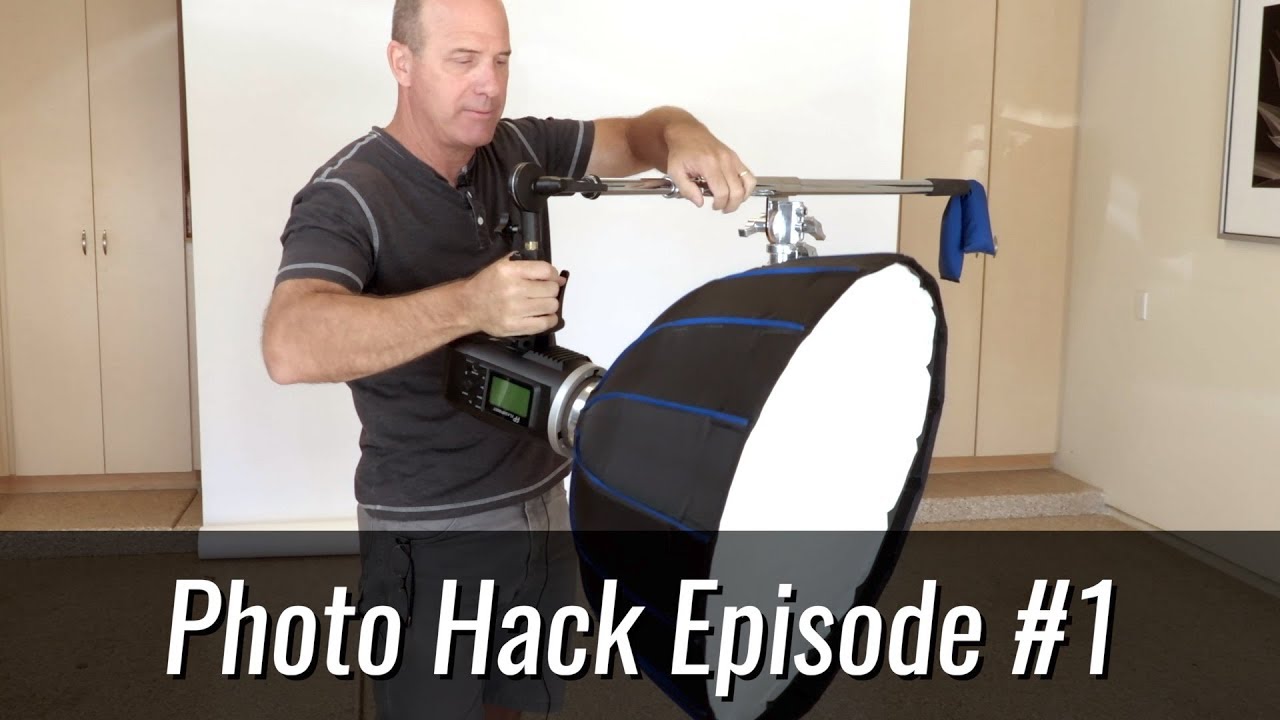
There is a specific kind of frustration that only studio photographers know: you have your boom arm positioned perfectly over your subject, the modifier is angled exactly where you want it, and then you watch the whole thing slowly rotate south while you’re mid-shoot. The strobe drifts. The softbox tilts. You crank the knob tighter and it still creeps. I have been shooting commercial work in Los Angeles for long enough that I label every piece of gear in my studio with masking tape, and I still spent embarrassingly long dealing with this problem before I found a fix that actually held.