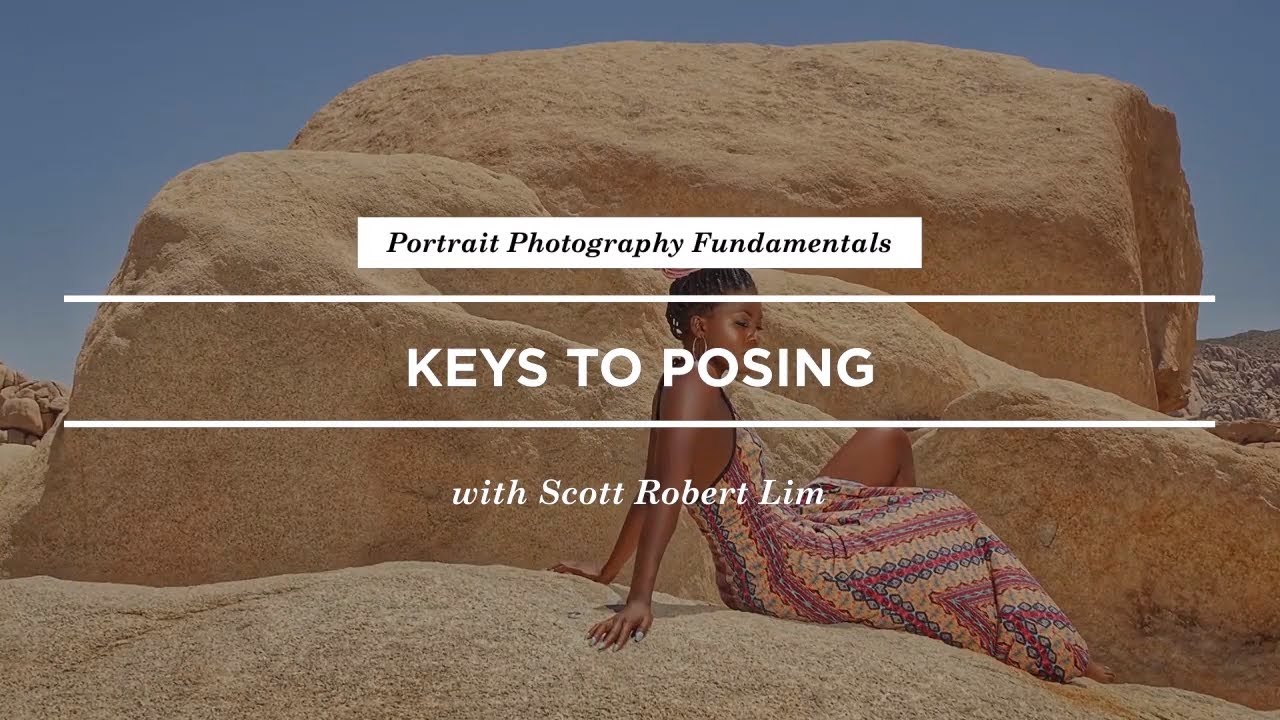
Most of my work happens in a controlled environment. I label every light, I sketch every setup, I run color calibration before the first frame fires. Control is how I operate. So when a client’s expressions fall flat despite a technically perfect setup, it’s genuinely disorienting. The lights are where they should be. The composition is solid. And yet the images feel hollow. For years I chalked that up to the subject, told myself some people just aren’t photogenic. I was wrong, and it took watching someone else’s workflow to see it.
Watch the full tutorial on YouTube
In this CreativeLive tutorial, Scott Robert Lim breaks down the posing philosophy that helped him command over $10,000 per wedding booking. What struck me immediately is that he doesn’t lead with technique. He leads with psychology, and then wraps the technical work around it. Coming from a math background himself, he spent years treating posing like a formula before he figured out that the formula only works when the person inside the pose is actually present. That reframe is the entire tutorial, and it’s worth your full attention.
Step 1: Anchor Every Pose in a Real Emotion
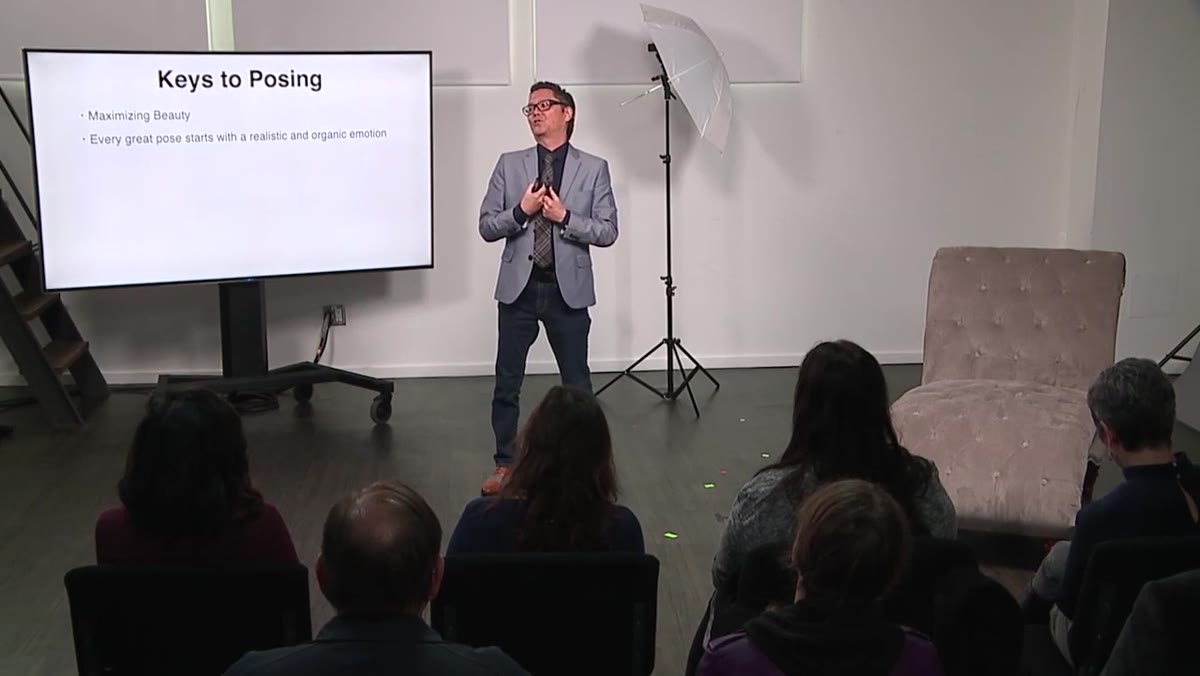 Lim explaining that emotion is the kernel of every portrait story
Before you touch a light or give a single physical direction, you need to know what feeling you’re going for. Lim’s argument is that emotion isn’t decoration sitting on top of a pose. It’s the foundation the pose is built on. A portrait without a genuine emotional starting point is just a person standing in a specific shape, and the camera sees the difference.
Lim explaining that emotion is the kernel of every portrait story
Before you touch a light or give a single physical direction, you need to know what feeling you’re going for. Lim’s argument is that emotion isn’t decoration sitting on top of a pose. It’s the foundation the pose is built on. A portrait without a genuine emotional starting point is just a person standing in a specific shape, and the camera sees the difference.
In practical terms, this means deciding on the feeling before the session starts. For a bridal shoot, that might be confidence, softness, or quiet joy. Write it down if you need to. Everything you direct, from where the weight falls to how the chin angles, should serve that single emotional target.
Step 2: Recognize That Posing Is Both Technical and Emotional
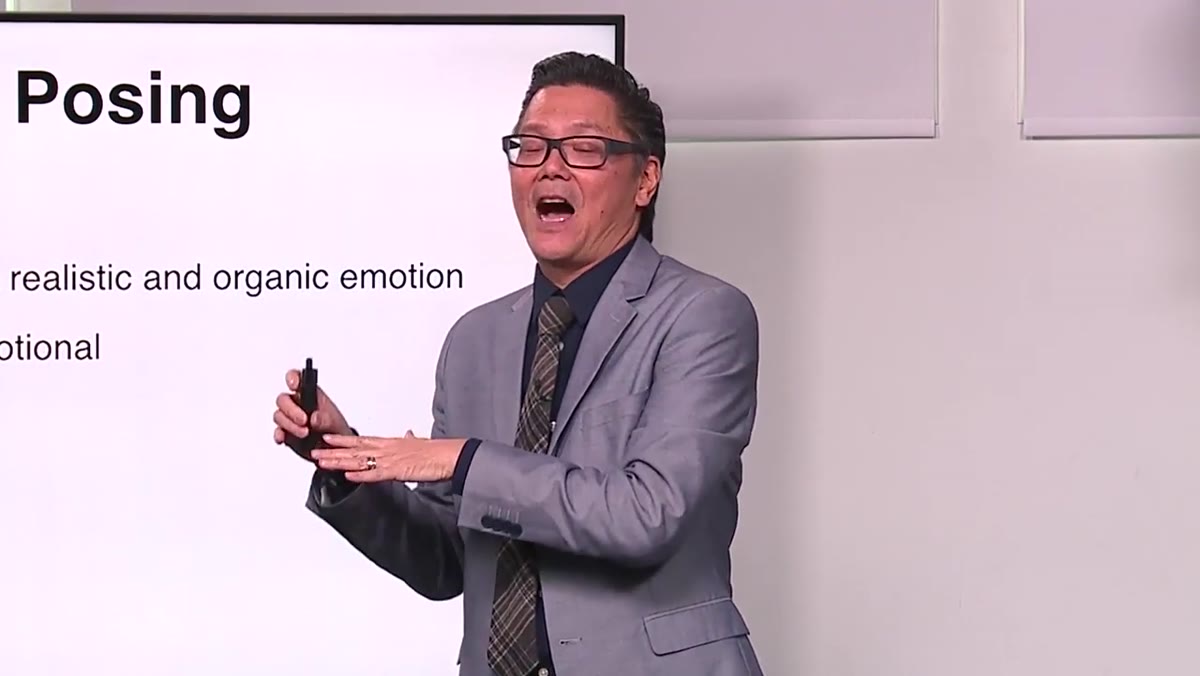 Lim describing his early robotic approach to posing as a math major
Lim is candid that he spent years posing people like he was configuring equipment. Hip here, weight there, chin up, look left. Technically correct, emotionally inert. The shift he describes is treating the technical elements as a support structure for the feeling, not as the point of the exercise.
Lim describing his early robotic approach to posing as a math major
Lim is candid that he spent years posing people like he was configuring equipment. Hip here, weight there, chin up, look left. Technically correct, emotionally inert. The shift he describes is treating the technical elements as a support structure for the feeling, not as the point of the exercise.
Think of it this way. The physical corrections you give, body angle, hand placement, shoulder rotation, are the equivalent of a lighting modifier. They shape and direct something that already needs to exist. If the emotion isn’t present, the posing adjustments won’t save the image, just like a perfectly positioned softbox can’t fix a subject who’s checked out of the room.
Step 3: Use a Story Prompt to Unlock the Pose
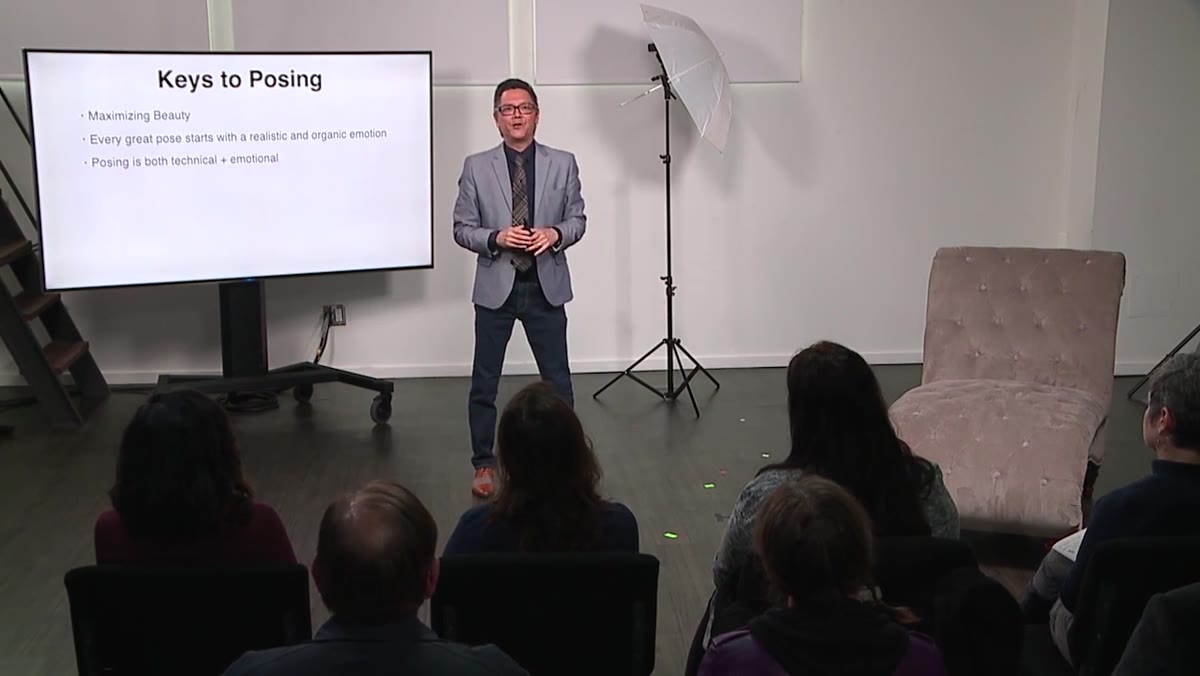 Lim using “pretend you’re a princess” as a posing prompt with a subject
One of Lim’s most transferable techniques is using a simple narrative prompt to get the body and the face working together. His example is “pretend you’re a princess,” which sounds a little odd on paper but works because it gives the subject an internal reference point. Their posture changes, their expression shifts, and suddenly the technical adjustments you make are working with the grain of how they’re holding themselves rather than against it.
Lim using “pretend you’re a princess” as a posing prompt with a subject
One of Lim’s most transferable techniques is using a simple narrative prompt to get the body and the face working together. His example is “pretend you’re a princess,” which sounds a little odd on paper but works because it gives the subject an internal reference point. Their posture changes, their expression shifts, and suddenly the technical adjustments you make are working with the grain of how they’re holding themselves rather than against it.
The specific prompt matters less than the principle. Find language that gives your subject a clear inner picture. I’ve had success with prompts like “you just walked into a room and everyone turned to look” or “you’re about to say something you’ve been waiting to say for a year.” Whatever gets them out of their head and into a physical state is the right prompt for that person.
Step 4: Make Them Buy Into Your Vision
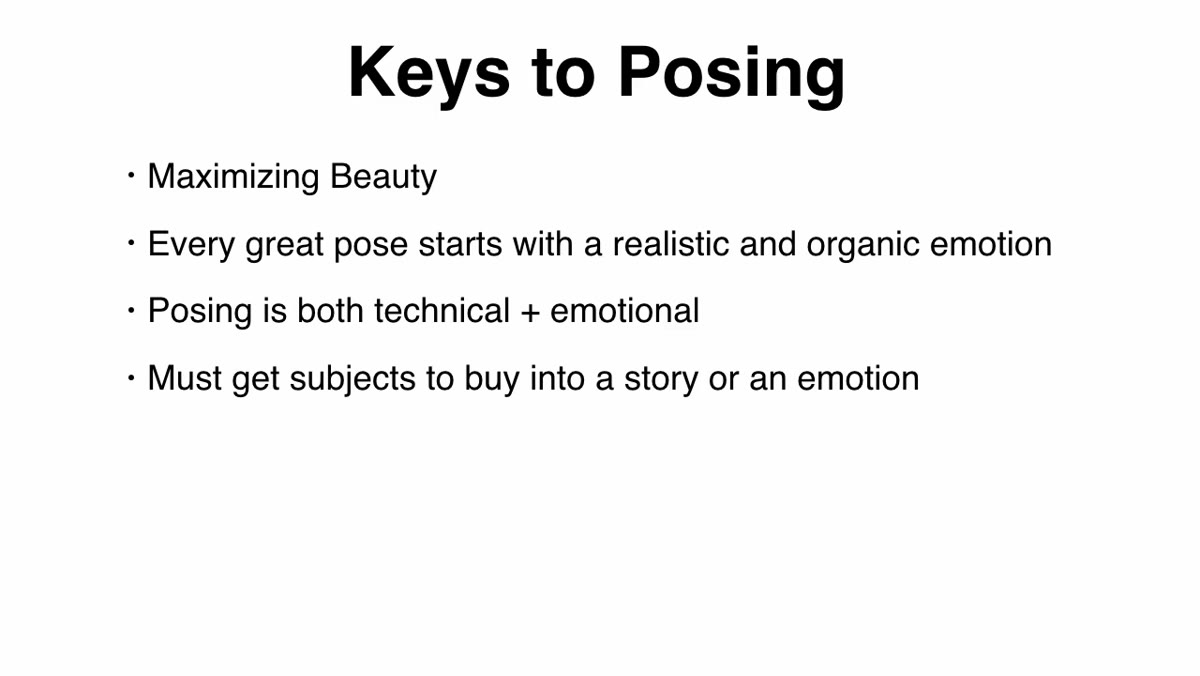 Lim explaining that subjects must commit to the photographer’s direction
Lim is direct about this one. If your subject doesn’t trust your direction, you’ll see it in their face. There’s a particular look, a slightly confused, slightly guarded expression, that shows up when someone is following instructions they don’t quite believe in. It kills the shot every time.
Lim explaining that subjects must commit to the photographer’s direction
Lim is direct about this one. If your subject doesn’t trust your direction, you’ll see it in their face. There’s a particular look, a slightly confused, slightly guarded expression, that shows up when someone is following instructions they don’t quite believe in. It kills the shot every time.
Getting that buy-in is partly about how you communicate your intent before you even start shooting. Explain the feeling you’re going for. Show a reference image if that helps. Make it clear you have a specific vision and that you’re going to get there together. When people understand where you’re taking them, they’re far more willing to commit to the journey.
Step 5: Project Confidence Even When You Don’t Feel It
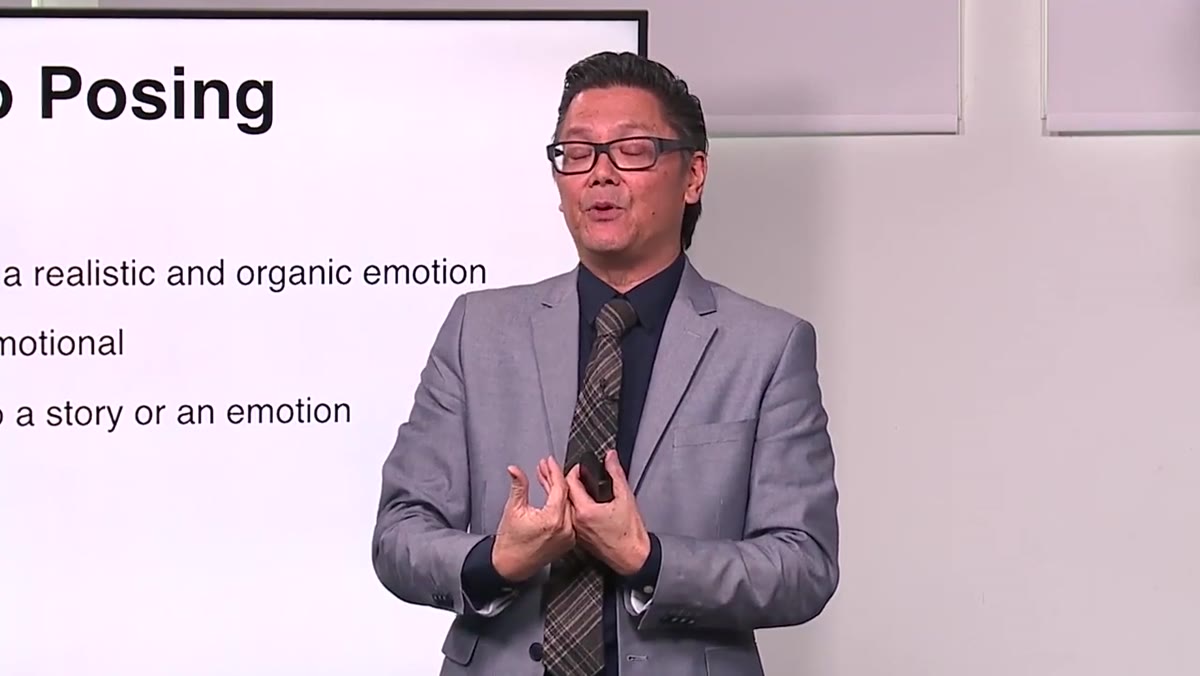 Lim advising photographers to “fake it until you make it” for subject confidence
Lim’s instruction here is blunt: fake it until you make it. If you’re uncertain, your subject picks that up immediately, and their uncertainty compounds yours. The energy in a portrait session is genuinely contagious in both directions.
Lim advising photographers to “fake it until you make it” for subject confidence
Lim’s instruction here is blunt: fake it until you make it. If you’re uncertain, your subject picks that up immediately, and their uncertainty compounds yours. The energy in a portrait session is genuinely contagious in both directions.
This isn’t about being performatively cheerful. It’s about committing to your direction even when you’re not sure it’s the right call. Give the adjustment with confidence, take the frame, evaluate it, and correct from there. Hesitant direction produces hesitant subjects, which produces images you’ll struggle to sell.
Step 6: Build Consistency Through a Repeatable Posing Framework
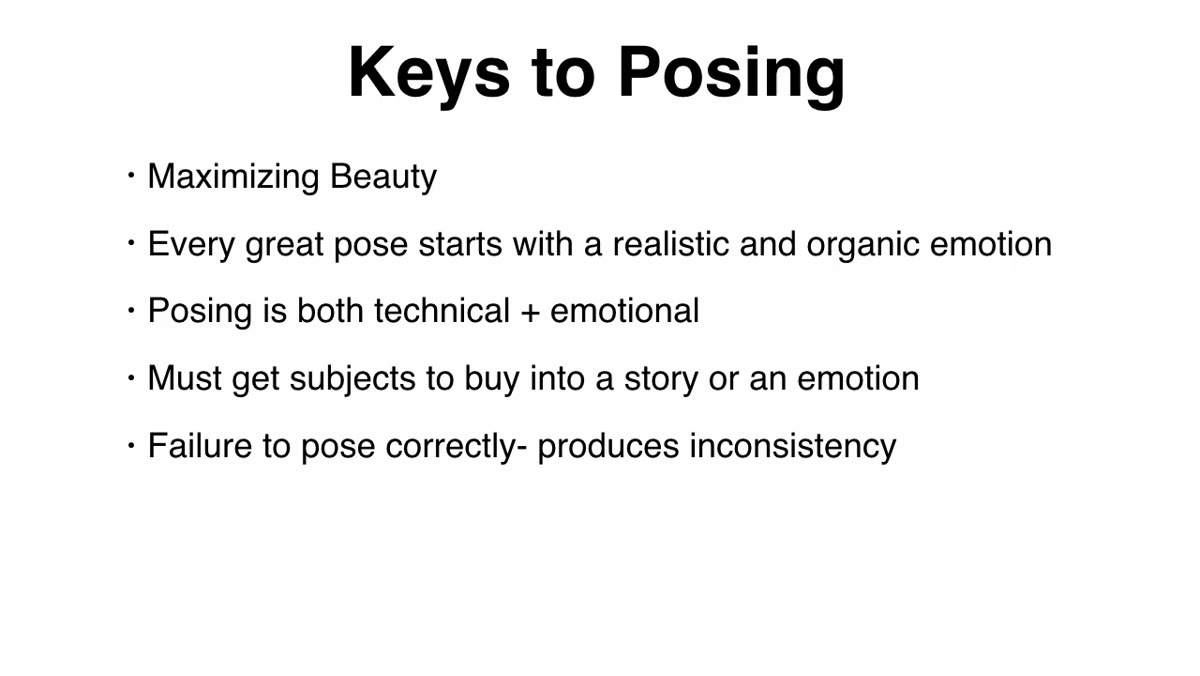 Lim connecting inconsistent posing results to inability to build a business
Lim makes a point that resonates with anyone who has tried to build a sustainable client business. Results that vary wildly depending on how comfortable the subject is don’t add up to a portfolio you can reliably market. The goal is to have a framework that works regardless of whether the subject is a natural in front of the camera or someone who’s never been photographed professionally.
Lim connecting inconsistent posing results to inability to build a business
Lim makes a point that resonates with anyone who has tried to build a sustainable client business. Results that vary wildly depending on how comfortable the subject is don’t add up to a portfolio you can reliably market. The goal is to have a framework that works regardless of whether the subject is a natural in front of the camera or someone who’s never been photographed professionally.
A repeatable framework means you have a sequence. You know where you start, you know what adjustments you make and in what order, and you know how to read when something isn’t working and pivot. You’re not reinventing the pose from scratch on every job. This is where the technical side of posing earns its keep. A solid set of foundational positions you can return to keeps you consistent even when everything else is variable.
Step 7: Create and Maintain a Positive Shooting Environment
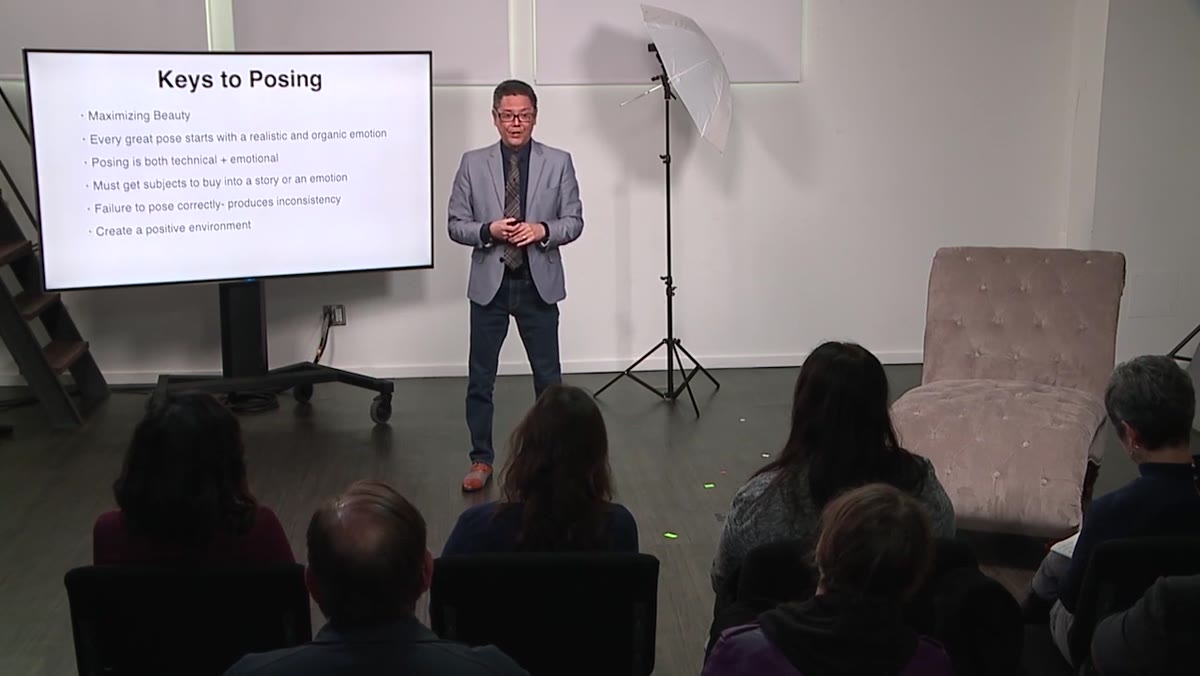 Lim describing his energetic personality as a career asset on set
The last structural point Lim makes is about the atmosphere you create on set. He credits his own energy as one of his most significant professional assets, more reliable than equipment or location. The environment you build around your subject directly affects what they give you.
Lim describing his energetic personality as a career asset on set
The last structural point Lim makes is about the atmosphere you create on set. He credits his own energy as one of his most significant professional assets, more reliable than equipment or location. The environment you build around your subject directly affects what they give you.
This is something you can be intentional about. Music, pacing, the way you talk between shots, whether you show them a frame occasionally to build their confidence, it all accumulates. A subject who feels good in the room will give you more than a technically superior setup with a tense atmosphere ever will.
A Note From My Own Studio Work
I’d add one thing Lim doesn’t mention explicitly. When I started keeping a lighting journal, I began noting not just the technical setup but the emotional tone of each session and what I’d done to establish it. Looking back at those notes, the sessions where I’d set a clear emotional intention at the start produced more usable frames per hour than any lighting innovation I’d tried. The technical work I do is still meticulous, but I now think of the emotional setup as its own kind of pre-production, as non-negotiable as setting my white balance.
The single most important thing I took from this tutorial is Lim’s inversion: emotion first, technique second. Every physical adjustment you make is only as good as the feeling it’s meant to express. Get that right, and the rest of the framework clicks into place.
Watch the full tutorial on YouTube
Comments
Leave a Comment