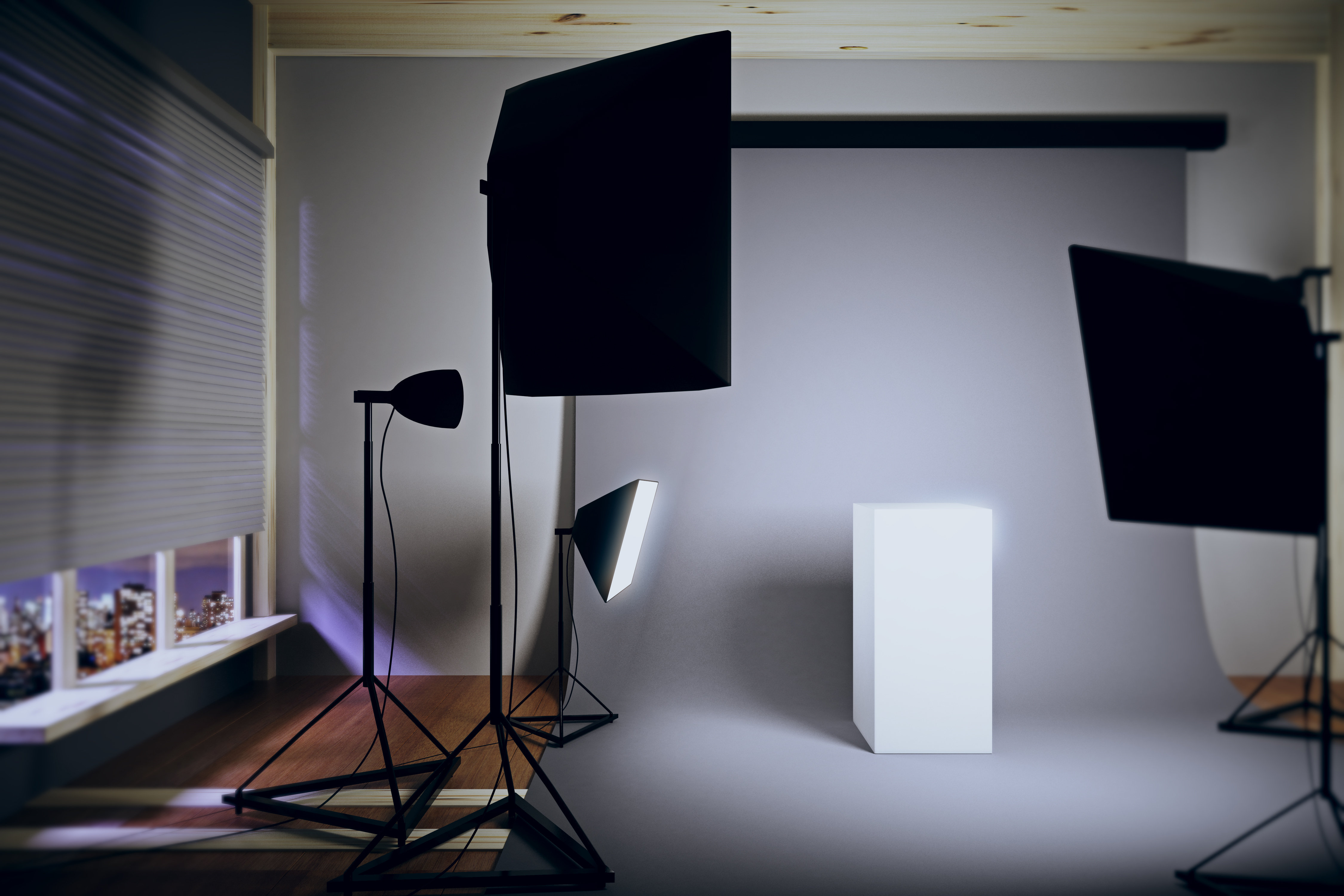
I used to own eleven lights. I counted them once while reorganizing my studio on a slow Tuesday, and the number genuinely embarrassed me. Not because eleven is too many, but because I could trace the purchase of at least four of them to insecurity. Some shoot went sideways, and my instinct was to buy another head, another fill, another hair light, as if more gear would paper over whatever I didn’t understand yet.
The shoots that taught me the most about light were the ones where I was forced to use one source and figure it out.
Why One Light Reveals What Multiple Lights Hide
When you add a second light to cover a problem, you stop diagnosing it. You just… fix it. The shadow was too deep, so you threw a fill in there, and now the image looks fine but you have no idea why the shadow was too deep in the first place. One-light shooting removes that escape route. You have to understand the relationship between your source, your subject, and your reflective environment because those are your only tools.
The physics here matter. A single source produces one set of shadow edges. The hardness or softness of those edges is a function of the size of the source relative to its distance from the subject. A 60-inch Octabox at four feet produces a dramatically different shadow quality than the same modifier at ten feet, even at identical exposures. Inverse square law controls your falloff. The angle of your source to your subject’s face controls where highlights and shadows land. Once you understand those two relationships, one light becomes a complete sentence instead of a rough draft.
The Baseline Setup I Return to Every Time
My go-to single-light setup for beauty and portrait work: a Profoto B10 Plus at roughly half power (approximately f/8 at ISO 100 with a 200mm lens, on a subject two meters out), fired through a 3-foot Westcott Rapid Box Duo softbox. I position the softbox at 45 degrees camera-left, elevated about 30 degrees above eye level. Classic Rembrandt placement. That alone gives me a workable image.
Then I add a white foam core reflector, 24x36 inches, positioned camera-right at about the subject’s shoulder height, angled to bounce light back into the shadow side. I’m not adding a second light. I’m redirecting the first one. That distinction matters because the reflected light will always be cooler in intensity and slightly warmer in color temperature than the key, which gives the shadow side a natural gradient rather than a flat fill. A proper fill light introduces its own color temperature, its own angle, its own falloff curve. A reflector just gives you back what you already have, softer.
Total gear cost for this setup, not counting camera body: approximately $1,100 for the B10 Plus, $160 for the Rapid Box, $12 for the foam core. You can produce magazine-quality portraits with $1,272 in lighting equipment if you know what you’re doing with it.
Moving the Light Is the Same as Changing the Light
This is where most people leave money on the table. They set their one light in one position and then feel limited. But the modifier you’re using determines a range of usable positions, not a single fixed angle.
With a large softbox, I’ll often start at the classic 45-degree position for the hero shot, then slide the stand directly in front of the subject and angle it down at about 15 degrees for a glamour or beauty look. The shadows fall straight down. The catchlights sit dead-center in the eyes. It’s a completely different image from the same light at the same power. Then I’ll drag it 90 degrees to camera-left for a dramatic split, which gives me a third distinct look. Three setups, one light, zero additional gear.
I keep a lighting journal, a physical sketchbook where I draw every setup from every shoot, sometimes mid-session if something is working especially well. The spatial relationship between source and subject looks obvious on paper in a way it doesn’t always feel in the room, especially when you’re also directing a client and answering emails on your phone. Drawing it forces me to see it.
Where One Light Actually Fails (And What To Do About It)
One light has a real limit: background control. If your subject is standing three feet from a white seamless, your single key light will hit that background and you will not be able to control the ratio between subject exposure and background exposure independently. You’ll either blow out the white or underexpose your subject.
The fix is distance. Move your subject at least six to eight feet from the background. At that distance, the inverse square law drops the background exposure by roughly two stops compared to your subject, assuming your key is positioned close to the subject. Now your white seamless reads as a medium gray, and you can decide whether to push it lighter with ambient room light bouncing around, or keep it dark by cutting ambient entirely. That background shift costs you nothing and changes the entire mood of the image.
If you absolutely need a specific background tone and you cannot control the ambient, that’s when a second light earns its place in the room. One head on the background only. But that’s a different article.
The Part No Gear Can Replace
My wife has a quality I’ve tried to bottle for years: she can look at a person’s face and immediately see where light is landing unfavorably, in a way that has nothing to do with f-stops or color science. She just sees it. Watching her observe people taught me to slow down and actually look at my subject before I ever fire a test frame. Where are the shadows sitting? Are the eyes reading as alive or flat? Is the jaw defined or lost?
One light setups reward that kind of looking, because there’s nothing else to adjust. You move the light or you move the subject, and you watch what changes.
The single most important thing I can tell you about shooting with one light is this: place it, look at your subject, and fix what you see before you reach for anything else. The solution is almost always positioning, not addition.
Comments (8)
Great breakdown. The step-by-step approach really helps.
This should be required reading for anyone starting out.
Just subscribed. If the rest of your content is this good, I'm in.
The before and after really sells it. Incredible difference.
My workflow just got 10x faster. Not even kidding.
Been doing this wrong for years apparently. Thanks for the wake-up call.
Bookmarked. Coming back to this one for sure.
Would love to see a follow-up going deeper into this topic.
Leave a Comment