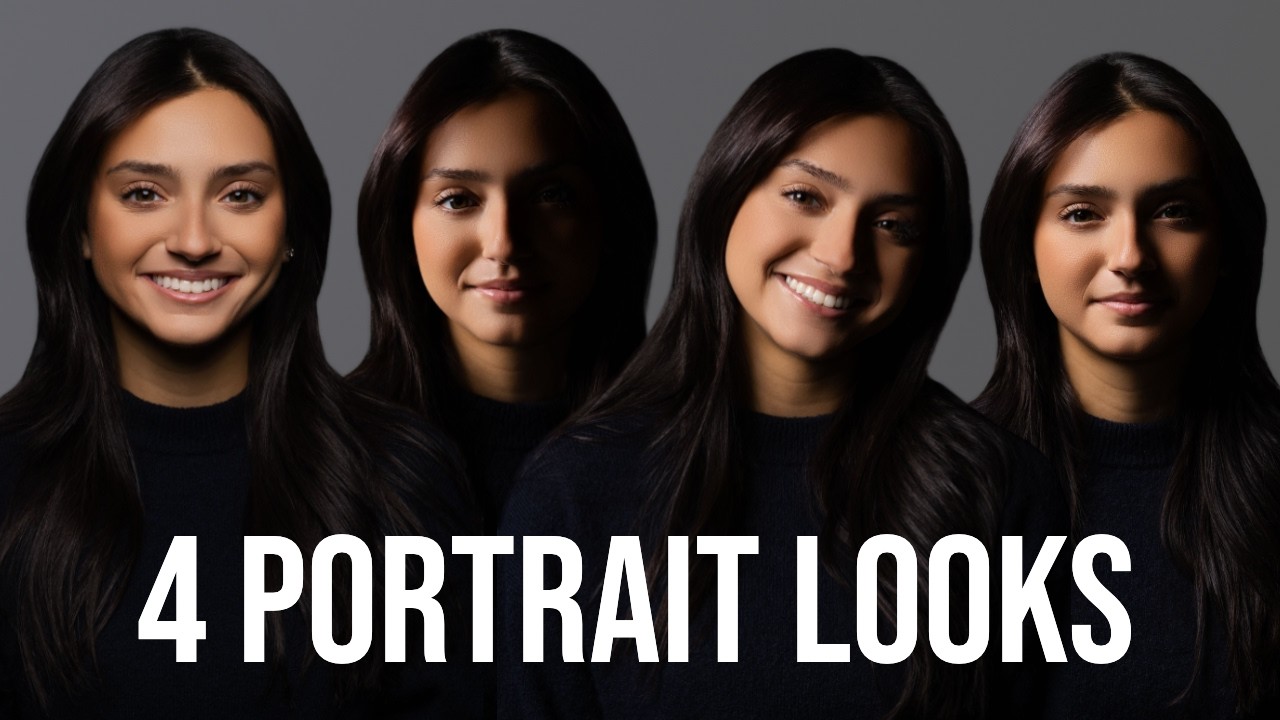
In this excellent tutorial, Joel Grimes breaks down the intimidating world of studio portrait lighting into four manageable, repeatable patterns. If you’ve ever felt overwhelmed by the complexity of studio work, this is exactly where you need to start.
I’ve been lighting portraits for fifteen years, and I can tell you with absolute certainty: these four patterns are the foundation of professional photography. Master them, and you’ll immediately understand why your portraits suddenly look like they belong in a portfolio instead of on Instagram.
Why Quality of Light Matters More Than You Think
Before we talk about positioning and patterns, we need to address the elephant in the room: what kind of light are you actually using?
This is where most beginners fail. They invest in a light source but then wonder why their results look amateurish. The problem? They’re not thinking about quality.
Think of quality of light like the difference between cooking with a gas burner versus an electric one. One gives you control and nuance; the other gives you blunt force.
A softbox creates diffused, wraparound light that flatters skin and minimizes harsh shadows. A hard reflector creates dramatic contrast with sharp shadow edges. Both are tools—but they solve different problems.
In studio portraiture, I always start with a softbox. Specifically, I prefer larger softboxes positioned close to the subject. This proximity does something magical: it wraps light around the face, creating dimension without looking clinical. A small Octa softbox like Grimes uses is perfect for entry-level photographers because it’s affordable, portable, and produces results that look expensive.
Here’s my golden rule: softbox is king in the studio. If you only buy one modifier, make it a large softbox. You can create 80% of professional looks with just that single tool.
Short Lighting vs. Broad Lighting: Which One Wins?
This decision happens before you take the first shot, and it fundamentally changes how your subject looks.
Short lighting places the main light on the side of the face toward which the subject is turned. So if your model’s nose points left toward your key light, you’re shooting short lighting. The lit side of the face appears narrower because it’s turned away from the camera.
Broad lighting does the opposite—the subject turns their nose away from the key light, so the wider part of their face is illuminated and facing the camera.
Here’s my opinion, and I’ve earned it through thousands of portraits: short lighting is almost always more flattering. It sculpts the face, creates definition, and works beautifully for nearly every face shape. I use it as my default pattern about 85% of the time.
Broad lighting has its place—specifically when your subject has a very symmetrical, angular face and you want to emphasize width. But if you’re new to this, train yourself on short lighting first. It’s more forgiving and produces consistently professional results.
The technical reason? Short lighting naturally creates shadows that suggest dimension and contour. Those shadows are your friends in portraiture.
The Four Essential Lighting Patterns
Now let’s talk about the setup itself. These four patterns are the vocabulary of studio portraiture. Learn to speak them fluently.
Butterfly Lighting
This is the most symmetrical pattern. Your key light sits directly above and slightly in front of the subject, creating a small shadow under the nose that resembles a butterfly.
This pattern is fantastic for beauty work, glamour, and anyone with great cheekbones. It’s symmetrical, flattering, and forgiving. The challenge? It can look a bit flat if you’re not careful with your fill light.
Split Lighting
Imagine dividing your subject’s face down the middle. One half is lit; one half is in shadow. This is dramatically different from butterfly.
Split lighting is bold. It’s confident. It’s perfect for editorial work, character studies, and moody portraits. The drawback is that it can look severe, so it’s not ideal for traditional corporate headshots. But when you want impact? Nothing beats it.
Loop Lighting
This is where the main light moves slightly to the side and up, creating a small loop-shaped shadow on the shadow side of the nose.
Loop lighting is the workhorse pattern. It’s versatile enough for nearly any assignment, flattering enough for corporate work, and interesting enough for editorial. I use loop lighting more than any other pattern in my studio because it sits in that perfect middle ground between flattering and dynamic.
Rembrandt Lighting
Named after the Dutch master, Rembrandt lighting creates a distinctive triangular patch of light on the shadow side of the face. It’s moody, sophisticated, and unmistakably professional.
Here’s the secret Grimes mentions, and I want to expand on it: the “triangle” is created when your key light is positioned high and to the side, with enough distance that only the cheekbone and area under the eye receives direct light on the shadow side. That triangle should be roughly equilateral—about the size of your subject’s eye.
To find it consistently, position your light at a 45-degree angle to the subject, then raise it until you see that triangle appear. Move it incrementally until the proportions feel balanced. This takes practice, but once you nail it, your portraits will have that timeless, gallery-quality look.
The Bottom Line
These patterns aren’t arbitrary. They’re distilled wisdom from centuries of portrait painting and decades of professional photography. Each one serves a specific purpose, and knowing when to deploy each one elevates your work from competent to compelling.
Watch the full tutorial to see Grimes demonstrate each pattern with live subjects. Seeing the before-and-after on camera is invaluable—you need to train your eye to recognize these patterns in the wild.
Then get into your studio and practice. Set up your softbox, position your subject, and methodically work through each pattern. Take detailed notes. Shoot tethered so you can see your results in real-time. After a few sessions, these patterns will become muscle memory.
That’s when your studio work stops looking like you’re following instructions and starts looking like you actually know what you’re doing.
Comments
Leave a Comment