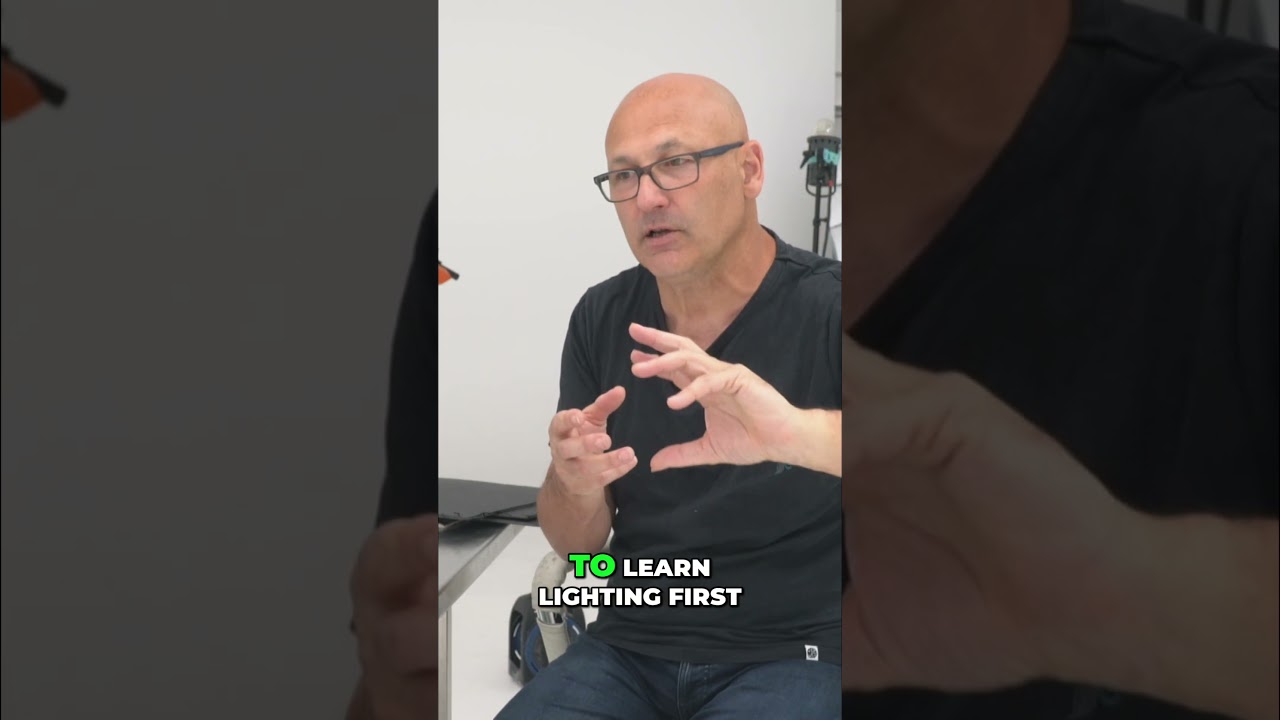
A few months back I was mid-way through a beauty editorial, two hours in, and something was off. The skin tones looked flat on one side and blown out on the other, and I kept adjusting my key light position when the real problem was simpler and more embarrassing. My ratio was wrong. I had not set a deliberate relationship between my key and fill before the first frame. I was chasing a symptom instead of diagnosing the cause.
That kind of mistake is exactly what this Visual Education tutorial addresses, and watching it gave me language to describe what I already half-knew but had never fully systematized.
Watch the full tutorial on YouTube
The Core Problem: Most Photographers Set Lights Instead of Ratios
There is a difference between placing a light and building a ratio, and the tutorial is clear on this point. When you place a light, you are thinking about one source in isolation. When you build a ratio, you are thinking about the relationship between sources, which is the thing that actually determines how three-dimensional a subject looks on a flat sensor.
The tutorial uses a 2:1 ratio as its starting baseline. In practical terms, that means your key light is delivering twice the light to one side of the face compared to the fill. This is measured in stops, so a 2:1 ratio equals one stop of difference. A 4:1 ratio equals two stops. These are not abstract numbers. They translate directly to whether shadow detail holds or drops off completely, and whether a shot reads as commercial and clean or editorial and dramatic.
The method the tutorial recommends is to set your fill light first, take a meter reading, then bring your key up to the intended ratio. That sequence matters. Building from fill gives you a ceiling for your shadow side. If you set key first, you end up guessing how much fill to add, which is how you get the muddy, pushed-back results that are hard to correct in post.
Modifier Choice as Part of the Ratio Equation
One thing the tutorial does well is treat modifier choice as part of the exposure conversation, not a separate aesthetic decision. A large softbox pushed in close will wrap around the subject and naturally compress your ratio because it is spilling onto the shadow side. A smaller, harder source held at the same distance will hold the shadow and stretch the ratio.
I test every new modifier the day it arrives, and this is why. The light output numbers on a modifier spec sheet tell you almost nothing about how it interacts with a ratio. You have to meter both sides of a face with that specific modifier in your specific ceiling height before you know what it actually does. The tutorial pushes this point without being preachy about it, which I appreciate.
A gridded beauty dish, which the tutorial references when discussing controlled falloff, is worth understanding specifically here. The grid tightens the spread so light does not bounce off the floor and back up into the shadow side. Remove the grid and your effective ratio gets softer whether you wanted that or not. This is not a small variable.
Reading the Catchlight to Diagnose Ratio Problems Fast
This is the most practically useful part of the tutorial for working photographers. If you are unsure whether your ratio is reading correctly in camera, the catchlight in the subject’s eyes is a fast diagnostic. The shape, size, and brightness of that reflection tells you the relative power and position of your sources before you pixel-peep the shadow detail.
A strong key and a weak fill will produce a dominant catchlight from the key with a much smaller, dimmer one from the fill, if you can see the fill at all. When those two catchlights start to match in brightness, your ratio is compressing and you are trending toward flat. The tutorial walks through this visually in a way that is hard to replicate in words, which is reason enough to watch it rather than just read a recap of it.
Where I Would Push This Further
The tutorial’s framework is primarily built around a single subject on a neutral background, which is the right place to start. But where it gets more complicated in my own work is fashion and full-length editorial, where the ratio that reads correctly on the face may not be the ratio that flatters the clothing or makes the shoes read at all.
In those situations I run the same ratio-first process, but I meter at the face, the torso, and the knees separately before the subject steps in. On a tall subject with a low key light, you can lose two stops from face to floor without realizing it. I started keeping a lighting journal years ago specifically because of surprises like this, sketching the setup and writing the meter readings next to each position. Comparing those notes across shoots has taught me more about how ratios shift with subject height and ceiling bounce than any single tutorial could.
That is not a criticism of the tutorial. It is sequenced correctly for building the foundational skill. But if you shoot full-length work regularly, add that three-point meter check to the workflow once the ratio concept is solid.
The One Thing That Changes How You Meter Forever
Set your fill first. Take the reading. Build up to your intended ratio with your key. Everything else, modifier choice, position, grid or no grid, follows from knowing that number before you bring a subject in.
Watch the full Visual Education tutorial for the visual demonstration of ratio shifts in real time. Seeing the shadow side change stop by stop on an actual face is the thing that makes this click in a way that reading about it cannot fully replicate.
Comments (2)
This is the kind of content that keeps me coming back.
I keep coming back to this article. It's that useful.
Leave a Comment