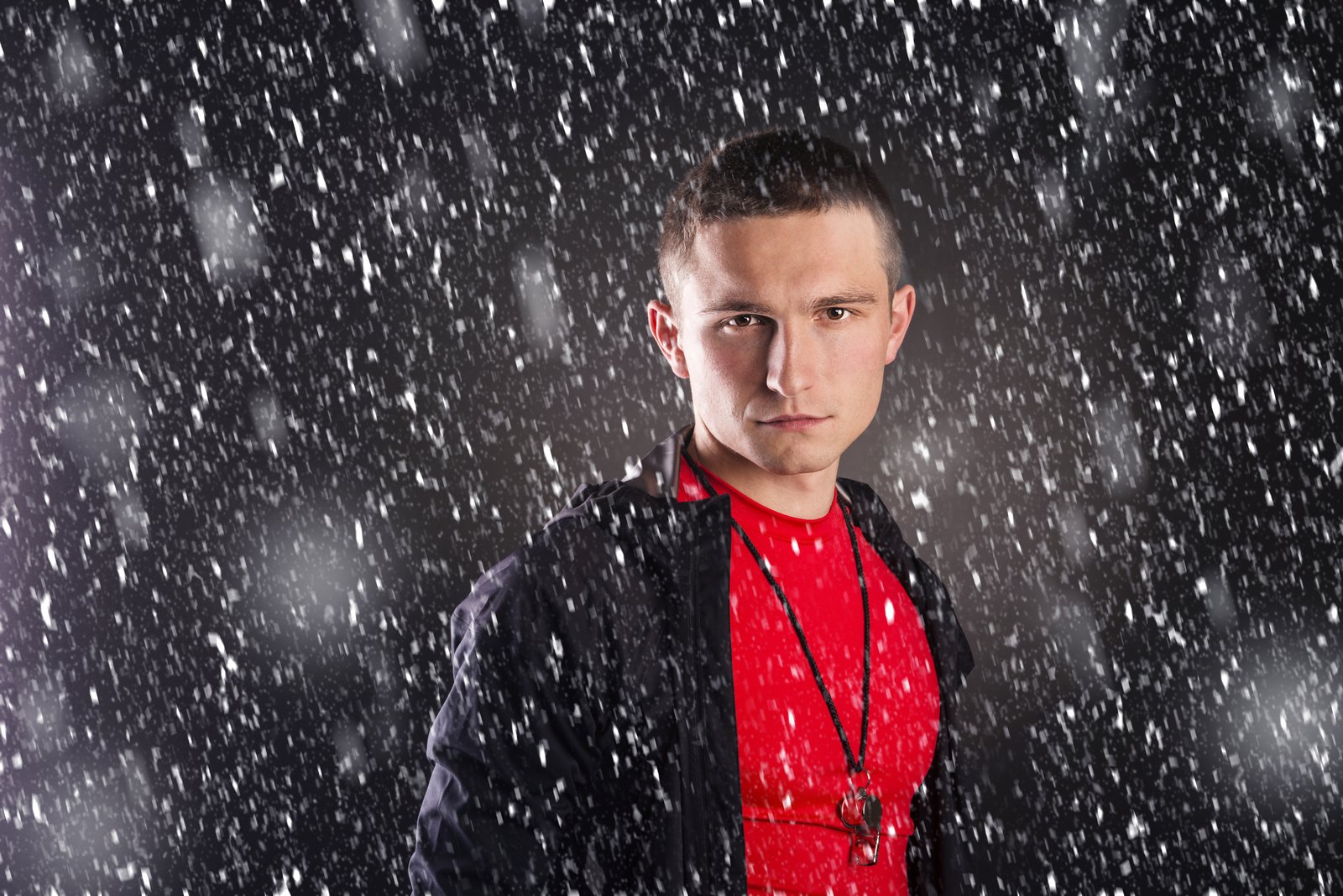
The Shoot Where I Realized Lighting Wasn’t My Problem
I had a corporate headshot client a few years back, a CFO at a mid-sized tech firm. The lighting was dialed: a 47-inch Profoto octabox at camera left, a strip box feathered in from the right for edge separation, and a 4x8 white foam core panel kicking fill back into the shadows. Everything was sitting at a 3:1 ratio. I had a lighting diagram sketched in my journal before she even walked in.
She walked in, stood in front of the seamless, and went completely rigid. Arms at her sides. Chin slightly back. Eyes doing that thing where someone is looking at a camera but not really seeing anything.
I fired off forty frames and knew maybe three of them were usable. The light was doing its job. The subject was not. And neither was I, because I had spent two hours planning the lighting and about four minutes thinking about how I was going to direct a human body.
That shoot corrected something I had been undervaluing for years.
What Stiffness Actually Is (And Why It Reads So Clearly on Camera)
When a person stands unnaturally, the camera catches it because of geometry. The body has a default “presentation posture” that most people slip into when they feel watched: weight distributed evenly across both feet, shoulders squared to the lens, arms hanging parallel to the torso. This creates a series of matching horizontal lines across the frame that read as static and confrontational.
The camera is a flattening device. It collapses three-dimensional space into two dimensions, which means the slight natural rotation of a person’s shoulders that looks subtle in real life becomes invisible entirely. You have to exaggerate angles and weight shifts by roughly 30 to 40 percent beyond what looks normal to the naked eye before the sensor starts recording something that feels natural.
This is the core technical problem with posing: what looks correct in the room often photographs as flat, and what feels dramatic to the subject usually photographs as just right.
The Weight Shift Is the Foundation of Every Other Adjustment
If I could only teach one posing concept, this is it. Have your subject shift 70 to 80 percent of their body weight onto one foot. It doesn’t matter which one to start, but this single instruction does more structural work than any other cue I give.
What it creates automatically: a hip tilt, a corresponding shoulder compensation, a slight bend in the unweighted knee, and a micro-rotation of the torso. Those are four problems solved with one instruction. The horizontal lines break up. The silhouette becomes asymmetrical. The body stops looking like it’s standing at attention.
From there, I work outward from the hips. Hands and arms are addressed last, never first. Most photographers go straight for hand placement because hands are what the subject and the client notice most, but hands attached to a rigid torso still read as rigid. Fix the foundation, and the hands often find reasonable positions on their own.
For arm separation from the torso, I tell subjects to imagine holding a small orange under each armpit without squeezing it. This keeps the arms slightly away from the body, which prevents them from flattening against the sides and losing definition in the silhouette.
Chin Work and Why It Controls More Than You Think
The chin is probably the single most corrected thing I do during a session, and it always moves in one direction: forward and slightly down. Never up, almost never straight back.
Pushing the chin forward and angling it fractionally down toward the camera does three things simultaneously. It sharpens the jawline by pulling skin taut, it brings the eyes slightly more forward in the frame (which creates engagement), and it corrects the natural instinct most people have to pull their chin back when a camera appears. That pull-back instinct causes the neck to disappear into the collar and produces the soft jawline that clients most frequently complain about in their own photos.
I mark chin position on a small piece of masking tape on the floor when I’m shooting repeatable setups. Sounds excessive, but when I know my key light is hitting a subject’s face at a specific angle relative to their position, I want their head oriented the same way across the full sequence. Consistency in the pose protects the consistency of the light.
When the Pose Has to Fight the Light
My wife, who is not a photographer, once watched me light a setup and said something I’ve thought about almost every shoot since. She said the light I was using made everything look like it was trying to hide. She was right. I had the key light at too steep a vertical angle for the subject’s face, and because the subject was standing squared to camera, the shadow was eating the entire cheek on the fill side. The pose was fine. The light placement was fine. But together, they were working against each other.
This is the interaction that most posing guides skip entirely: the pose has to be negotiated with the light, not set before it. If I’m running a Rembrandt-style setup with the key at roughly 45 degrees horizontal and 45 degrees vertical, I need the subject’s face rotated slightly toward the key so the shadow triangle forms correctly on the fill-side cheek. A straight-on face with that lighting setup produces a half-shadow, which is usually not what anyone ordered.
I now do a standing test with every subject before the first frame. I position them in my intended base pose, walk to the camera position, and look at how the light is falling across their specific face, shoulders, and hands. Then I make corrections. It adds maybe three minutes to setup and saves fifteen minutes of culling frames where the pose and light were arguing with each other.
The Single Thing That Changed How I Direct
The best posing cue I’ve found is not a physical instruction at all. I ask the subject to think of something they’re genuinely proud of, without telling me what it is, and to look at the lens as if they’re deciding whether or not to share it. That instruction relaxes the jaw, slightly raises the chin to the right height, and puts actual intention behind the eyes, which no technical adjustment can manufacture.
The light can be perfect. The composition can be perfect. But a technically correct portrait of a person who isn’t present in the moment is still a photograph of someone pretending to be photographed. The pose is what gets the body ready. The direction is what gets the person there.
Comments (9)
Shared this with my photography group. Everyone loved it.
This should be required reading for anyone starting out.
This is fantastic. I've been recommending this approach to my readers too.
Finally someone explains this in a way that actually makes sense.
Printing this out and pinning it next to my monitor. That good.
Great article! I actually covered something related on my site — the landscape angle is really complementary to this.
Applied this to my portfolio shots and the improvement is noticeable.
This is going in my reference folder. Incredibly useful.
This is fantastic. I've been recommending this approach to my readers too.
Leave a Comment