What a Wedding Shoot in the Wind Taught Me About Natural Light Fundamentals

What a Wedding Shoot in the Wind Taught Me About Natural Light Fundamentals

Most of my working life happens under controlled light. I know where every joule is going. I have a strip of masking tape on every modifier in my studio with the light’s name, its distance from the last shoot, and whether the modeling lamp is running hot. So when I watch a photographer work in full natural light, with wind, changing clouds, and a nervous groom cracking jokes, I pay close attention.
What Game Design's Storyboard Mode Teaches Us About Visual Storytelling in Studio Work

What Game Design's Storyboard Mode Teaches Us About Visual Storytelling in Studio Work

The Power of Stripping Things Down I’ve always believed that the best way to understand lighting is to remove everything unnecessary and start from scratch. This principle applies equally to game design, where AdHoc Studio’s recent anniversary update for Dispatch demonstrates something photographers should pay close attention to: sometimes the rough draft tells you more than the finished product. Their new Storyboard Mode does something unconventional—it lets players experience the entire game through its original animatic sketches.

Shadow Direction Is Not a Mystery: What Every Photographer Should Already Know

Shadow Direction Is Not a Mystery: What Every Photographer Should Already Know

Every so often I watch a tutorial and feel two things at once: relief that someone said it plainly, and mild frustration that it needed to be said at all. That’s exactly where I landed watching this short but sharp breakdown from Visual Education. Watch the full tutorial on YouTube before or after reading this, because seeing it in motion reinforces everything written here. The topic is shadow direction. Specifically, why shadows fall where they do, and how to move them deliberately.

Flash Power and Aperture Are the Same Dial: Here's How to Read Them Together

Flash Power and Aperture Are the Same Dial: Here's How to Read Them Together

Early in my career, I treated flash power and aperture as two separate problems. I’d fire a test shot, decide it was too bright, randomly close down my aperture, fire again, still wrong, then start fiddling with the flash power. No logic to it. Just guessing with expensive equipment. It wasn’t until I really internalized the stop-based relationship between those two controls that my exposure work became something I could actually reason through instead of stumble toward.

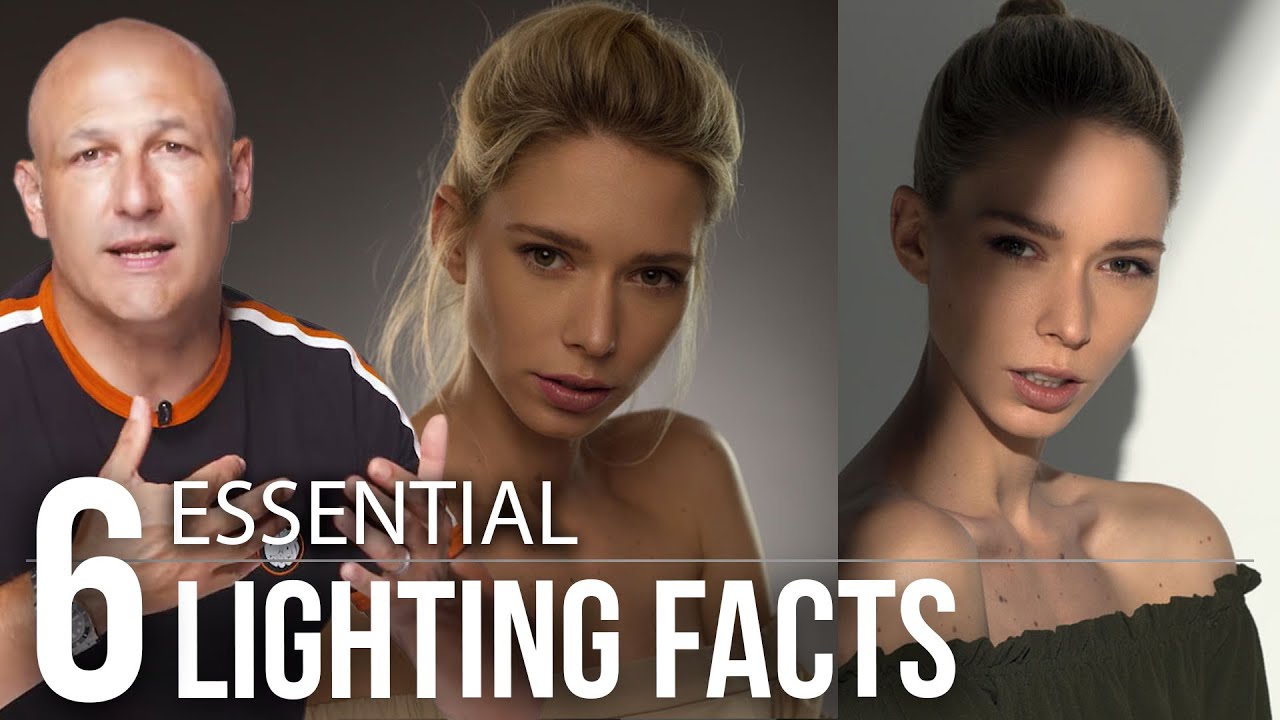
6 Lighting Fundamentals That Matter More Than Any Camera You'll Ever Buy

6 Lighting Fundamentals That Matter More Than Any Camera You'll Ever Buy

Every few weeks someone emails me asking which camera body I’m shooting with, or which prime lens I’d recommend for portrait work. I get it. Gear is tangible. You can read specs, compare prices, feel confident you’re making a measurable upgrade. But after nearly two decades shooting fashion, beauty, and corporate work out of my studio here in Los Angeles, I can tell you that the camera has never once been the reason a shot failed.

Skip the Strobes: Why Natural Light is Your Best Teacher

Skip the Strobes: Why Natural Light is Your Best Teacher

I’ve watched countless photographers make the same mistake when starting out: they assume better portraits require better gear. They spend hundreds on a flash, a softbox kit, and light stands before they’ve learned to see light at all. It’s backwards, and it’s expensive. The truth I keep returning to is simpler and more humbling. The fastest path to stronger portraits isn’t through your credit card—it’s through training your eye to recognize and manipulate light that’s already there.

What Anime Studios Get Right About Lighting That Photographers Should Learn

What Anime Studios Get Right About Lighting That Photographers Should Learn

The Art of Restraint in Modern Production I’ve been watching the newly released footage from Science Saru’s upcoming Ghost in the Shell anime series, and I have to say—it’s reminded me of something we often forget in contemporary studio work: sometimes doing less is doing more. The production team has deliberately chosen to pull away from the hyperpolished digital rendering that dominates modern anime. Instead, they’re embracing a visual language closer to the source material’s original manga aesthetic.