Godox's New $189 LED Monolight Changes the Game for Budget-Conscious Studios

Godox's New $189 LED Monolight Changes the Game for Budget-Conscious Studios

I’ve watched the budget lighting market evolve considerably over the past five years, and I’m genuinely impressed by what Godox has accomplished with their new Litemons LE200D. At $189, this 220W LED monolight represents a genuine inflection point in what’s possible for photographers and video creators working with limited budgets. The 220W Sweet Spot Let me be direct: 220W of output is the right amount of power for most small studio work.

Godox TT600 vs Neewer 660 LED — Choosing Your First Studio Light

Godox TT600 vs Neewer 660 LED — Choosing Your First Studio Light

Godox TT600 vs Neewer 660 LED — Choosing Your First Studio Light I’ve spent the last eight years recommending lighting gear to photographers stepping into studio work, and I can tell you with certainty: the first light you buy shouldn’t be your dream light. It should be your learning light. That’s where budget options like the Godox TT600 Speedlite Flash and the Neewer 660 LED Video Light 2-Pack Kit come in.

Game Collections as Visual Storytelling: What BOXROOM Teaches Us About Displaying Personal Collections

Game Collections as Visual Storytelling: What BOXROOM Teaches Us About Displaying Personal Collections

The Art of Showcasing What Matters to You I’ve spent years teaching photographers how to light and compose product shots, and I’ve noticed something consistent: the best images tell a story about the person behind the collection. A new digital tool called BOXROOM has me thinking differently about how we approach display photography. At its core, BOXROOM is a building simulator where users construct personalized rooms specifically designed to house their Steam game libraries.

Flash Photography: The Recipe for Consistent Studio Lighting

Flash Photography: The Recipe for Consistent Studio Lighting

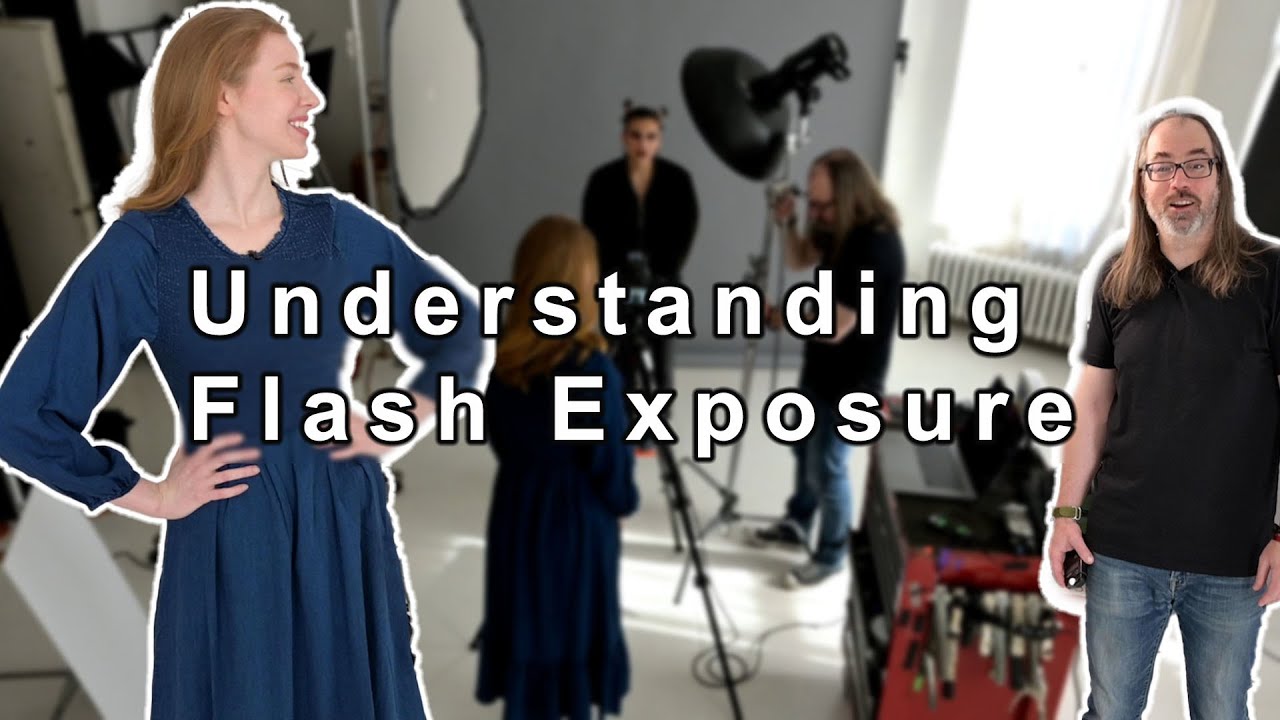
Flash Photography: The Recipe for Consistent Studio Lighting I’ve watched too many photographers treat flash like an afterthought—a last resort when natural light fails. That’s backwards. Flash is the most controllable light source available, and when you understand it properly, you’ll produce more consistent results than you ever will chasing window light. Understanding Flash Fundamentals Flash photography works like a precise recipe: get one ingredient wrong, and the entire dish suffers.

Flash Photography: Stop Apologizing and Start Mastering Your Speedlight

Flash Photography: Stop Apologizing and Start Mastering Your Speedlight

I’m tired of hearing photographers apologize for using flash. “I wish I had natural light,” they say, as if flash is some kind of failure. It isn’t. Flash is a tool that, when used correctly, gives you absolute control over your subject’s appearance. Most people just use it wrong. The problem isn’t flash itself—it’s that photographers treat it like an afterthought. They slap a speedlight on their camera’s hot shoe, aim it forward, and wonder why their subjects look washed out and one-dimensional.

Flash Photography Fundamentals: The Recipe for Consistent, Controlled Light

Flash Photography Fundamentals: The Recipe for Consistent, Controlled Light

Flash Photography Fundamentals: The Recipe for Consistent, Controlled Light I’ve spent twenty years working with flash, and I can tell you this: most photographers use it as a last resort instead of a primary tool. That’s a mistake. Flash isn’t a backup—it’s precision lighting you can carry in your bag. When you understand how to control it, you’ll never again accept flat, unpredictable ambient light. The Three Variables You Must Master Think of flash exposure like baking.

Flash Photography Fundamentals: Control Light Like a Professional

Flash Photography Fundamentals: Control Light Like a Professional

Flash Photography Fundamentals: Control Light Like a Professional I’ve watched photographers spend thousands on flash equipment only to produce flat, unflattering light. The problem isn’t the gear—it’s the approach. Flash photography isn’t mysterious. It’s a system, and once you understand the mechanics, you control the outcome with precision. The Core Principle: Inverse Square Law Governs Everything Every flash decision flows from one physical law: light intensity drops by a quarter every time you double the distance from source to subject.

Flash Photography Fundamentals: Building Your Technique from the Ground Up

Flash Photography Fundamentals: Building Your Technique from the Ground Up

Flash Photography Fundamentals: Building Your Technique from the Ground Up I’ve spent twenty years in studios watching photographers stumble with flash because they treat it like an on-off switch rather than a precision tool. Flash intimidates people. It shouldn’t. Once you understand the mechanics, it becomes as controllable as any other light source—sometimes more so. The Core Recipe: Understanding Flash Exposure Flash exposure works differently than ambient light, and this is where most photographers lose control.

Five Eras, Five Cities: What Multi-Period Game Design Teaches Us About Lighting Consistency

Five Eras, Five Cities: What Multi-Period Game Design Teaches Us About Lighting Consistency

The Challenge of Temporal Lighting I’ve been watching the gaming industry’s approach to visual storytelling, and I’m genuinely impressed by the technical demands they’re tackling. Ryu Ga Gotoku’s upcoming title, Stranger Than Heaven, spans five distinct time periods across five different cities—1915, 1929, 1943, 1951, and 1965—and this presents a lighting puzzle that rivals what we face in studio photography. When you’re shooting across different eras, you’re not just changing costumes and props.

The 5 Classic Portrait Lighting Patterns Every Photographer Should Know

The 5 Classic Portrait Lighting Patterns Every Photographer Should Know

Portrait lighting patterns are defined by the position of shadows on the subject’s face. There are five classical patterns, each producing a distinct look. Understanding them gives you a vocabulary for lighting that applies whether you are using a studio strobe, a window, or a flashlight. 1. Flat Lighting The light source is positioned directly in front of the subject, at or near the camera’s axis. Shadows are minimized because light fills every visible surface evenly.

Environmental Portraits: Lighting People in Context

Environmental Portraits: Lighting People in Context

Environmental portraits tell a story that studio portraits can’t. A chef in their kitchen, an artist in their studio, a farmer in their field — the environment provides context that gives the viewer insight into who the person is. But lighting these scenes is fundamentally different from studio work. You’re not creating light from scratch — you’re integrating with light that already exists. The Environmental Portrait Philosophy The environment is as important as the subject.

How to Create Dramatic Low-Key Portraits

How to Create Dramatic Low-Key Portraits

Low-key portraits use predominantly dark tones with selective highlights to create drama, mystery, and emotional intensity. The technique draws from chiaroscuro painting — the interplay of light and dark that Rembrandt and Caravaggio used to create depth and mood. In photography, it means controlling exactly where light falls and where darkness remains. Understanding Low-Key Low-key isn’t just underexposure. A poorly exposed portrait is dark everywhere; a low-key portrait is intentionally dark with precise highlights that sculpt the subject.