Reading Light in the Wild: What Street Photography Taught Me About Seeing

Reading Light in the Wild: What Street Photography Taught Me About Seeing

I’ve spent enough years in a controlled studio environment that I sometimes forget how to just look. I can dial in a three-light setup in about twelve minutes. I keep a lighting journal where I sketch every setup from every shoot, so nothing gets lost between jobs. But last month, prepping for a location editorial that pulled me out of my comfort zone and onto actual city streets, I realized how dependent I’d become on being able to place light exactly where I want it.

Compact Flash Systems and Studio Storage: What Photographers Need to Know Right Now

Compact Flash Systems and Studio Storage: What Photographers Need to Know Right Now

The Rise of Compact Flash Systems The photography equipment landscape continues to evolve, and I’ve been paying close attention to the newest compact flash options hitting the market. These miniaturized systems represent a genuine shift in how we approach portable lighting—particularly relevant for those of us who work between studio and location settings. What strikes me most about current mini flash developments is their potential to democratize sophisticated lighting setups. Where we once needed substantial equipment cases and power supplies, photographers can now achieve comparable results with significantly less bulk.

One Desk Lamp, One Subject, Zero Excuses: What Project 3 Taught Me About Lighting Control

One Desk Lamp, One Subject, Zero Excuses: What Project 3 Taught Me About Lighting Control

I’ve been shooting commercial and editorial work long enough to know that the worst thing you can bring onto a set is too much gear and not enough understanding. Last month I was prepping a beauty campaign, nothing complicated on paper, one subject, neutral background, clean skin. I pulled out three lights before I caught myself. I was stacking modifiers to solve a problem I hadn’t even diagnosed yet. I put two of them back and started from scratch with one source.

One Light, Maximum Drama: What Joel Grimes' Umbrella Setup Taught Me About Controlling the Dark

One Light, Maximum Drama: What Joel Grimes' Umbrella Setup Taught Me About Controlling the Dark

I had a client last month who wanted “edgy” headshots. Motorcycle guy, leather jacket, the whole thing. My instinct was to reach for my usual two-light setup, add a rim light, keep things controlled. The results were technically fine and completely soulless. Everything was visible, which meant nothing was interesting. The image had no tension. That failure sent me back to a tutorial I’d bookmarked and never properly sat with. In this Joel Grimes behind-the-scenes video, filmed at Westcott’s Ohio headquarters, he builds a genuinely dramatic single-light portrait of a Harley-Davidson rider using nothing but a 7-foot umbrella, a front diffusion panel, and an FJ400 strobe.

How Apple Crumble's Creepy-Cute Aesthetic Teaches Us About Mood Lighting in Narrative Games

How Apple Crumble's Creepy-Cute Aesthetic Teaches Us About Mood Lighting in Narrative Games

A Studio Lesson Hiding in Plain Sight I stumbled onto something fascinating while researching upcoming indie games: Happy Broccoli’s new mystery adventure, Apple Crumble, demonstrates lighting principles that every studio photographer should understand. The team has crafted what they’re calling a “creepy-cute” experience—and the visual language they’re using is pure lighting mastery. The Balance Between Warmth and Unease What caught my attention immediately is how the game’s aesthetic mirrors the fundamental challenge we face in portrait studios: balancing comfort with intrigue.

What Street Photography Taught Me About Reading Light I Already Know

What Street Photography Taught Me About Reading Light I Already Know

I spend most of my working life in a controlled environment. Every light in my studio has a strip of masking tape on it with a label: key, fill, hair, kicker. I know exactly what each one is doing at any given moment. That control is the whole point. So when a recent editorial brief pushed me outside for a “candid, documentary-style” series in downtown Los Angeles, I felt the specific discomfort of a person who has forgotten that light exists before you plug anything in.

The Harlowe Pocket Flash Changes the Game for Portable Studio Lighting

The Harlowe Pocket Flash Changes the Game for Portable Studio Lighting

A Fresh Approach to Compact Flash Design I’ve been watching the compact flash market closely over the past year, and I have to admit I’m intrigued by what Harlowe has just announced. Their new Pocket Flash represents something I haven’t seen before in this category: a serious attempt to merge flash and continuous lighting into a single, genuinely portable unit without sacrificing either function. At $149, it’s positioned firmly in the premium tier of compact flashes.

The IM30Pro Changes the Game for Affordable On-Camera Flash

The IM30Pro Changes the Game for Affordable On-Camera Flash

I’ve spent enough time wrestling with aging flash units and unreliable external batteries to appreciate when a manufacturer gets the fundamentals right. Godox just did exactly that with their IM30Pro, and I think it deserves serious consideration from photographers who refuse to compromise between cost and functionality. The Bounce Head Changes Everything Let’s be direct: the ability to bounce light separates professional-looking flash work from flat, harsh on-camera snapshots. This compact unit now includes a tilting bounce head, which fundamentally alters what you can accomplish in real-world shooting conditions.

Why I Stopped Editing With Just a Keyboard and Mouse (And What I Use Instead)

Why I Stopped Editing With Just a Keyboard and Mouse (And What I Use Instead)

Every wasted minute in post is a minute I’m not shooting, billing, or sleeping. That sounds blunt, but after fifteen years of commercial and editorial work, I’ve learned that the editing desk is where time quietly bleeds out. I’ve spent years refining my shooting workflow, labeling my lights with masking tape, building lighting diagrams before a client walks through the door, and testing every new modifier the afternoon it arrives. But my post-processing setup stayed embarrassingly manual for too long.

Rim Lighting Done Right: The Setup That Separates Flat Studio Shots from Images That Actually Sell

Rim Lighting Done Right: The Setup That Separates Flat Studio Shots from Images That Actually Sell

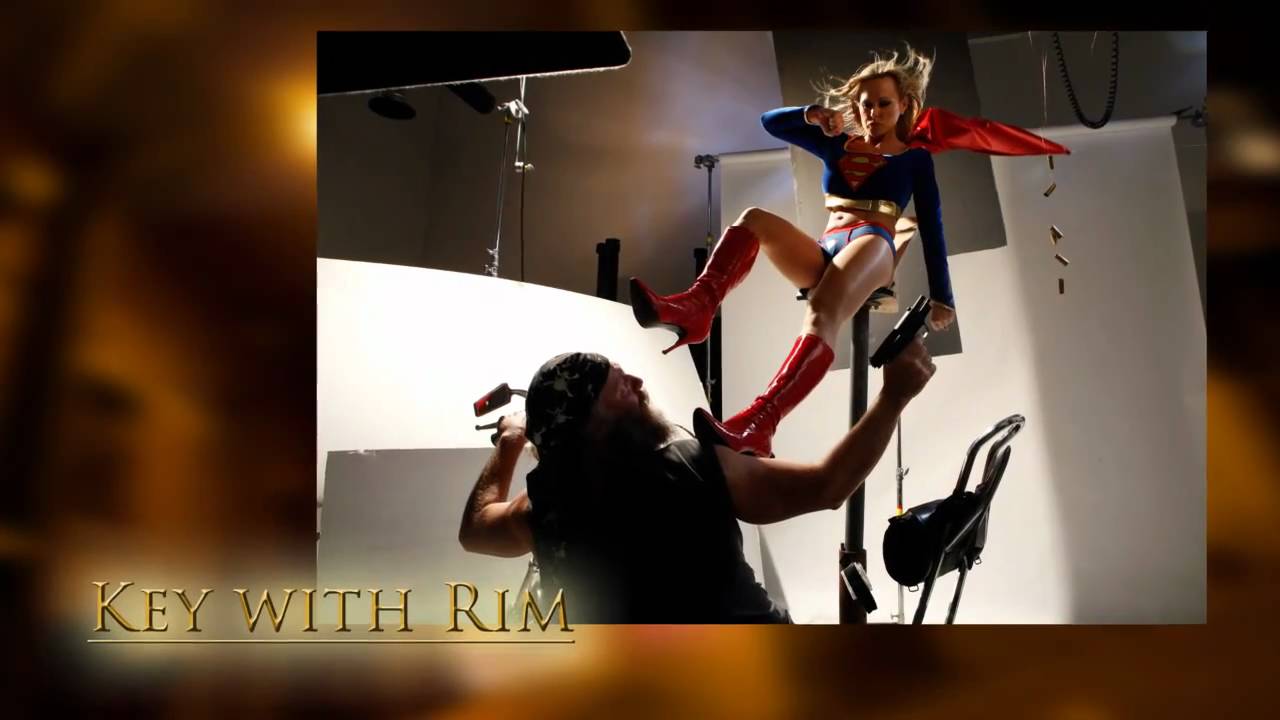
I pulled a tear-out from a magazine once, a full-page beauty editorial, and spent about forty minutes staring at the catchlights and shadow edges trying to reverse-engineer the setup. Two rim lights, one key, a reflector below the chin. I sketched it in my lighting journal, taped it to the wall, and built it. The first test frame looked almost identical to the tear-out. That was the day I understood that rim lighting is not a creative accident.

Why Your Group Shots Look Wrong — And the Physics That Fixes Them

Why Your Group Shots Look Wrong — And the Physics That Fixes Them

I had a corporate client last spring — twelve people, a small conference room, a two-hour window. I walked in with a 35mm and a single large softbox because I thought I could work fast. The images came back technically exposed, technically sharp, and completely wrong. The front-row faces looked wider than the back row faces. The edges of the frame looked like a funhouse mirror. The lighting dropped off so hard by the third row that I was fighting it in post for an hour.

How Joel Grimes Builds a Strobe System That Actually Works in a Working Studio

How Joel Grimes Builds a Strobe System That Actually Works in a Working Studio

I had a client walk into my studio last month for a corporate portrait session and I could see immediately that my go-to single-strobe setup was going to fail her. Strong bone structure, darker complexion, specific wardrobe with high contrast. The setup I’d been running for weeks was going to flatten everything that made her interesting to photograph. I needed to think in terms of a system, not a single light, and I needed to think about it fast.